
Date: 2018-07-03
Volkswagen Group of America, Inc.
NHTSA Action Number: EA18005
Components: SEAT BELTS:FRONT:WEBBING
Subject: Seat Belt Webbing Failure
Opened From: 2018-07-03 - 2023-02-27
NHTSA Recall Number: 20V724
Summary
In December 2017, NHTSA conducted two (2) New Car Assessment Program (NCAP) tests on the Model Year (MY) 2018 Volkswagen (VW) Tiguan. Both tests were 35mph full frontal impacts into a rigid barrier with a 50th percentile male dummy seat-belted in the driver position and a 5th percentile female seat-belted in the right front passenger position. The tests were conducted on December 8, 2017, at MGA Research Corp. (MGA) in Wisconsin and December 13, 2017, at the Transportation Research Center (TRC) of Ohio.During both crash tests, the driver seat belt webbing completely separated at the point where the webbing loops through the Crash Locking Tongue (CLT). In both NCAP tests, the dummy injury criteria requirements, as set forth in Federal Motor Vehicle Safety Standard (FMVSS) 208, were met with one exception. The chest deceleration G force requirement was exceeded in the test conducted at TRC. The FMVSS 208 injury criteria requirement for the chest deceleration is 60 Gs and it was measured at 67 Gs in the test conducted at TRC. It should be noted, FMVSS 208 does not include a requirement that the seat belt webbing remain intact during a frontal collision to comply with the standard. Compliance with the standard is based on the dummy injury criteria.Further, the Agency has conducted NCAP testing with no substantial protocol changes for over forty (40) years. This includes tests conducted prior and subsequent to the subject NCAP tests. During that time there has not been a similar failure of the seat belt webbing in any other NCAP tested vehicle manufactured by VW or another manufacturer.In November 2020, VW filed a defect notice (20V-724/69BH) that recalled seat belt systems, both driver, and front passenger, that were manufactured with webbing from the same lot as the two NCAP tested MY2018 Tiguan vehicles. VW has tested and inspected several of the returned seat belt systems and found no anomalies in either the webbing or the CLT that would substantially affect system performance in a frontal collision.The Office of Defects Investigation (ODI) estimates that between 2000 and 3500 frontal collisions involving MY2018 VW Tiguan vehicles have occurred in the field during the time these vehicles have been in service. This estimate is based on vehicle population and an estimated yearly rate of severe frontal collisions.A severe frontal collision is defined, in this instance, as being of sufficient severity to warrant a commanded deployment of the frontal air bags. These collisions would place a significant load on the seat belt system similar to loads experienced during the NCAP tests. To date, neither ODI nor VW is aware of any frontal collision in the field that resulted in separation of the seat belt webbing. ODI believes that had any field collisions involved separation of the seat belt webbing, the Agency would have been notified.In view of the recall being conducted by VW, and lack of field data demonstrating a system defect, ODI is closing this Engineering Analysis (EA). The closing of this investigation does not constitute a finding by NHTSA that a safety-related defect does not exist. The Agency reserves the right to take additional action if warranted by future circumstances.
Investigation Documents
For Latest Documents related to this Investigation, visit the NHTSA Website.
Click the (+) Plus Sign
Then click Associated Document(s).
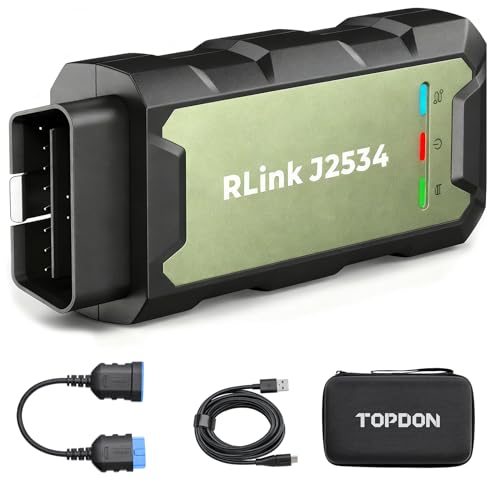
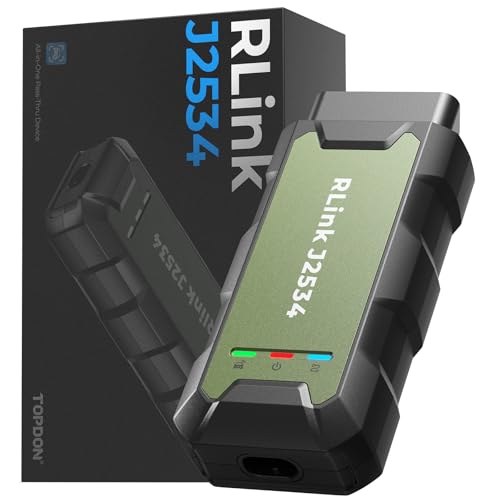
- Advanced VCI Box, Industry-leading J2534 Pass-Thru...
- High-Speed OEM-Level Diagnostics & Programming: Unlock true...
- Coverage for 17 Car Brands & Ultra Reliability: Works...
- User-Friendly RLink Platform & Expert Support: TOPDON’s...
- 6.6 ft USB-C Cable & Portable Storage Case: The RLink J...
Search NHTSA Database for Recalls
Search NHTSA Database for (TSB's) Technical Service Bulletins
Technical Service Bulletins TSB's List
Previous Investigation | Next Investigation |

- CEL Doctor: The ANCEL AD310 is one of the best-selling OBD II scanners on the market and is recommended by Scotty Kilmer, a YouTuber and auto mechanic. It can easily determine the cause of the check engine light coming on. After repairing the vehicle's problems, it can quickly read and clear diagnostic trouble codes of emission system, read live data & hard memory data, view freeze frame, I/M monitor readiness and collect vehicle information.
- Sturdy and Compact: Equipped with a 2.5 foot cable made of very thick, flexible insulation. It is important to have a sturdy scanner as it can easily fall to the ground when working in a car. The AD310 OBD2 scanner is a well-constructed mechanic tool with a sleek design. It weighs 12 ounces and measures 8.9 x 6.9 x 1.4 inches. Thanks to its compact design and light weight, transporting the device is not a problem. The buttons are clearly labelled and the screen is large and displays results clearly.
- Accurate Fast and Easy to Use: The AD310 scanner can help you or your mechanic understand if your car is in good condition, provides exceptionally accurate and fast results, reads and clears engine trouble emission codes in seconds after you fixed the problem. This device will let you know immediately and fix the problem right away without any car knowledge. No need for batteries or a charger, get power directly from the OBDII Data Link Connector in your vehicle.
- OBDII Protocols and Car Compatibility: Many cheap scan tools do not really support all OBD2 protocols. AD310 scanner as it can support all OBDII protocols such as KWP2000, J1850 VPW, ISO9141, J1850 PWM and CAN. This device also has extensive vehicle compatibility with 1996 US-based, 2000 EU-based and Asian cars, light trucks, SUVs, as well as newer OBD2 and CAN vehicles both domestic and foreign. Pls confirm with our customer service whether it is compatible with your vehicle before purchasing.
- Home Necessity and Worthy to Own: This is an excellent code reader to travel or home with as it weighs less and it is compact in design. You can easily slide it in your backpack as you head to the garage, or put it on the dashboard, this will be a great fit for you. The AD310 is not only portable, but also accurate and fast in performance. Moreover, it covers various car brands and is suitable for people who just need a code reader to check their car.

- Multi-Functions - Practical Multi-Functions OBD2 code reader features built-in OBD2 DTC lookup library, which help you to determine the cause of the engine light, read code, erase code, view freeze frame, I/M ready, vehicle information, data flow, real-time curve, get vehicle speed information, calculate load value, engine coolant temperature, get engine speed.
- Wide Capability - Supports 9 protocols compatible with most 1996 US-Based, 2000 EU-Based and Asian cars, and newer OBD II & CAN domestic or import vehicles. Supports 6 languages - English,German, Dutch, Spanish, French, Italian.
- 2.8" LCD Display - Designed with a clear display 2.8" Large LCD screen - white backlight and contrast adjustment. No need any battery or charger, OBD reader gets the power directly from your vehicle through the OBDII Data Link Connector.
- Compact Design - Car diagnostic scanner is equipped with a 2.5 feet long cable and made of a very thick flexible insulator.There are 6 buttons on OBD2 Scanner:scroll up/down,enter/exit and buttons that quick query VIN vehicle number& the DTC fault code.
- ABS / Airbag codes NOT Supported - It is able to read and clear check engine information which is part of OBDII system, but it cannot work with non-OBDII systems, including ABS / Airbag / Oil Service Light, etc.

- 【Your Personal CEL Doctor – Read & Clear Engine Codes】The NT301 OBD2 scanner lets you read diagnostic trouble codes (DTCs), check em-issions readiness, turn off your Check Engine Light (CEL) or MIL, reset monitors, and view live data streams. It retrieves your vehicle's VIN instantly. Like all standard OBD2 scanners, it clears codes only after repairs are completed—if the issue persists, the code will return. Designed for DIYers who want to understand what’s really going on under the hood.
- 【Easy Code Reading – Just Plug & Play】Simply plug into the OBD2 port, turn the ignition to “ON” (engine off), and select the correct menu: Select OBDII-> Wait for seconds-> Select Read codes. For accurate results, ensure your vehicle is compatible and the OBD2 port is free from damage or wiring issues. No batteries needed— powered directly by your car.
- 【Live Data Graphing & Accuracy for Most OBD2 Vehicles】View and log live sensor data in graph form—monitor oxygen sensors, fuel trims, coolant temp, RPM, and more. Spot trends and suspicious values in real time. Compatible with most 1996+ gasoline cars, light trucks, and SUVs sold in the U.S., as well as many 2000+ European and Asian models. Also works on 12V diesel vehicles equipped with OBD2.
- 【S-mog Check Helper – Know Your Readiness Status at a Glance】With dedicated I/M readiness hotkeys and a simple Red-Yellow-Green LED indicator, you’ll instantly know if your vehicle is ready for em-issions testing. Built-in speaker provides audio feedback. No guesswork—just confidence before you head to the test center.
- 【A Must-Have Tool for Every Home Mechanic】Compact, rugged, and ready to use right out of the box. The 2.8” color screen is easy to read, even in daylight. No charging or setup required—just plug into the 16-pin DLC and start diagnosing. Recommended by professional mechanics on YouTube and trusted by DIYers worldwide.
Last update on 2026-03-23 / Affiliate links / Images from Amazon Product Advertising API
This product presentation was made with AAWP plugin.