Date: 2024-04-25
Ford Motor Company
NHTSA Action Number: PE24012
Components: ELECTRICAL SYSTEM:ADAS
Subject: Collisions Involving Ford BlueCruise
Opened From: 2024-04-25 - 2025-01-17
Summary
On April 25, 2024, NHTSAG??s Office of Defects Investigation (ODI) opened a Preliminary Evaluation (PE24012) to assess BlueCruise, a partial driving automation system available on certain vehicles manufactured by Ford Motor Company (Ford). NHTSA opened the investigation after the agency received notice of two fatal collisions involving BlueCruise-equipped Ford Mustang Mach-E vehicles. Based on the incidents, NHTSA scoped the investigation to 2021-2024 Mustang Mach-E vehicles equipped with BlueCruise. In June 2024, ODI sent an Information Request (IR) letter to Ford requiring that it provide certain information pertaining to crashes, non-crash reports, and technical specifications that relate to BlueCruise, as well as other Ford partial driving automation systems that offer lane and speed maintenance. In its response to ODIG??s IR, Ford stated that there are 2,539,962 Ford and Lincoln vehicles (including subject and peer vehicles) equipped with a partial driving automation system within the scope of the request. The majority of these vehicles are equipped with a system that Ford calls Lane Centering Assist (LCA), which is a hands-on partial driving automation system that combines longitudinal control authority governed by Adaptive Cruise Control (ACC) and lateral control authority governed by a steerable path. LCA is offered on a wide range of Ford and Lincoln models beginning in model year 2019. Vehicles that are equipped with BlueCruise, the focus of this investigation, have LCA capability and additionally offer hands-free partial driving automation when certain conditions are met. Hands-free BlueCruise operation is only offered on certain roadways and system availability is geofenced using vehicle GPS. BlueCruise-equipped vehicles employ a camera-based driver monitoring system to determine driver attentiveness to the roadway. BlueCruise was introduced in model year 2021 and is currently available in a select range of Ford and Lincoln vehicles. For BlueCruise- and LCA-equipped vehicles, both ACC and Pre-Collision Assist (PCA) features use a combination of camera and radar sensing technologies to detect and classify objects. ACC is specifically designed to detect vehicles (including cars, trucks, and motorcycles) and bicycles in front of the subject vehicle which are either stationary or moving in the same direction as the subject vehicle. Through this investigation, limitations in the detection of stationary vehicles in certain conditions have been identified. Specifically, due to the potential for false detection of stationary objects at long distances, Ford designed ACC to inhibit any response to reported stationary objects when the subject vehicleG??s approach speed is at or above 62 mph. Additionally, system performance may be limited when there is poor visibility due to insufficient illumination. In addition to reviewing FordG??s response to ODIG??s IR, the agency conducted a review of crash and non-crash reports identified collectively through FordG??s IR response, incident reporting through Standing General Order 2021-01 (SGO), and NHTSA vehicle owner questionnaires. In total, 32 crashes and 2,004 non-crash reports on subject and peer Ford vehicles were identified across manufacturer and ODI data sources. A detailed analysis of each crash was conducted including the review of any available police reports, photographs, data recovered from in-vehicle event data recorders, connected vehicle data, and/or other information. In both fatal collisions referenced in the PE24012 opening resume, the subject Ford Mustang Mach-E vehicle was traveling over 70 mph on a controlled-access highway during nighttime lighting conditions with hands-free BlueCruise engaged when it collided with a stationary vehicle. Analysis of data imaged from the vehiclesG?? event data recorders demonstrates that in each incident, the driver did not apply the brakes or take evasive steering action, and no deceleration was initiated by either the BlueCruise system or PCA prior to impact. Through the agencyG??s crash analysis, four additional frontal collisions were identified where the subject Ford impacted a stopped or slow-moving lead vehicle or another stationary object located in the travel lane. Two of these four incidents involved BlueCruise-equipped Ford Mustang Mach-E vehicles (included in the failure report summary along with the fatal collisions discussed above), while the other two involved other Ford models equipped with the LCA system. Additionally, a trend was identified through analysis of the non-crash reports relating to allegations that ACC (the longitudinal component of both BlueCruise and LCA) failed to detect and/or respond to a stopped or slow-moving lead vehicle. In these reports, consumers often describe that the absence of deceleration initiated by ACC was unexpected and required harsh manual braking or intervention from the PCA to avoid a frontal collision with the lead vehicle. Based on NHTSAG??s analysis, system limitations relating to the detection of stationary vehicles while traveling at highway speeds and in nighttime lighting conditions appear to be factors in collisions under investigation and several apparently similar near-miss, non-crash reports. This Preliminary Evaluation is being upgraded to an Engineering Analysis (EA25001) to further investigate these system limitations and to evaluate driversG?? ability to respond to scenarios that exceed system limitations. During the EA, the agency expects to, among other things, perform vehicle evaluations, review additional technical information, and perform additional analysis of related crashes and non-crash reports. The crashes included in the failure report summary can be found at NHTSA.gov under the following SGO report identification numbers: 502-7268, 502-7426, 502-6852, 502-8738.
Investigation Documents
For Latest Documents related to this Investigation, visit the NHTSA Website.
Click the (+) Plus Sign
Then click Associated Document(s).

- 💝【Questions? We’re Here Anytime】MK808S is a...
- 🔥🔥🔥【2026 NEWLY RELEASED BI-DIRECTIONAL...
- 【28+ MOST POPULAR RESET SERVICE FOR 150 MAKES】Autel...
- 【ALL SYSTEM DIAGNOSTICS, FACTORY-LEVEL SCANNER】The...
- 【AUT0 SCAN & AUT0V1N, 10X FASTER】How much have you spent...
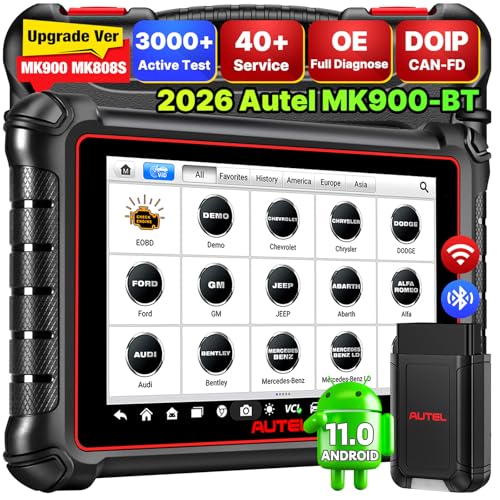
- 💯【Conta.ct us for Support Directly】If you met any...
- 🔥🔥🔥【2026 AUTEL FLAGSHIP MK900BT MK900-BT, NEW...
- 🚗【3000+ ACTIVE TESTS (50➡3000+), SAME AS MS...
- 🚗【40+ HOT SERVICES FOR 150 MAKES (28+➡40+)】Full...
- 🚗【OE ALL SYSTEM DIAGNOSE, AUTO SCAN 2.0: SCAN LICENSE...
Search NHTSA Database for Recalls
Search NHTSA Database for (TSB's) Technical Service Bulletins
Technical Service Bulletins TSB's List
Previous Investigation | Next Investigation |
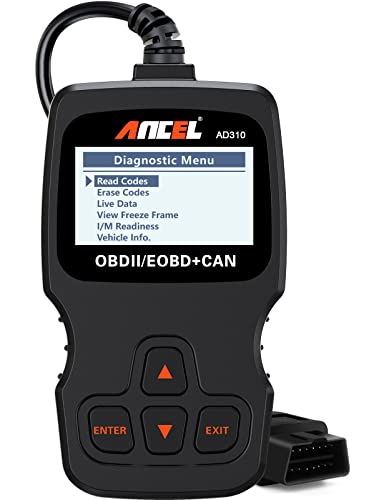
- CEL Doctor: The ANCEL AD310 is one of the best-selling OBD II scanners on the market and is recommended by Scotty Kilmer, a YouTuber and auto mechanic. It can easily determine the cause of the check engine light coming on. After repairing the vehicle's problems, it can quickly read and clear diagnostic trouble codes of emission system, read live data & hard memory data, view freeze frame, I/M monitor readiness and collect vehicle information.
- Sturdy and Compact: Equipped with a 2.5 foot cable made of very thick, flexible insulation. It is important to have a sturdy scanner as it can easily fall to the ground when working in a car. The AD310 OBD2 scanner is a well-constructed mechanic tool with a sleek design. It weighs 12 ounces and measures 8.9 x 6.9 x 1.4 inches. Thanks to its compact design and light weight, transporting the device is not a problem. The buttons are clearly labelled and the screen is large and displays results clearly.
- Accurate Fast and Easy to Use: The AD310 scanner can help you or your mechanic understand if your car is in good condition, provides exceptionally accurate and fast results, reads and clears engine trouble emission codes in seconds after you fixed the problem. This device will let you know immediately and fix the problem right away without any car knowledge. No need for batteries or a charger, get power directly from the OBDII Data Link Connector in your vehicle.
- OBDII Protocols and Car Compatibility: Many cheap scan tools do not really support all OBD2 protocols. AD310 scanner as it can support all OBDII protocols such as KWP2000, J1850 VPW, ISO9141, J1850 PWM and CAN. This device also has extensive vehicle compatibility with 1996 US-based, 2000 EU-based and Asian cars, light trucks, SUVs, as well as newer OBD2 and CAN vehicles both domestic and foreign. Pls confirm with our customer service whether it is compatible with your vehicle before purchasing.
- Home Necessity and Worthy to Own: This is an excellent code reader to travel or home with as it weighs less and it is compact in design. You can easily slide it in your backpack as you head to the garage, or put it on the dashboard, this will be a great fit for you. The AD310 is not only portable, but also accurate and fast in performance. Moreover, it covers various car brands and is suitable for people who just need a code reader to check their car.

- Multi-Functions - Practical Multi-Functions OBD2 code reader features built-in OBD2 DTC lookup library, which help you to determine the cause of the engine light, read code, erase code, view freeze frame, I/M ready, vehicle information, data flow, real-time curve, get vehicle speed information, calculate load value, engine coolant temperature, get engine speed.
- Wide Capability - Supports 9 protocols compatible with most 1996 US-Based, 2000 EU-Based and Asian cars, and newer OBD II & CAN domestic or import vehicles. Supports 6 languages - English,German, Dutch, Spanish, French, Italian.
- 2.8" LCD Display - Designed with a clear display 2.8" Large LCD screen - white backlight and contrast adjustment. No need any battery or charger, OBD reader gets the power directly from your vehicle through the OBDII Data Link Connector.
- Compact Design - Car diagnostic scanner is equipped with a 2.5 feet long cable and made of a very thick flexible insulator.There are 6 buttons on OBD2 Scanner:scroll up/down,enter/exit and buttons that quick query VIN vehicle number& the DTC fault code.
- ABS / Airbag codes NOT Supported - It is able to read and clear check engine information which is part of OBDII system, but it cannot work with non-OBDII systems, including ABS / Airbag / Oil Service Light, etc.

- 【Your Personal CEL Doctor – Read & Clear Engine Codes】The NT301 OBD2 scanner lets you read diagnostic trouble codes (DTCs), check em-issions readiness, turn off your Check Engine Light (CEL) or MIL, reset monitors, and view live data streams. It retrieves your vehicle's VIN instantly. Like all standard OBD2 scanners, it clears codes only after repairs are completed—if the issue persists, the code will return. Designed for DIYers who want to understand what’s really going on under the hood.
- 【Easy Code Reading – Just Plug & Play】Simply plug into the OBD2 port, turn the ignition to “ON” (engine off), and select the correct menu: Select OBDII-> Wait for seconds-> Select Read codes. For accurate results, ensure your vehicle is compatible and the OBD2 port is free from damage or wiring issues. No batteries needed— powered directly by your car.
- 【Live Data Graphing & Accuracy for Most OBD2 Vehicles】View and log live sensor data in graph form—monitor oxygen sensors, fuel trims, coolant temp, RPM, and more. Spot trends and suspicious values in real time. Compatible with most 1996+ gasoline cars, light trucks, and SUVs sold in the U.S., as well as many 2000+ European and Asian models. Also works on 12V diesel vehicles equipped with OBD2.
- 【S-mog Check Helper – Know Your Readiness Status at a Glance】With dedicated I/M readiness hotkeys and a simple Red-Yellow-Green LED indicator, you’ll instantly know if your vehicle is ready for em-issions testing. Built-in speaker provides audio feedback. No guesswork—just confidence before you head to the test center.
- 【A Must-Have Tool for Every Home Mechanic】Compact, rugged, and ready to use right out of the box. The 2.8” color screen is easy to read, even in daylight. No charging or setup required—just plug into the 16-pin DLC and start diagnosing. Recommended by professional mechanics on YouTube and trusted by DIYers worldwide.
Last update on 2026-03-20 / Affiliate links / Images from Amazon Product Advertising API
This product presentation was made with AAWP plugin.