
NHTSA ID Number: 11027587
Manufacturer Communication Number: SD-11-550
TSB/Document Date: 2026-01-12
Summary
Service Data Instructions: Bendix® BA-3800™ Single-Cylinder Compressor
If the PDF is very large, it may not load in the preview below.
Some older TSBs had multiple PDFs — visit the NHTSA Website to view all PDFs.
If the TSB PDF does not show, download or view it on the NHTSA Website.
Click on the (+) Plus Sign
Then Click on Associated Document(s)

- 💝【Questions? We’re Here Anytime】MK808S is a...
- 🔥🔥🔥【2026 NEWLY RELEASED BI-DIRECTIONAL...
- 【28+ MOST POPULAR RESET SERVICE FOR 150 MAKES】Autel...
- 【ALL SYSTEM DIAGNOSTICS, FACTORY-LEVEL SCANNER】The...
- 【AUT0 SCAN & AUT0V1N, 10X FASTER】How much have you spent...
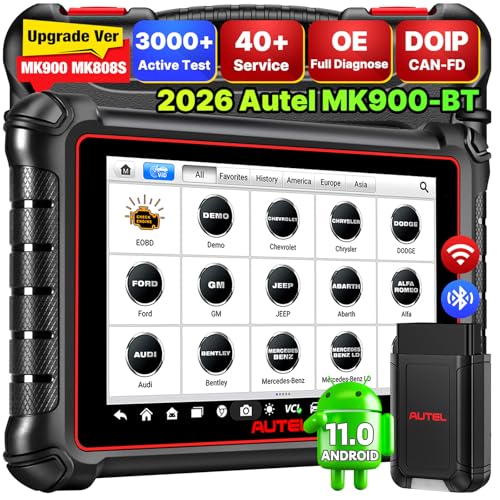
- 💯【Conta.ct us for Support Directly】If you met any...
- 🔥🔥🔥【2026 AUTEL FLAGSHIP MK900BT MK900-BT, NEW...
- 🚗【3000+ ACTIVE TESTS (50➡3000+), SAME AS MS...
- 🚗【40+ HOT SERVICES FOR 150 MAKES (28+➡40+)】Full...
- 🚗【OE ALL SYSTEM DIAGNOSE, AUTO SCAN 2.0: SCAN LICENSE...
Search NHTSA Database for Recalls
Search NHTSA Database for Vehicle Investigations
View Latest Vehicle Investigations
Search NHTSA Database for Vehicle Complaints
View Latest Vehicle Complaints
TSB/Document ID: SD-11-550
Replacement Service Bulletin Number:
MFR Communication Date: 2026-01-12
MFR Internal Campaign ID/Software Version:
Communication Type: Service Bulletin/Repair Instructions
NHTSA Components: SERVICE BRAKES
MFR Component System: Air Brake System
MFR Component Subsystem: Air Compressor
Previous TSB | Next TSB |
5. Any metal tubes should also be tight (torqued
properly) to the mating fitting. Inspect the metal tubes
for any cracks or breaks and replace if necessary.
6. Confirm the induction plumbing does not collapse
when the compressor is in the loaded mode.
1. Inspect the compressor discharge port, inlet cavity,
and discharge line for evidence of restrictions and
carbon build-up.
NOTE: If more than 1/16 in. of carbon is found, thoroughly
clean or replace the affected parts. In some cases, carbon
build-up indicates inadequate cooling.
2. Closely inspect the compressor cooling system.
3. Check all compressor coolant lines for kinks and
restrictions to flow. The minimum coolant line size is
3/8-in. I.D.
4. Check coolant lines for internal clogging from rust
scale.
NOTE: If coolant lines appear suspicious, check the coolant
flow and compare to the technical specifications at the end
of this document.
5. Carefully inspect the coolant system for restrictions.
COMPRESSOR LUBRICATION
NOTE: The compressor utilizes an internal oil feed design.
To inspect compressor lubrication, complete the following
steps:
1. Check the exterior of the compressor (e.g. around
the mounting face) for the presence of oil seepage.
2. Refer to BW1971, Advanced Troubleshooting Guide
for Air Brake Compressors, on B2Bendix.com
for appropriate tests and corrective action, if needed.
3. Refer to the technical specifications at the end of this
document for oil pressure minimum values.
4. Repair or replace the oil sealing ring if damage or
seepage is found.
NOTE: All reciprocating compressors pass a minimal amount
of oil. Air dryers will remove the majority of oil before it can
enter the air brake system. If compressor oil passing is
suspected, refer to BW1971, Advanced Troubleshooting
Guide for Brake Compressors, on B2Bendix.com for the
symptoms and corrective actions.
7. Check for any other forms of inlet restrictions that
would increase intake vacuum when in the loaded
mode.
7
COMPRESSOR DRIVE
To inspect compressor drive alignment and functionality,
complete the following steps:
1. Check for noisy compressor operation, which could
indicate excessive drive component wear. Adjust
and/or replace as necessary.
2. Check all compressor mounting bolts and retighten
evenly if necessary.
3. Inspect for oil leakage. Replace parts or the
compressor as necessary.
IMPORTANT
Replacement air governors must have a minimum
cut-in pressure of 94 psi. The cut-in pressure is the
lowest system pressure registered in the gauges before
the compressor resumes compressing air.
Compressors with no signal line to the unloader port should
have a vent cap (e.g. Bendix Part Number 222797) installed
in the port. Under no circumstances should the port be
plugged or left open.
COMPRESSOR UNLOADER AND GOVERNOR
4. SERVICE TESTS
Test and inspect the compressor unloader and governor
system for proper operation and pressure setting by
completing the following steps:
GENERAL
1. Using shop air, pressurize the unloader port of the
compressor. With the unloader port pressurized,
listen for an audible leak near the center bolt of the
compressor. Check for leakage at the unloader port.
If leakage is present, replace leaking or worn o-rings.
Center Bolt Vent
The compressor operating and leakage tests listed
below need not be performed on a regular basis. These
tests should be performed when it is suspected that
leakage is substantially affecting compressor build-up
performance, or when it is suspected that the compressor
is “cycling” between the loaded (pumping) and unloaded
(non-pumping) modes due to unloader leakage.
IN-SERVICE OPERATING TESTS
Compressor Performance: Build-up Test
This test is performed with the vehicle parked and the engine
operating at maximum recommended governed speed.
1. Fully charge the air system to governor cut-out (air
dryer purges).
2. Pump the service brake pedal to lower the system
air pressure below 80 psi using the dash gauges.
3. As the air pressure builds back up, measure the
time from when the dash gauge passes 85 psi to the
time it passes 100 psi. The time should not exceed
40 seconds.
4. If the time exceeds 40 seconds, test for (and fix)
any air leaks, and then re-test the compressor
performance.
Figure 9 – Center Bolt Vent
2. Make certain the unloader system lines are
connected as illustrated in Figure 8.
3. Cycle the compressor through the loaded and
unloaded cycle several times. Make certain
that the governor cuts in (compressor resumes
compressing air) at a minimum of 94 psi (cut-out
should be approximately 15 - 20 psi greater than
cut-in pressure). Adjust or replace the governor as
required.
NOTE: Make sure the compressor cycles to the loaded and
unloaded conditions promptly. If prompt action is not noted,
replace the governor and/or repair the unloader line.
8
5. If the vehicle does not pass the test the second
time, refer to BW1971, Advanced Troubleshooting
Guide for Air Brake Compressors, on B2Bendix.com
to assist your investigation of the cause(s).
NOTE: All new vehicles are certified using the FMVSS 121
air pressure build-up time requirements test by the vehicle
manufacturer; however, the above test is a useful guide for
in-service vehicles.
Optional Comparative Performance Check
INLET, DISCHARGE, AND UNLOADER
It may be useful to also conduct the build-up test with the
engine running at high idle (instead of the maximum governed
speed), and record the time required to raise the system
pressure a selected range (e.g., from 90 to 120 psi, or from
100 to 120 psi, etc.) in the vehicle’s maintenance files.
Subsequent build-up times throughout the vehicle’s service
life can then be compared to the first one recorded.
NOTE: In order to test the inlet and discharge valves and the
unloader piston, it is necessary to have shop air pressure
and an assortment of fittings. A soap solution is also required.
NOTE: The 40-second guide in the test above does not apply
to this build-up time. If the performance degrades significantly
over time, refer to BW1971, Advanced Troubleshooting
Guide for Brake Compressors, on B2Bendix.com to assist
investigation of the cause(s).
NOTE: When comparing build-up times, be sure to make an
allowance for any air system modifications which would cause
longer times, such as adding air components or reservoirs.
Always check for air system leakage.
LEAKAGE TESTS
Refer to the standard Air Brake System and Accessory
Leakage test found in BW1971, Advanced Troubleshooting
Guide for Air Brake Compressors, on B2Bendix.com.
To test the inlet and discharge valves and the unloader piston,
complete the following steps:
1. With the engine shut off, drain ALL air pressure from
the vehicle.
2. Disconnect the inlet and discharge lines and remove
the governor or its line or adapter fitting.
3. Using shop air, pressurize the unloader port of the
compressor. With the unloader port pressurized,
listen for an audible leak near the center bolt of the
compressor. Check for leakage at the unloader port.
If leakage is present, replace leaking or worn o-rings.
See Figure 9.
4. Apply air pressure to the discharge port and then
apply and release air pressure to the inlet port. Apply
a soap solution around the inlet port. Listen for an
escape of air, and watch for soap bubble development
at the compressor inlet. A barely audible or visible
escape of air is generally acceptable.
NOTE: Leakage in the air supply system (components
connected to the supply reservoir such as the governor, air
dryer, reservoir drain cocks, safety valve, and check valves)
will not be registered on the vehicle dash gauges and must
be tested separately. Refer to the applicable documentation
for individual component leakage tests and the Test and
Checklist published in BW5057, Bendix Air Brake System
Handbook, and on the back of BW1396, Bendix Dual Circuit
Brake System Troubleshooting Card, on B2Bendix.com.
NOTE: If excessive leakage is noted in Steps 3 or 4,
replace the compressor with a genuine Bendix replacement
available from any authorized Bendix parts outlet.
CYLINDER HEAD
Unloader leakage is generally exhibited by excessive
compressor cycling between the loaded and unloaded
condition.
To inspect for cylinder head gasket air leakage, complete
the following steps:
1. With the engine running, lower air system pressure
to 60 psi and apply a soap solution around the
cylinder head.
2. Check the gasket between the cylinder head and
the valve plate assembly, as well as the inlet reed
valve/gasket between the valve plate assembly and
the crankcase for air leakage.
3. No leakage is permitted. If leakage is detected,
replace the compressor.
While it is possible to test for inlet, discharge, and unloader
piston leakage, it may not be practical to do so. Inlet and
discharge valve leakage can generally be detected by longer
compressor build-up and recovery times. Compare current
compressor build-up times with the last several recorded
times. Make certain to test for air system leakage before
making a determination that performance has been lost.
To check for unloader leakage, complete the following steps:
1. With service and supply system leakage below the
maximum allowable limits and the vehicle parked,
bring system pressure to governor cut-out and allow
the engine to idle.
2. The compressor should remain unloaded for a
minimum of 5-10 minutes. If compressor cycling
occurs more frequently and service and supply
system leakage is within tolerance, replace the
compressor or repair the compressor unloader
system using a genuine Bendix maintenance kit
available from authorized Bendix parts outlets.
9
5. COMPRESSOR REPLACEMENT
READ THE GENERAL SAFETY GUIDELINES ON PAGE
2 OF THIS DOCUMENT BEFORE PROCEEDING.
5. Remove any supporting bracketing attached to
the compressor and note the position(s) on the
compressor to aid in reassembly.
GENERAL
6. Remove the mounting bolts that retain the compressor
to the engine block. Remove the compressor from
the vehicle.
The following disassembly and assembly procedure is
for reference purposes and assumes that a repair of the
compressor is being undertaken. Several maintenance
kits are available and the instructions provided with these
parts and kits should be followed in lieu of the instructions
presented here.
7. Inspect the drive gear and associated drive parts
for visible wear or damage. If the compressor drive
gear is worn or damaged, the compressor and the
compressor drive gear must be replaced. Refer to
the engine manufacturer's service documentation to
address the associated engine drive parts.
Description
Part Number
Unloader Kit
K203786
8. If the compressor is being replaced, STOP HERE
and proceed to the Installing the Compressor
section on page 13.
Discharge Safety Valve
K039542
Compressor to Engine
Mounting Face Sealant
Supplied by the Engine
Manufacturer
PREPARATION FOR DISASSEMBLY
Compressor to Engine Oil Seal
O-ring (some applications)
Supplied by the Engine
Manufacturer
Refer to Figure 10 during the entire disassembly and
assembly procedure.
MAINTENANCE KITS AND SERVICE PARTS
1. Place a clean rag over the openings that expose the
gear and crankshaft/connecting rod assembly. No
contamination is permitted in these areas.
NOTE: All components shown in Figure 10 with a key number
are available in kits and/or as individual service parts.
2. Remove road dirt and grease from the exterior of the
compressor with a cleaning solvent.
REMOVAL
In many instances, it may not be necessary to remove the
compressor from the vehicle when installing the various
maintenance kits and service parts. The maintenance
technician must assess the installation and determine the
correct course of action. These instructions are general
and are intended to be a guide. In some cases, additional
preparations and precautions are necessary. In all cases
follow the instructions contained in the vehicle maintenance
manual in lieu of the instructions, precautions, and procedures
presented in this document.
To remove the compressor from the vehicle, complete the
following steps:
1. Block the wheels of the vehicle and drain the air
pressure from all the reservoirs in the system.
2. Drain the engine cooling system and the cylinder
head of the compressor. Identify and disconnect all
air, water, and oil lines leading to the compressor.
Take care not to lose the face seals for the fluid
fittings, as they will be needed during reassembly.
3. Remove as much road dirt and grease from the
exterior of the compressor as possible. Take care
not to lose the face seal, as it will be needed during
reassembly.
4. Remove the discharge fitting, if applicable, and note
the position on the compressor to aid in reassembly.
Take care not to lose the face seal, as it will be
needed during reassembly.
10
3. Prior to disassembly, make certain that the appropriate
kits are available. Refer to B2Bendix.com.
UNLOADER VALVE
To disassemble the unloader valve, complete the following
steps:
1. To restrain the spring force exerted by the return
spring (5) of the unloader assembly, hold the
unloader cover in place while removing the two
unloader cover cap screws (8).
2. Carefully release the hold on the unloader cover
until the spring force is relaxed, then remove the
unloader cover.
3. Remove the unloader cover gasket (7).
4. Remove the balance piston (3) with its o-ring (1),
return spring (5), and the unloader piston assembly,
which includes the unloader piston (6), large
unloader piston o-ring (2), and the medium unloader
piston o-ring (4), from the cylinder head.
Unloader Cover Cap Screw (2)
8
7
Balance Piston
3
5
4
Return Spring
Unloader Piston
6
2
Unloader Cover
Unloader Cover Gasket
1
Cylinder Head
Cap Screw (6)
Large Unloader Piston O-ring
Medium Unloader Piston O-ring
Cylinder Head
Cylinder Head Plug
10 Safety Valve
Intermediate Plate
Cylinder Head Gasket (2)
Valve Plate Assembly
Inlet Reed Valve/Gasket
Piston Assembly
Connecting Rod Assembly
Coolant O-ring
Crankcase Plug (3)
Journal Bearing
Rear Cover
Crankcase
Crankshaft
Rear Cover Screw (3)

- CEL Doctor: The ANCEL AD310 is one of the best-selling OBD II scanners on the market and is recommended by Scotty Kilmer, a YouTuber and auto mechanic. It can easily determine the cause of the check engine light coming on. After repairing the vehicle's problems, it can quickly read and clear diagnostic trouble codes of emission system, read live data & hard memory data, view freeze frame, I/M monitor readiness and collect vehicle information.
- Sturdy and Compact: Equipped with a 2.5 foot cable made of very thick, flexible insulation. It is important to have a sturdy scanner as it can easily fall to the ground when working in a car. The AD310 OBD2 scanner is a well-constructed mechanic tool with a sleek design. It weighs 12 ounces and measures 8.9 x 6.9 x 1.4 inches. Thanks to its compact design and light weight, transporting the device is not a problem. The buttons are clearly labelled and the screen is large and displays results clearly.
- Accurate Fast and Easy to Use: The AD310 scanner can help you or your mechanic understand if your car is in good condition, provides exceptionally accurate and fast results, reads and clears engine trouble emission codes in seconds after you fixed the problem. This device will let you know immediately and fix the problem right away without any car knowledge. No need for batteries or a charger, get power directly from the OBDII Data Link Connector in your vehicle.
- OBDII Protocols and Car Compatibility: Many cheap scan tools do not really support all OBD2 protocols. AD310 scanner as it can support all OBDII protocols such as KWP2000, J1850 VPW, ISO9141, J1850 PWM and CAN. This device also has extensive vehicle compatibility with 1996 US-based, 2000 EU-based and Asian cars, light trucks, SUVs, as well as newer OBD2 and CAN vehicles both domestic and foreign. Pls confirm with our customer service whether it is compatible with your vehicle before purchasing.
- Home Necessity and Worthy to Own: This is an excellent code reader to travel or home with as it weighs less and it is compact in design. You can easily slide it in your backpack as you head to the garage, or put it on the dashboard, this will be a great fit for you. The AD310 is not only portable, but also accurate and fast in performance. Moreover, it covers various car brands and is suitable for people who just need a code reader to check their car.

- Multi-Functions - Practical Multi-Functions OBD2 code reader features built-in OBD2 DTC lookup library, which help you to determine the cause of the engine light, read code, erase code, view freeze frame, I/M ready, vehicle information, data flow, real-time curve, get vehicle speed information, calculate load value, engine coolant temperature, get engine speed.
- Wide Capability - Supports 9 protocols compatible with most 1996 US-Based, 2000 EU-Based and Asian cars, and newer OBD II & CAN domestic or import vehicles. Supports 6 languages - English,German, Dutch, Spanish, French, Italian.
- 2.8" LCD Display - Designed with a clear display 2.8" Large LCD screen - white backlight and contrast adjustment. No need any battery or charger, OBD reader gets the power directly from your vehicle through the OBDII Data Link Connector.
- Compact Design - Car diagnostic scanner is equipped with a 2.5 feet long cable and made of a very thick flexible insulator.There are 6 buttons on OBD2 Scanner:scroll up/down,enter/exit and buttons that quick query VIN vehicle number& the DTC fault code.
- ABS / Airbag codes NOT Supported - It is able to read and clear check engine information which is part of OBDII system, but it cannot work with non-OBDII systems, including ABS / Airbag / Oil Service Light, etc.

- 【Your Personal CEL Doctor – Read & Clear Engine Codes】The NT301 OBD2 scanner lets you read diagnostic trouble codes (DTCs), check em-issions readiness, turn off your Check Engine Light (CEL) or MIL, reset monitors, and view live data streams. It retrieves your vehicle's VIN instantly. Like all standard OBD2 scanners, it clears codes only after repairs are completed—if the issue persists, the code will return. Designed for DIYers who want to understand what’s really going on under the hood.
- 【Easy Code Reading – Just Plug & Play】Simply plug into the OBD2 port, turn the ignition to “ON” (engine off), and select the correct menu: Select OBDII-> Wait for seconds-> Select Read codes. For accurate results, ensure your vehicle is compatible and the OBD2 port is free from damage or wiring issues. No batteries needed— powered directly by your car.
- 【Live Data Graphing & Accuracy for Most OBD2 Vehicles】View and log live sensor data in graph form—monitor oxygen sensors, fuel trims, coolant temp, RPM, and more. Spot trends and suspicious values in real time. Compatible with most 1996+ gasoline cars, light trucks, and SUVs sold in the U.S., as well as many 2000+ European and Asian models. Also works on 12V diesel vehicles equipped with OBD2.
- 【S-mog Check Helper – Know Your Readiness Status at a Glance】With dedicated I/M readiness hotkeys and a simple Red-Yellow-Green LED indicator, you’ll instantly know if your vehicle is ready for em-issions testing. Built-in speaker provides audio feedback. No guesswork—just confidence before you head to the test center.
- 【A Must-Have Tool for Every Home Mechanic】Compact, rugged, and ready to use right out of the box. The 2.8” color screen is easy to read, even in daylight. No charging or setup required—just plug into the 16-pin DLC and start diagnosing. Recommended by professional mechanics on YouTube and trusted by DIYers worldwide.
Last update on 2026-03-26 / Affiliate links / Images from Amazon Product Advertising API
This product presentation was made with AAWP plugin.