
NHTSA ID Number: 11027818
Manufacturer Communication Number: B26-039
TSB/Document Date: 2026-01-27
Summary
Service Bulletin - A warning message "Service Leveling System" displaying on dash with an active C1194 DTC set against the K5 Automatic Level Control Module due to potential internal contamination of the Air Suspension Control Module Manifold.
If the PDF is very large, it may not load in the preview below.
Some older TSBs had multiple PDFs — visit the NHTSA Website to view all PDFs.
If the TSB PDF does not show, download or view it on the NHTSA Website.
Click on the (+) Plus Sign
Then Click on Associated Document(s)

- 💝【Questions? We’re Here Anytime】MK808S is a...
- 🔥🔥🔥【2026 NEWLY RELEASED BI-DIRECTIONAL...
- 【28+ MOST POPULAR RESET SERVICE FOR 150 MAKES】Autel...
- 【ALL SYSTEM DIAGNOSTICS, FACTORY-LEVEL SCANNER】The...
- 【AUT0 SCAN & AUT0V1N, 10X FASTER】How much have you spent...
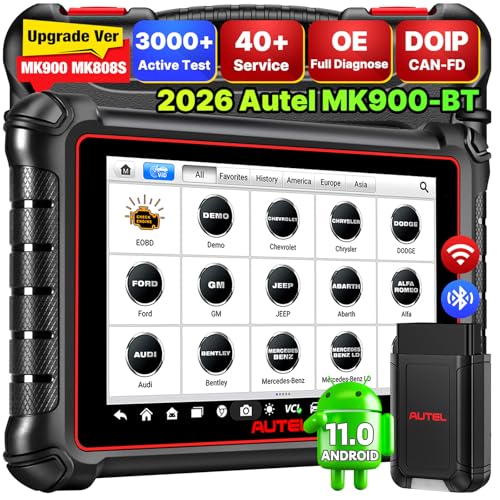
- 💯【Conta.ct us for Support Directly】If you met any...
- 🔥🔥🔥【2026 AUTEL FLAGSHIP MK900BT MK900-BT, NEW...
- 🚗【3000+ ACTIVE TESTS (50➡3000+), SAME AS MS...
- 🚗【40+ HOT SERVICES FOR 150 MAKES (28+➡40+)】Full...
- 🚗【OE ALL SYSTEM DIAGNOSE, AUTO SCAN 2.0: SCAN LICENSE...
Search NHTSA Database for Recalls
Search NHTSA Database for Vehicle Investigations
View Latest Vehicle Investigations
Search NHTSA Database for Vehicle Complaints
View Latest Vehicle Complaints
TSB/Document ID: B26-039
Replacement Service Bulletin Number:
MFR Communication Date: 2026-01-15
MFR Internal Campaign ID/Software Version:
Communication Type: Service Bulletin/Repair Instructions
NHTSA Components: SUSPENSION
MFR Component System:
MFR Component Subsystem:
Previous TSB | Next TSB |
Service Bulletin
26-039
January 15, 2026
Version 1
"Service Leveling System" Warning Message with DTC C1194 Air
Reservoir Progress Level
APPLIES TO
Year
Model
Trim Level
VIN Range
2024
ZDX
TYPE S
ALL
SYMPTOM
Warning message "Service Leveling System" displaying on dash with an active C1194 DTC set against the K5 Automatic
Level Control Module.
POSSIBLE CAUSE
The cause of the condition may be internal contamination of the Air Suspension Control Module Manifold.
CORRECTIVE ACTION
Perform inspection of air suspension system for leaks. If no leaks are found, replace Air Suspension Control Module
Manifold.
PARTS INFORMATION
Part Name
Part Number
Quantity
Air Suspension Control Module Manifold
86587321
1
Tool Name
Tool Number
Quantity
Air Suspension Inflator
07AAK-TYBA102
1
TOOL INFORMATION
WARRANTY CLAIM INFORMATION
The normal warranty applies.
Operation
Number
4145A6
Description
Air Suspension
Control Module
Manifold replacement
(Includes inspection and
DTC clear)
Flat Rate
Time
Defect Code
Symptom
Code
Template ID
Failed Part Number
2.2 hr
08103
03217
B26039A
86587321
Skill Level: Repair Technician
CLIENT INFORMATION: The information in this bulletin is intended for use only by skilled technicians who have the proper tools, equipment, and
training to correctly and safely maintain your vehicle. These procedures should not be attempted by “do-it-yourselfers,” and you should not assume this
bulletin applies to your vehicle, or that your vehicle has the condition described. To determine whether this information applies, contact an authorized
Acura automobile dealer.
© 2026 American Honda Motor Co., Inc. – All Rights Reserved
Page 1 of 7
INSPECTION PROCEDURE
CAUTION
Do NOT remove Automatic Level Control System components when the system is pressurized. Disconnecting a
pressurized air line that is connected to an Automatic Level Control System component can cause damage to
components and personal injury.
1. Enter service mode, use the vehicle’s infotainment screen: Settings > Vehicle > Suspension > Service Mode, move
the slider to the right to activate Service Mode.
2. Using the MDI2, Verify the Pneumatic Connection Pressure Test passes, and the reservoir pressure is 4–20 bar.
Control Function > Automatic Level Control Module > Pneumatic Connection Pressure Test > Select Enter
3. Did the Pneumatic Connection Pressure Test Pass?
NO: Proceed to step 4.
YES: Proceed to step 9.
4. Install the air suspension inflator (P/N 07AAK-TYBA102) to the automatic level control air supply reservoir air valve and
set the regulator on the nitrogen tank to 15 Bar.
5. Raise and support the vehicle.
6. Open the air suspension charger valve on the pressure gauge to fill the automatic level control air supply reservoir.
7. Fill the automatic level control air supply reservoir to 15 Bar.
8. Install the automatic level control air supply reservoir coupling cap and tighten 2 N·m (18 lb-in).
9. Inspect for damage, improper seating of air lines, evidence of water/ice, or leaks using soapy water on the following
components:
•
Air Suspension Control Module Manifold
•
Air Strut Fittings
Page 2 of 7
•
Air line from the Air Suspension Control Module Manifold to the Automatic Level Control Air Supply Reservoir.
10. Was damage, improper air line seating, evidence of water/ice, or leaks found?
YES: This bulletin does not apply. Continue with normal troubleshooting.
NO: Proceed to Repair Procedure.
REPAIR PROCEDURE
1. Place hoists under lifting points to prevent vehicle from lowering when deflating Air Supply Reservoir
NOTE: DO NOT fully lower the vehicle to the floor until the air suspension has been fully pressurized. Lowering an air
suspension vehicle without a charged system can cause severe damage to the air springs.
2. Connect the MDI2 scan tool to the deflate automatic level control air supply reservoir.
3. Deflate Air Supply Reservoir:
Control Function > Automatic Level Control Module > Complete Deflate > Air Supply Reservoir > Select Enter
NOTE: Repeat process as need to reach 1 bar. Deflating individual air springs is NOT necessary.
4. Remove the air intake line (1) from the body grommet.
Page 3 of 7
5. Remove the air line retainer clips (1).
6. Remove the 7 air line nuts (1) from the air suspension controller.
NOTE: The air lines and air suspension controller are color coded to aid with installation
7. Disconnect the electrical connectors (2) and release the wiring harness retainers (1).
Page 4 of 7
8. Remove Automatic Level Control Air Compressor hardware (1) and Automatic Level Control Air Compressor (2).
9. Remove Automatic Level Control Air Compressor (1) from Air Suspension Control Module Bracket.
10. Remove Air Suspension Control Module Manifold assembly hardware.
Page 5 of 7
11. Separate the Air Suspension Control Module (2) from the Air Suspension Control Module Manifold assembly (1).
12. Replace the Air Suspension Control Module Manifold assembly, then torque bolts to 2.5 N·m (22 lb-in).
13. Install the Air Suspension Control Module Manifold assembly to the Air Suspension Control Module Bracket, then torque
bolts to 5.65 N·m (50 lb-in)
14. Reinstall the Air Suspension Control Module Bracket, then torque hardware to 22 N·m (16 lb-ft).
15. Reinstall the 7 Automatic Level Control Air Compressor tube fittings to the Air Suspension Control Module Manifold
Assembly, then torque lines to 5.5 N·m (49 lb-in).
16. Reconnect the electrical connectors and resecure the wiring harness retainers.
17. Remove the Automatic Level Control Air Supply Reservoir Coupling Cap (1).
18. Install 07AAK-TYBA102 Air Spring Inflator to the automatic level control air supply reservoir air valve (2) and set the
regulator on the nitrogen tank to 18 Bar (261 PSI).
19. Open the valve on the pressure gage to fill the automatic level control air supply reservoir.
20. Using the shop nitrogen tank, fill the automatic level control air supply reservoir to 18 Bar (261.068 PSI).
21. Close the pressure gauge valve and remove Air Spring Inflator from the automatic level control air supply reservoir.
22. Install the automatic level control air supply reservoir coupling cap, then torque to 2 N·m (18 lb-in).
23. Partially raise the vehicle till the wheels are off the ground.
Page 6 of 7
24. Using MDI2 tool, equalize the pressure in all air springs then use short-term inflate to increase pressure to the air
springs:
•
•
Front: 7 Bar (101.526 PSI)
Rear: 7 Bar (101.526 PSI)
25. Using MDI2, verify automatic level control air supply tank pressure is at 18 Bar (261.068 PSI), if not repeat steps 17-23.
26. Reinstall Rear Compartment Floor Stowage Compartment Divider.
27. Clear DTC.
28. Verify DTC does not reset.
Page 7 of 7
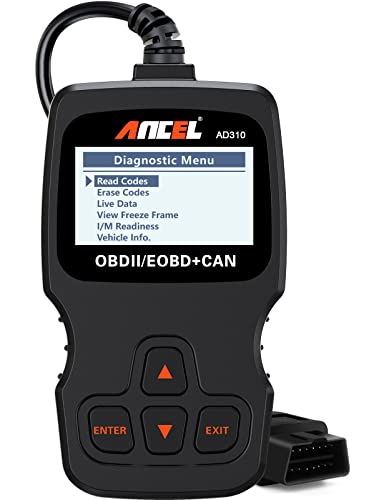
- CEL Doctor: The ANCEL AD310 is one of the best-selling OBD II scanners on the market and is recommended by Scotty Kilmer, a YouTuber and auto mechanic. It can easily determine the cause of the check engine light coming on. After repairing the vehicle's problems, it can quickly read and clear diagnostic trouble codes of emission system, read live data & hard memory data, view freeze frame, I/M monitor readiness and collect vehicle information.
- Sturdy and Compact: Equipped with a 2.5 foot cable made of very thick, flexible insulation. It is important to have a sturdy scanner as it can easily fall to the ground when working in a car. The AD310 OBD2 scanner is a well-constructed mechanic tool with a sleek design. It weighs 12 ounces and measures 8.9 x 6.9 x 1.4 inches. Thanks to its compact design and light weight, transporting the device is not a problem. The buttons are clearly labelled and the screen is large and displays results clearly.
- Accurate Fast and Easy to Use: The AD310 scanner can help you or your mechanic understand if your car is in good condition, provides exceptionally accurate and fast results, reads and clears engine trouble emission codes in seconds after you fixed the problem. This device will let you know immediately and fix the problem right away without any car knowledge. No need for batteries or a charger, get power directly from the OBDII Data Link Connector in your vehicle.
- OBDII Protocols and Car Compatibility: Many cheap scan tools do not really support all OBD2 protocols. AD310 scanner as it can support all OBDII protocols such as KWP2000, J1850 VPW, ISO9141, J1850 PWM and CAN. This device also has extensive vehicle compatibility with 1996 US-based, 2000 EU-based and Asian cars, light trucks, SUVs, as well as newer OBD2 and CAN vehicles both domestic and foreign. Pls confirm with our customer service whether it is compatible with your vehicle before purchasing.
- Home Necessity and Worthy to Own: This is an excellent code reader to travel or home with as it weighs less and it is compact in design. You can easily slide it in your backpack as you head to the garage, or put it on the dashboard, this will be a great fit for you. The AD310 is not only portable, but also accurate and fast in performance. Moreover, it covers various car brands and is suitable for people who just need a code reader to check their car.

- Multi-Functions - Practical Multi-Functions OBD2 code reader features built-in OBD2 DTC lookup library, which help you to determine the cause of the engine light, read code, erase code, view freeze frame, I/M ready, vehicle information, data flow, real-time curve, get vehicle speed information, calculate load value, engine coolant temperature, get engine speed.
- Wide Capability - Supports 9 protocols compatible with most 1996 US-Based, 2000 EU-Based and Asian cars, and newer OBD II & CAN domestic or import vehicles. Supports 6 languages - English,German, Dutch, Spanish, French, Italian.
- 2.8" LCD Display - Designed with a clear display 2.8" Large LCD screen - white backlight and contrast adjustment. No need any battery or charger, OBD reader gets the power directly from your vehicle through the OBDII Data Link Connector.
- Compact Design - Car diagnostic scanner is equipped with a 2.5 feet long cable and made of a very thick flexible insulator.There are 6 buttons on OBD2 Scanner:scroll up/down,enter/exit and buttons that quick query VIN vehicle number& the DTC fault code.
- ABS / Airbag codes NOT Supported - It is able to read and clear check engine information which is part of OBDII system, but it cannot work with non-OBDII systems, including ABS / Airbag / Oil Service Light, etc.

- 【Your Personal CEL Doctor – Read & Clear Engine Codes】The NT301 OBD2 scanner lets you read diagnostic trouble codes (DTCs), check em-issions readiness, turn off your Check Engine Light (CEL) or MIL, reset monitors, and view live data streams. It retrieves your vehicle's VIN instantly. Like all standard OBD2 scanners, it clears codes only after repairs are completed—if the issue persists, the code will return. Designed for DIYers who want to understand what’s really going on under the hood.
- 【Easy Code Reading – Just Plug & Play】Simply plug into the OBD2 port, turn the ignition to “ON” (engine off), and select the correct menu: Select OBDII-> Wait for seconds-> Select Read codes. For accurate results, ensure your vehicle is compatible and the OBD2 port is free from damage or wiring issues. No batteries needed— powered directly by your car.
- 【Live Data Graphing & Accuracy for Most OBD2 Vehicles】View and log live sensor data in graph form—monitor oxygen sensors, fuel trims, coolant temp, RPM, and more. Spot trends and suspicious values in real time. Compatible with most 1996+ gasoline cars, light trucks, and SUVs sold in the U.S., as well as many 2000+ European and Asian models. Also works on 12V diesel vehicles equipped with OBD2.
- 【S-mog Check Helper – Know Your Readiness Status at a Glance】With dedicated I/M readiness hotkeys and a simple Red-Yellow-Green LED indicator, you’ll instantly know if your vehicle is ready for em-issions testing. Built-in speaker provides audio feedback. No guesswork—just confidence before you head to the test center.
- 【A Must-Have Tool for Every Home Mechanic】Compact, rugged, and ready to use right out of the box. The 2.8” color screen is easy to read, even in daylight. No charging or setup required—just plug into the 16-pin DLC and start diagnosing. Recommended by professional mechanics on YouTube and trusted by DIYers worldwide.
Last update on 2026-03-25 / Affiliate links / Images from Amazon Product Advertising API
This product presentation was made with AAWP plugin.