
NHTSA ID Number: 11027967
Manufacturer Communication Number: SD-13-47572A
TSB/Document Date: 2026-02-02
Summary
Bendix® TABS‑6™ Advanced Multi-Channel (MC) (ABS/TRSP) and MC LITE (ABS Only) Trailer Antilock Braking System (ABS) Modules The Bendix® TABS‑6™ Advanced (ADV) Multi-Channel (MC) module (Generation 2) is an integrated, MC (4S/2M) trailer service brake module controller for air-braked, heavy-duty semi trailers that features the Bendix® Antilock Brake System (ABS) and Bendix® Trailer Roll Stability Program (TRSP®). TABS-6 ADV MC offers a LITE version, which provides an ABS-only functionality while keeping the benefits of having a multi-channel system. NOTE: All references to the TABS-6 module in this document – aside from TRSP-related references – also include the MC LITE module. Installed on semi-trailers, the module acts as a relay valve during service braking, but during ABS events, it may intervene to help maintain vehicle stability by modulating brake pressure at the wheel ends. The Bendix TRSP monitors the trailer's motion and reduces the risk of rollovers by automatically applying the brakes when a risk of a rollover is detected. NOTE: The Bendix TRSP is not available for TABS-6 MC LITE.
If the PDF is very large, it may not load in the preview below.
Some older TSBs had multiple PDFs — visit the NHTSA Website to view all PDFs.
If the TSB PDF does not show, download or view it on the NHTSA Website.
Click on the (+) Plus Sign
Then Click on Associated Document(s)
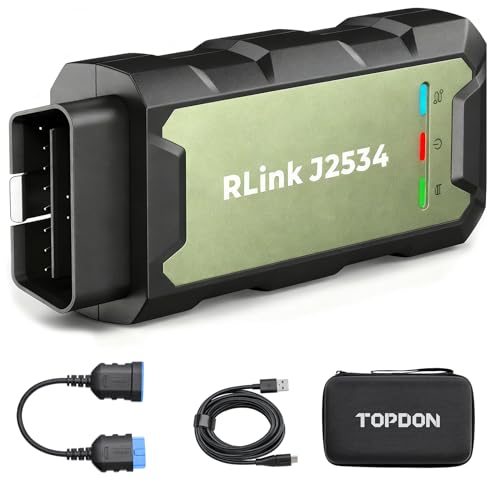
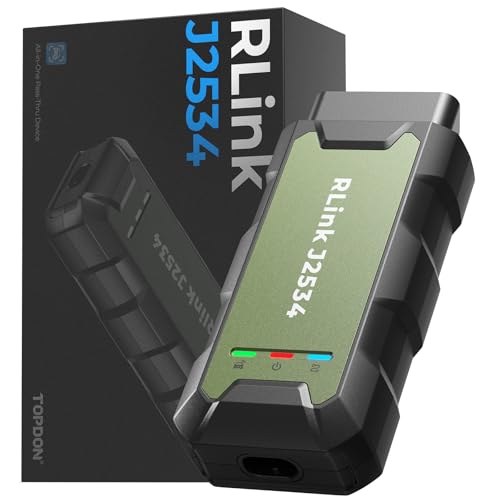
- Advanced VCI Box, Industry-leading J2534 Pass-Thru...
- High-Speed OEM-Level Diagnostics & Programming: Unlock true...
- Coverage for 17 Car Brands & Ultra Reliability: Works...
- User-Friendly RLink Platform & Expert Support: TOPDON’s...
- 6.6 ft USB-C Cable & Portable Storage Case: The RLink J...
Search NHTSA Database for Recalls
Search NHTSA Database for Vehicle Investigations
View Latest Vehicle Investigations
Search NHTSA Database for Vehicle Complaints
View Latest Vehicle Complaints
TSB/Document ID: SD-13-47572A
Replacement Service Bulletin Number:
MFR Communication Date: 2026-01-31
MFR Internal Campaign ID/Software Version:
Communication Type: Service Bulletin/Repair Instructions
NHTSA Components: SERVICE BRAKES
MFR Component System: Trailer
MFR Component Subsystem: ABS
Previous TSB | Next TSB |
normally. No service to the ABS
unit is needed.
33
SECTION C: TROUBLESHOOTING THE TRAILER-MOUNTED
ABS INDICATOR LAMP CIRCUITRY
Is the tractor ignition or battery
box (if not using tractor as power source)
switched ON?
Switch the ignition ON and re-check if the trailer
ABS indicator lamp does a power-up check. Go
to Troubleshooting Section A.
NO
YES
Is SAE J560
cable (green, spiral)
connected from the tractor/battery box to the
trailer?
Connect an SAE J560 cable. Verify that ABS
warning lamp turns ON and OFF during ignition
power-up.
NO
YES
Check the
tractor for constant
power (blue wire). Does the trailer
Electronic Control Unit (ECU) perform an ABS
indicator lamp power-on test when the brake
is applied while the trailer is
stationary?
YES
NO
Troubleshoot the main trailer power harness for
mis-wiring, open circuits, and/or short circuits.
Add constant power (blue wire) to the center pin of the SAE J560 connector..
Looking into the TABS‑6 ADV MC Module 7-pin connector pigtail harness.
Pin 4 is the ground pin. Pin 5 is the ABS indicator lamp pin.
ACTION: If the trailer-mounted ABS indicator lamp did
not illuminate during the power-up sequence...
Troubleshoot the power supply to the ABS module. Go to
Section D. Continue if the power and ground wiring are OK.
ACTION: If the trailer-mounted ABS indicator lamp
remains ON after the standard power-up time interval of
approximately 2.5 seconds...
Determine if a module Diagnostic Trouble Code (DTC) exists
using any of the following methods:
• Blink code diagnostics, Section 19
• PC diagnostics, Section 21
Turn the power to the module OFF. Inspect the condition of
the ABS indicator lamp, connector, and ground. Using a volt/
ohm meter, verify continuity from the trailer chassis ground pin
(pin 4) to the ground pin of the indicator lamp.
If repairs are made, rerun the power-up sequence. Go to
Section A.
Continue if the indicator lamp and ground wire check out
OK.
With power to the ABS module OFF, disconnect the 7-pin
ECU connector.
Verify continuity from the ABS indicator lamp pin (pin 5) of
the ECU connector to the ABS indicator lamp connector.
If repairs are made, rerun the power-up sequence. Go to
Section A. If the condition persists, contact the Bendix Tech
Team.
34
• Bendix® Trailer Remote Diagnostic Unit (TRDU™) and
magnet, Section 21
• Bendix® Trailer Information Module, Section 21
If DTC(s) exist, and repairs are made, rerun the power-up
sequence. Go to Section A. If no DTCs are found, the ABS
module appears to be functioning normally, but the ABS lamp
remains on, continue to the next step.
With power to the ABS module OFF, disconnect the 7-pin
ECU connector.
Apply power to the trailer. If the ABS lamp illuminates,
there is a voltage short on the lamp circuit. Troubleshoot,
repair, and retest. Use a volt meter to check if there is a
short to the voltage on the warning lamp circuit between the
ABS indicator lamp pin (pin 5) and the lamp. If repairs are
made, rerun the power-up sequence. Go to Section A. If the
condition persists, replace the ABS module.
SECTION D: TROUBLESHOOTING THE POWER SUPPLY
Turn power to the module OFF.
Disconnect the 7-pin Electrical Control
Unit (ECU) connector.
Check for high resistance (corrosion,
wire/connector damage, or improper
termination) of the power lines, resulting
in a high voltage drop across the lines.
Measure the voltage under load by
placing a load, such as a type 1157
brake light bulb, between the ignition
power pin and the ground pin of the
ECU connector, while the lamp is in
place.
With ignition power to the trailer,
measure the voltage between the
ignition power (pin 1) and ground pin
(pin 4) of the ECU connector.
Repeat the voltage measurement
with brake lamp power to the trailer,
between the brake lamp power (pin 2)
and the ground pin (pin 4) of the ECU
connector.
Verify that the voltage drop
measurements are no less than 1.0
VDC from the vehicle voltage at both
the ignition and brake power inputs.
YES
With ignition
power to the
trailer (engine running),
measure the voltage between
the ignition power pin (pin 1) and the
ground pin
(pin 4) of the ECU connector.
Repeat the voltage measurement between the brake
lamp power pin (pin 2) and the ground pin (pin 4) of the ECU
connector, while the service brake is being applied (the
brake lamp power should be supplied to the ECU).
Can you verify that measurements found
are equal to the vehicle voltage
(within 1 VDC) at both the
ignition and brake power
inputs?
NO
Look for corroded or damaged wires or
connectors. Check the power supply.
If repairs are made, rerun the power-up
sequence. Go to Section A.
With a volt/ohm meter, check the power
and ground wiring. Look for corroded or
damaged wires or connectors.
Measure the loaded
voltage across a type
1157 brake light bulb.
If repairs are made, rerun the power-up
sequence. Go to Section A.
If proper loaded and unloaded voltage
is measured at the ECU connector, and
no corrosion or damage is found on the
wiring, connectors or ECU, contact the
Bendix Tech Team.
Looking into the TABS-6 ADV
MC Module 7-pin Connector
Pigtail Harness Measure:
Ignition Power (pin 1) to
Ground (pin 4), and Brake
Lamp Power (pin 2) to Ground
(pin 4).
35
SECTION E: TROUBLESHOOTING THE WS-24 WSS
Turn the power to the module OFF and disconnect the wheel speed sensor connector. NOTE: For
some troubleshooting steps, both static and dynamic WSS Diagnostic Trouble Codes (DTCs) may
be present:
Wheel Speed Sensor
(different lengths available)
For additional troubleshooting steps, see Service Data Sheet SD-13-4860,
Bendix ® WS-24™ Antilock Wheel Speed Sensor.
NO
E1
Are there Static WSS
DTCs present?
YES
If Static WSS DTCs are present:
Using a volt/ohm meter to measure the connector pins of the sensor with a DTC, verify
950-1950 Ohms across the sensor connector pins.
Verify/inspect the following:
• No continuity from the sensor connector pins to ground
• Vbat is not measured at either sensor connector pins
• Verify there is no continuity between the sensor leads and other sensors
• Sensor/Electronic Control Unit (ECU) wiring and connectors are not damaged or
corroded
• Proper sensor wire routing and clamping
Make repairs as needed (replace wiring and/or ABS components)
Reset active DTCs by using any of the following methods:
• Blink code diagnostics, Section 19
• PC diagnostics, Section 21
• Bendix® Trailer Remote Diagnostic Unit (TRDU™) and magnet, Section 21
• Bendix® Trailer Information Module, Section 21
Then, check for dynamic WSS DTCs, See E3.
Then, rerun the power-up sequence. Go to Section A.
YES
E2
Are there dynamic
WSS DTCs
present?
Go to (E3)
36
NO
End
SECTION E: TROUBLESHOOTING THE WS-24 WSS (CONTINUED)
E3: Dynamic WSS Diagnostic Trouble Codes (DTCs) are present
NOTE: If dynamic WSS DTCs are related to a lift axle problem, they will typically
occur in pairs (“SE” and “SF”) or (“SC” and “SD”).
E4
Is the trailer
equipped with one (1) or
more lift axle(s)?
NO
Continue to E7: Sensor and wheel inspection.
YES
E5
Are there WSS installed
on the lift axle?
NO
YES
E6
Are sensors “SC”
and “SD” installed on the lift
axle?
NO
YES
Go to E7: Sensor and Wheel Inspection.
Sensors “SE” and “SF” are on the lift axle, as needed. Use the Bendix®
ACom® Diagnostic Software to check if the trailer is configured for a
lift axle. If the vehicle is not yet configured for a lift axle,use the ACom
Diagnostic Software to configure the trailer for a lift axle and configure
an auxiliary input/output (I/O) for lift axle sensing using the steps in
this document. When configuring a trailer for an automatic lift axle, the
system will either require a pressure switch be placed in one of the lift
air bags (as near as possible to – or actually in – the air bag), or an
automatic lift axle solenoid will need to be installed and configured.
The vehicle setup needs to be rearranged so that sensors
“SE” and “SF” are on the lift axle, and “SC” and “SD” are
on the stationary axle. Using the schematics, change
the vehicle to ensure all of the sensors are in the correct
locations for a lift axle, then rerun the power-up sequence.
E7: Sensor and Wheel Inspection
Rotate the affected wheel and verify a minimum of 0.25 VAC
sensor output is seen across the WSS pins while rotating the
wheel at least 0.5 rps. This voltage output will vary based on how
fast the wheel is being rotated.
NOTE: A properly positioned sensor can output more than 2.0
VAC at 1 rps.
Verify/inspect the following:
•
•
•
•
•
•
•
•
WSS properly contact the tone ring
The condition and retention force of the sensor sleeve
Proper sensor lead condition, routing, and clamping sleeve
Condition of the tone ring mounting and teeth
Proper number of tone ring teeth per sensed wheel
Proper adjustment of wheel bearings
Condition of the foundation brakes
Check for corroded/damaged wiring or connectors between
the ECU and the WSS
Then, rerun the power-up sequence. Go to Section E8.
E8: Repairs
Make repairs as needed (replace wiring and/or ABS
components).
Reset active DTCs by using any of the following
methods:
• Blink code diagnostics, Section 19
• PC diagnostics, Section 21
• Bendix® Trailer Remote Diagnostic Unit (TRDU™)
and magnet, Section 21
• Bendix® Trailer Information Module, Section 21
NOTE: If you do not reset manually, these will typically
reset automatically after a power cycle and the vehicle
has been driven for a period of time.
Then, rerun the power-up sequence. Go to Section A.
37
SECTION F: TROUBLESHOOTING THE
LOAD SENSOR (OUT-OF-RANGE CONDITION)
(NOTE: The indicator lamp for this condition is illuminated only after the vehicle moves.)
Turn power to the module OFF.
For spring suspension system trailers:
Verify/inspect the following:
1.
2.
3.
Inspect the load sensor linkage.
•
Check that the linkage is attached to the axle clamp.
•
Inspect for damage to the linkage components, loose
connectors, and improper installation.
•
heck that the load sensor lever rod is in a horizontal
C
position with the trailer empty. Verify that it is a
Bendix® sensor.
•
erify that the sensor linkage has not flipped over so
V
that it faces the opposite direction.
Switch the power to the module ON. Using the Bendix®
ACom® Diagnostic Software, open the Bendix® Trailer
Roll Stability Program (TRSP®) Sensor screen and select
Start. Find the load (in lbs.) that the sensor is registering,
and verify the actual trailer load is consistent with the
value found. See the NOTE below.
Where the value does not appear to be correct, perform
the load sensor resistance check:
•
nplug the 12-pin connector, or the 2.4 (X4
U
connector), from the module. Refer to Table 3.
• With the load sensor lever in the horizontal position,
verify that approximately 2.5K Ohms is measured
between the sensor supply pin and the sensor
input pin, and between sensor input pin and sensor
ground. Refer to Table 3.
• Using the ACom Diagnostic Software, open the
configuration screen. Select the Load and Sensor
Configuration tab, and then view the Load Sensing
panel. Verify that the current Sensing Type is shown
as External. If not, change the selection to External.
Perform the external spring deflection sensor
calibration. Refer to Instruction Sheet S-1588, Spring
Deflection Sensor.
• Note the values shown on the screen for the current
load and sensor voltage. Verify that the values
shown on the screen for the empty and laden weight
and voltage are correct. Where the value does not
appear to be correct, enter the correct value(s) on the
configuration screen.
NOTE: Use a scale to obtain the actual empty trailer weight.
Where possible, obtain the load/deflection curve from the
suspension/spring manufacturer for the specific suspension/
spring combination to find the expected values for this vehicle.
Then, rerun the power-up sequence. Go to Section A.
38
For air suspension system trailers:
Verify/inspect the following:
1.
heck that the load port P42 is connected to the
C
primary suspension air bags at a location as far from
the height control valve as possible. Verify that the
air hose is not kinked.
2.
witch the power to the module ON. Using the ACom
S
Diagnostic Software, open the Pressure screen and
select Start. Read the pressure shown for the load
port (p42). If the pressure value is not as expected,
close the Pressure window and open the Controller
Configuration window. Then, select the Load and
Sensor Configuration tab and view the Load Sensing
panel. Verify that the current Sensing Type is shown as
Internal. If not, change the selection to Internal.
3.
heck that the suspension height control valve is
C
functioning correctly.
4.
Check for air leakage in the suspension system.
•
sing the ACom Diagnostic Software, open the
U
TRSP Sensor screen and select Start. Find the
load (in lbs.) that the sensor is registering, and
verify that the actual trailer load is consistent with
the value found.
• Note the values shown on the screen for the
current load and pressure. Verify that the values
shown on the screen for the empty and laden
weight and pressures are correct. See the NOTE
below.
• Using the ACom Diagnostic Software, where the
value does not appear to be correct, select Modify,
and enter the correct value(s) on the configuration
screen.
NOTE: Use a scale to obtain the actual empty trailer weight
and use a pressure gauge to obtain actual empty trailer
suspension air bag pressure. Where possible, obtain the
load/pressure curve from the suspension manufacturer
for the specific suspension/air bag combination to find the
expected values for this vehicle.
Then, rerun the power-up sequence. Go to Section A.
SECTION G: TROUBLESHOOTING AN AUTOMATIC LIFT AXLE
THAT REMAINS LOWERED
G1 Does
the axle only raise
when the driver’s foot is on the
brake?
Ensure the blue line (ignition power) is
connected at the J560 nose box. Brake
light power is insufficient for an automatic
lift axle.
YES
NO
G2 Is the trailer
loaded such that the axle
should be up?
NO
The axle should remain in lowered
state. There is no issue. End
troubleshooting.
YES
G3 Is power
applied to the system?
The Electronic Control Unit
(ECU) is required to have power for
the Lift Axle Control (LAC) feature to work. Does
the trailer Antilock Braking System (ABS)
indicator lamp on the side of the
trailer turn on and off during
ignition power-up?
NO
See Section C: Troubleshooting the TrailerMounted ABS Indicator Lamp Circuitry and begin
troubleshooting again.
YES
G4
The lift axle mechanism uses
air pressure to lift the axle. If there is
inadequate air in the system, the axle will
not lift. Are the trailer air tanks
fully charged?
NO
Ensure the trailer wheels are chocked since
the following test will release the trailer
spring brakes.
TEST: Charge the trailer tank(s) by pushing
in the red button on the dash. If the axle still
does not lift, continue to section G5.
YES
Go to G5
39
SECTION G: TROUBLESHOOTING AN AUTOMATIC LIFT AXLE
THAT REMAINS LOWERED (CONTINUED)
from previous page
YES
G5 Is the trailer
equipped with a parking brake
override system?
NO
Ensure the trailer wheels are chocked
since the following test will release the
trailer spring brakes.
YES
G 5.1 Is the trailer

- CEL Doctor: The ANCEL AD310 is one of the best-selling OBD II scanners on the market and is recommended by Scotty Kilmer, a YouTuber and auto mechanic. It can easily determine the cause of the check engine light coming on. After repairing the vehicle's problems, it can quickly read and clear diagnostic trouble codes of emission system, read live data & hard memory data, view freeze frame, I/M monitor readiness and collect vehicle information.
- Sturdy and Compact: Equipped with a 2.5 foot cable made of very thick, flexible insulation. It is important to have a sturdy scanner as it can easily fall to the ground when working in a car. The AD310 OBD2 scanner is a well-constructed mechanic tool with a sleek design. It weighs 12 ounces and measures 8.9 x 6.9 x 1.4 inches. Thanks to its compact design and light weight, transporting the device is not a problem. The buttons are clearly labelled and the screen is large and displays results clearly.
- Accurate Fast and Easy to Use: The AD310 scanner can help you or your mechanic understand if your car is in good condition, provides exceptionally accurate and fast results, reads and clears engine trouble emission codes in seconds after you fixed the problem. This device will let you know immediately and fix the problem right away without any car knowledge. No need for batteries or a charger, get power directly from the OBDII Data Link Connector in your vehicle.
- OBDII Protocols and Car Compatibility: Many cheap scan tools do not really support all OBD2 protocols. AD310 scanner as it can support all OBDII protocols such as KWP2000, J1850 VPW, ISO9141, J1850 PWM and CAN. This device also has extensive vehicle compatibility with 1996 US-based, 2000 EU-based and Asian cars, light trucks, SUVs, as well as newer OBD2 and CAN vehicles both domestic and foreign. Pls confirm with our customer service whether it is compatible with your vehicle before purchasing.
- Home Necessity and Worthy to Own: This is an excellent code reader to travel or home with as it weighs less and it is compact in design. You can easily slide it in your backpack as you head to the garage, or put it on the dashboard, this will be a great fit for you. The AD310 is not only portable, but also accurate and fast in performance. Moreover, it covers various car brands and is suitable for people who just need a code reader to check their car.

- Multi-Functions - Practical Multi-Functions OBD2 code reader features built-in OBD2 DTC lookup library, which help you to determine the cause of the engine light, read code, erase code, view freeze frame, I/M ready, vehicle information, data flow, real-time curve, get vehicle speed information, calculate load value, engine coolant temperature, get engine speed.
- Wide Capability - Supports 9 protocols compatible with most 1996 US-Based, 2000 EU-Based and Asian cars, and newer OBD II & CAN domestic or import vehicles. Supports 6 languages - English,German, Dutch, Spanish, French, Italian.
- 2.8" LCD Display - Designed with a clear display 2.8" Large LCD screen - white backlight and contrast adjustment. No need any battery or charger, OBD reader gets the power directly from your vehicle through the OBDII Data Link Connector.
- Compact Design - Car diagnostic scanner is equipped with a 2.5 feet long cable and made of a very thick flexible insulator.There are 6 buttons on OBD2 Scanner:scroll up/down,enter/exit and buttons that quick query VIN vehicle number& the DTC fault code.
- ABS / Airbag codes NOT Supported - It is able to read and clear check engine information which is part of OBDII system, but it cannot work with non-OBDII systems, including ABS / Airbag / Oil Service Light, etc.

- 【Your Personal CEL Doctor – Read & Clear Engine Codes】The NT301 OBD2 scanner lets you read diagnostic trouble codes (DTCs), check em-issions readiness, turn off your Check Engine Light (CEL) or MIL, reset monitors, and view live data streams. It retrieves your vehicle's VIN instantly. Like all standard OBD2 scanners, it clears codes only after repairs are completed—if the issue persists, the code will return. Designed for DIYers who want to understand what’s really going on under the hood.
- 【Easy Code Reading – Just Plug & Play】Simply plug into the OBD2 port, turn the ignition to “ON” (engine off), and select the correct menu: Select OBDII-> Wait for seconds-> Select Read codes. For accurate results, ensure your vehicle is compatible and the OBD2 port is free from damage or wiring issues. No batteries needed— powered directly by your car.
- 【Live Data Graphing & Accuracy for Most OBD2 Vehicles】View and log live sensor data in graph form—monitor oxygen sensors, fuel trims, coolant temp, RPM, and more. Spot trends and suspicious values in real time. Compatible with most 1996+ gasoline cars, light trucks, and SUVs sold in the U.S., as well as many 2000+ European and Asian models. Also works on 12V diesel vehicles equipped with OBD2.
- 【S-mog Check Helper – Know Your Readiness Status at a Glance】With dedicated I/M readiness hotkeys and a simple Red-Yellow-Green LED indicator, you’ll instantly know if your vehicle is ready for em-issions testing. Built-in speaker provides audio feedback. No guesswork—just confidence before you head to the test center.
- 【A Must-Have Tool for Every Home Mechanic】Compact, rugged, and ready to use right out of the box. The 2.8” color screen is easy to read, even in daylight. No charging or setup required—just plug into the 16-pin DLC and start diagnosing. Recommended by professional mechanics on YouTube and trusted by DIYers worldwide.
Last update on 2026-03-25 / Affiliate links / Images from Amazon Product Advertising API
This product presentation was made with AAWP plugin.