
NHTSA ID Number: 11028000
Manufacturer Communication Number: B010122
TSB/Document Date: 2026-02-02
Summary
N63TU1 CLASS ACTION SETTLEMENT SVC CAMPAIGN: OIL CONSUMPTION DIAGNOSIS/REPAIR
If the PDF is very large, it may not load in the preview below.
Some older TSBs had multiple PDFs — visit the NHTSA Website to view all PDFs.
If the TSB PDF does not show, download or view it on the NHTSA Website.
Click on the (+) Plus Sign
Then Click on Associated Document(s)
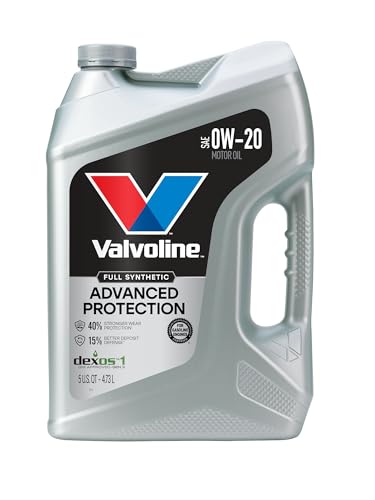
- Advanced protection against the four main causes of engine...
- Delivers 40% stronger wear protection than industry...
- Provides 15% better deposit defense vs. industry standards...
- Up to 2.5X better heat protection vs. industry standards to...
- Engineered for excellent low-temperature flow, reducing...
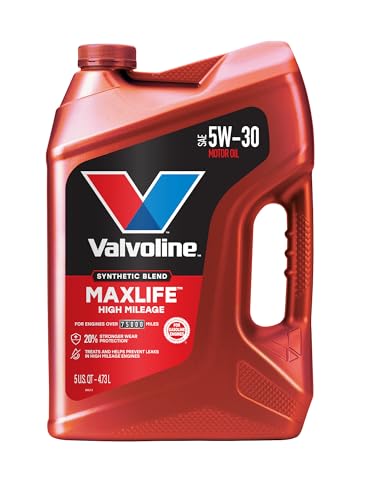
- Formulated for engines with 75,000 miles or more, Valvoline...
- Delivers 20% better wear protection and 15% better sludge...
- Extra detergents safeguard against friction, corrosion and...
- Advanced friction-fighting additives help maximize...
- Provides performance benefits for high mileage, new and...
Search NHTSA Database for Recalls
Search NHTSA Database for Vehicle Investigations
View Latest Vehicle Investigations
Search NHTSA Database for Vehicle Complaints
View Latest Vehicle Complaints
TSB/Document ID: B010122
Replacement Service Bulletin Number:
MFR Communication Date: 2026-01-21
MFR Internal Campaign ID/Software Version:
Communication Type: Service Bulletin/Repair Instructions
NHTSA Components: ENGINE
MFR Component System:
MFR Component Subsystem:
Previous TSB | Next TSB |
upper oil pan and or lower
oil pan leak (3)
All other items are OK,
turbo charger and/or lines
(6) leaking
Rear oil leak (4), found
valley dry (10) and upper oil
pan and or lower oil pan (3)
and turbos and/or lines (6)
leaking
Step (10) ok, found rear oil
leak (4), and turbos and/or
lines (6) leaking
Step (4 and 10) ok, found
the upper oil pan and or
lower oil pan (3), turbos
and/or lines (6) leaking
Repair Procedures
Labor Operation
Codes
Item (A), replace the valve stem seals and
cylinder head covers oil separators
With (A), replace the rear crankshaft and
rear engine cover seals and upper oil pan
and or lower oil pan gasket
With (A), replace the rear crankshaft and
rear engine cover seals
00 71 992, and
00 71 999
With (A), replace the upper oil pan and or
lower oil pan gasket
00 71 992, and
00 72 502
With (A), and Item (B), replace both turbo
chargers and/or the oil return line
seals/return line cover seals
00 71 992, and
00 71 995
With (A) and (B), replace rear crankshaft
and rear engine cover seals; upper oil pan
and or lower oil gasket
00 71 992, and
00 71 996
With (A) and (B), replace; rear crankshaft
and rear engine cover seals
00 71 992, and
00 71 997
With (A) and (B), replace the upper oil pan
and or lower oil pan gasket
00 71 992, and
00 71 998
00 71 992, and
00 72 500
00 71 992, and
00 72 501
Defect Codes:
1100902900
1100903000
Retain copy of this checklist (both pages) in the vehicle file. Provide copy of page 2 to your warranty booker/administrator for
claims processing.
2
B01_01_22_N63TU1_Oil_Consumption_Instructions V2.0
March 2022
Changes to this procedure are highlighted in yellow.
Do not drain and measure the engine oil. Follow the applicable instructions to use the electronic oil
level measurement.
Do not reprogram the vehicle.
Do not repair any engine oil leaks prior to starting the oil consumption test described below.
1. The engine oil must be measured using the electronic measurement test plan called “Motor Oil Quantity”
found in ISTA/D.
Test Plan Path:
Select “Vehicle management”
Select “Powertrain”
Select “Engine electronics, quality control valve (MSV)
Select “Engine oil”
Select “ABL Motor oil quantity”
Select “Display”
Follow the onscreen prompts. The test plan will measure the engine oil in 100 ml increments.
Top the engine oil accordingly and perform the test plan a second time (after topping) to ensure the
proper full engine oil level is reached.
The vehicle must be driven by the customer roughly 750 to 1,000 miles or until the next low engine oil
message appears (whichever comes first). After the customer returns the engine oil must be measured
again using the electronic measurement test plan called “Motor Oil Quantity” found in ISTA/D.
If the oil consumption is not greater than 1 liter per 750 miles, then top the engine oil and return the vehicle
to the customer.
OR
If the engine oil consumption is greater than 1 liter per 750 miles, then proceed to step 2.
For additional information on oil consumption refer to B11 03 13.
2. Inspect or measure the following 4 items in order. Note the inspection results on the attached
“B01_21_18_N63TU1_Oil_Consumption_Checklist.”
•
•
•
•
•
Engine front cover
Engine upper oil pan
Engine lower oil pan
Lower bell housing
Perform a compression test.
All components or measurements that are found to be outside the specification need to be documented
with pictures and submitted for authorization via a TSARA TeileClearing Hotline case at the end of this
procedure.
1
B01_01_22_N63TU1_Oil_Consumption_Instructions V2.0
March 2022
Vehicles that require an oil consumption test, have passed the oil consumption test, or do not require any
repairs do not need authorization.
IMPORTANT!
If the engine is leaking engine oil, the oil leak must be an active major engine oil leak, not seepage or
wetness.
GENERAL NOTES REGARDING ENGINE OIL LEAKS:
“Oil Leaks” are being defined as clearly visible oil presence (like oil drops) at the engine components
(e.g. area of oil pan, front cover, etc.), and in their vicinity. Also, a large visible oil stains (or oil
accumulation) on the underbody panels are indication of oil leaks, causing a substantial oil capacity
loss.
The black (dirt stained) “wetness” marks on the engine components, DO NOT qualify as oil leaks.
3. Inspect the front engine cover for engine oil leakage.
If the front timing cover is not leaking. Go to
step 4.
If the front timing cover is leaking. Go to step
6.
4. Inspect the upper and lower engine oil pan for engine oil leakage.
If the upper oil pan or lower oil pan is not
leaking. Go to step 5.
If the upper oil pan or lower oil pan is
leaking. Go to step 6.
2
B01_01_22_N63TU1_Oil_Consumption_Instructions V2.0
March 2022
5. Inspect the lower bell housing for engine oil leakage
The lower bell housing is not leaking. Go to
step 7.
The lower bell housing is leaking. Go to step
6.
6. Turbocharger oil line diagnosis.
Remove the heat shield (1) to diagnose the
engine oil leak.
Refer to Repair Instruction 11 65 180
“Removing and installing/replacing heat
shield at top”.
3
B01_01_22_N63TU1_Oil_Consumption_Instructions V2.0
March 2022
The illustration shows an overview of the
components found on cylinder bank 1.
Cylinder head cover (1)
Cylinder # 4 (2)
Inspection location (3)
The illustration shows an overview of the
component’s frond on cylinder bank 1.
Cylinder head cover (1)
Bank 1 post O2 sensor (2)
Heat shield mounting hole (3)
4
B01_01_22_N63TU1_Oil_Consumption_Instructions V2.0
March 2022
Preparing for the inspection:
Bore scope specifications:
The recommended diameter of the fiber
optic cable (imager) should not be greater
than 5.5 mm. The 8 mm fiber optic cable
(imager) will work but it is very tight, and
damage may occur to the larger cable and
imager.
The recommended borescope and imager
can be found at www.centersolutions.com or
refer to SI B04 19 15 for more information
about the BMW Equipment Program.
Equipment Program Part Numbers:
107 - BK5000 - SNAP ON Video Scope
107- BK8000 – 5.5 mm Dual View Side
Imager
The illustration shows an overview of the
component’s frond on cylinder bank 1.
Cylinder head cover (1)
Bank 1 post O2 sensor (2)
Heat shield mounting hole (3)
Insert bore scope here (4) on an angle
downward.
5
B01_01_22_N63TU1_Oil_Consumption_Instructions V2.0
March 2022
Approach angle of the bore scope (1) is
approximately 45 degrees.
After inserting the bore scope, you must
locate the cylinder head gasket tab. (1).
The tab is approximately 135 mm strait
down from original entry point.
Cylinder head gasket tab (1)
Gap in heat shields (2)
Cylinder head (3)
Feed the bore scope past the left side (1) of
the cylinder head gasket tab (2) towards the
vacuum reservoir (3).
6
B01_01_22_N63TU1_Oil_Consumption_Instructions V2.0
March 2022
Continue to push the bore scope towards
the vacuum reservoir (1). The engine valley
drain hole is location is just to the left of the
vacuum reservoir (2).
Metal vacuum reservoir shown in photo.
As the bore scope approaches the drain
hole it will become more apparent.
Inspect the surrounding area of the engine
valley drain hole (1).
Engine valley drain hole (1)
Metal vacuum reservoir (2) shown.
This is a clean picture. No oil can be seen in
the oil drain hole (1).
The dark material at the bottom of the photo
is dust and dirt. This material appears to be
reflective, but it is dry
It is possible that a black plastic vacuum
reservoir (1) is installed. This illustration
provides an overview of the entire
component and specific points of the
component.
Reservoir (1)
Reservoir mounting screw (2)
Plastic vacuum reservoir tab (3)
7
B01_01_22_N63TU1_Oil_Consumption_Instructions V2.0
March 2022
Plastic vacuum reservoir tab (1)
Mounting screw (2)
Diagnosis in the vehicle:
It may be more difficult to position the bore
scope, but it will only take a few minutes
more to make the diagnosis.
Engine valley drain hole (1)
Plastic vacuum reservoir tab (2)
Reservoir mounting screw (3)
Continue to push bore scope downward
towards the plastic vacuum reservoir tab (2).
The bore scope needs to be moved towards
the direction of the red arrow and under the
tab (2) to have the best viewing angle of the
engine valley drain hole (1).
Engine valley drain hole (1)
Plastic vacuum reservoir tab (2)
Reservoir mounting screw (3)
8
B01_01_22_N63TU1_Oil_Consumption_Instructions V2.0
March 2022
Once the bore scope has gone under the
plastic reservoir tab then the engine valley
drain hole (1) and surrounding area can be
clearly inspected.
The dark material at the bottom of the photo
is dust and dirt. This material appears to be
reflective, but it is dry.
Engine valley drain hole (1)
Plastic vacuum reservoir (2)
If engine oil is found in the valley area, then the root cause of the engine oil leak resides in the components
on top of the engine i.e., turbocharger oil line cover, turbo charger, etc. Further basic diagnosis will be
needed to find the root cause this engine oil leak. Do not remove the transmission from the vehicle. Go to
Step 7.
If NO engine oil residue is found at the engine valley drain hole, but an original visual inspection indicated
leak in the bell housing area, the root cause of the engine leak resides in the rear main seal and rear engine
cover. Do not remove transmission from the vehicle. Go to step 7.
If NO engine oil residue is found at the engine valley drain hole, then the root cause of the engine oil leak will
be related to the original visual inspection of front cover, or oil pan. Go to step 12.
Using the borescope, provide a picture of the engine valley drain hole regardless if oil is present or not.
7. Preform the compression test.
Test Plan Path:
Select “Vehicle management”
Select “Service functions”
Select “Powertrain”
Select “Engine Electronics quality control (MSV)”
Select “Compression test”
The compression test plan and the compression test repair instructions will be shown on the screen.
Review the compression test repair instruction to become more familiar with the tools and the
procedure before starting the compression test plan.
7. Select “ABL Compression test”
8. Follow the test plan steps to complete the compression tests.
1.
2.
3.
4.
5.
6.
For reference the compression test procedure instructions can also be found in Repair Instruction 11 00 039
“Checking compression of all cylinders”.
The compression test should be performed after the engine has reached operating temperature. When
performing the test count the rotations of the engine crankshaft and apply the same rotations to each cylinder
compression test. The industry standard is 4 rotations per cylinder.
When comparing the values of all cylinders the compression results should not vary by more than 2.5 bar or
36.25 psi. If the difference is greater than 2.5 bar or 36.25 psi, then proceed to step 11.
9
B01_01_22_N63TU1_Oil_Consumption_Instructions V2.0
March 2022
The test plan will record the measurements, but you will have to determine if they are within specification or
not.
If the BMW special tools are not available at the dealer then a manual gauge procedure can be substituted,
record all values in the oil consumption checklist. Use the limit values listed above to determine if the values
are within specification.
If the engine passes the compression test, then proceed to step 8.
8. Inspect the turbochargers for engine oil leakage.
The turbocharger is OK.
No engine oil can be seen around the
turbocharger impeller.
The turbocharger is OK.
No engine oil can be seen around the
turbocharger impeller.
10
B01_01_22_N63TU1_Oil_Consumption_Instructions V2.0
March 2022
The turbocharger is not OK.
The turbocharger impeller seals are leaking
engine oil.
The turbocharger is not OK.
The turbocharger impeller seals are leaking
engine oil.
If the turbocharger inspection is “OK”, then go to step 9.
Or
If the turbocharger inspection is “NOT OK”, then replace the turbochargers in conjunction with the
recommendations in step 9. Go to step 9.
11
B01_01_22_N63TU1_Oil_Consumption_Instructions V2.0
March 2022
9. Replace the intake and exhaust valve seals
using the N63TU1 Valve Seal Replacement
Tool Kit P/N 83 30 2 450 434 as per SI B11 01
17.
Refer to SI B 04 02 17 for additional ordering
information.
Replace the cylinder head cover oil separators
as per Repair Instruction 11 15 140 “Replace
oil separator”.
If the turbocharger inspection is “not OK” then
replace the turbochargers. Refer to repair
instruction 11 65 025 “Removing and installing
exhaust turbocharger, cylinders 1-4” and
Repair Instruction 11 65 030 “Removing and
installing exhaust turbocharger, cylinders 5-8”.
Do not replace the turbo chargers if they are
not leaking.
If engine oil is found under the turbos using a
borescope then the oil return line cover (1) or
the oil return line gaskets (2) are leaking
engine oil.
(1) The oil return cover comes with all 3 Orings. Use P/N 11 42 7 935 572.
(2) Gasket asbestos free. Use P/N 11 42 8 624
158.
If the bell housing area shows a major oil leak,
but engine valley area is dry (no oil puddle
present), then also replace the rear main oil
seal (find the correct PN in the ETK), with the
rear engine cover (PN 11 14 2 446 298).
Follow repair instructions found in SI B11 09
16.
12
B01_01_22_N63TU1_Oil_Consumption_Instructions V2.0
March 2022
10. Complete the “B01_01_22_N63TU1_Oil_Consumption_Checklist”
All components or measurements that are found to be outside the specification need to be documented
with pictures and submitted for authorization via a TSARA TeileClearing Hotline case and wait for a
response. Weekend and holiday submissions must wait for a response on the following business day
before starting any repairs.
Vehicles that require an oil consumption test, have passed the oil consumption test, or do not require any
repairs do not need authorization.
11. Only continue if one of the 4 inspections above have failed in steps 3 – 6 and there is no engine
oil found under the turbo chargers using the borescope.
Inspect the turbochargers for engine oil leakage.
The turbocharger is OK.
No engine oil can be seen around the
turbocharger impeller.
The turbocharger is OK.
No engine oil can be seen around the
turbocharger impeller.
13
B01_01_22_N63TU1_Oil_Consumption_Instructions V2.0
March 2022
The turbocharger is not OK.
The turbocharger impeller seals are leaking
engine oil.
The turbocharger is not OK.
The turbocharger impeller seals are leaking
engine oil.
If the turbocharger inspection is “OK”, then go to step 12.
Or,
If the turbocharger inspection is “NOT OK”, then replace the turbochargers in conjunction with the
recommendations in step 11. Go to step 12.
12. Replace the engine.
If the turbocharger inspection is “not OK” then replace the turbochargers. Refer to repair instruction 11
65 025 “Removing and installing exhaust turbocharger, cylinders 1-4” and Repair Instruction 11 65 030
“Removing and installing exhaust turbocharger, cylinders 5-8”
Do not replace the turbo chargers if they are not leaking.
Complete the “B01_01_22_N63TU1_Oil_Consumption_Checklist”
All components or measurements that are found to be outside the specification need to be documented
with pictures and submitted for authorization via a TSARA TeileClearing Hotline case and wait for a
response. Weekend and holiday submissions must wait for a response on the following business day
before starting any repairs.
14
B01_01_22_N63TU1_Oil_Consumption_Instructions V2.0
March 2022
Vehicles that require an oil consumption test, have passed the oil consumption test, or do not require any
repairs do not need authorization.
For frequently asked questions go to the TIS.Net Advanced Information, search for “N63TU1 Oil
Consumption FAQ”.
Engine Repairs and Replacements:
Replacement engine assemblies are NOT pre-filled with engine oil.
After replacing an engine with a new or remanufactured engine assembly, the engine oil level must be
verified as outlined in the procedure below first, before starting the engine for the first time.
If the replacement engine is started to determine electronically if the engine is filled with the appropriate
amount of engine oil, damage to the replacement engine can occur immediately.
The engine may have some residual engine oil from assembly, but this is not enough engine oil to properly
lubricate the engine to measure the engine oil level electronically when it is started for the first time.
Further, the electronic engine oil measurement is only operational when the engine is running at its full
operating temperature. Checking the engine oil without the engine running at operating temperature will lead to
an incorrect or incomplete measurement.
After replacing the engine or making engine repairs that require the replacement or removal of the engine
bearings, VANOS gears, camshafts, bed plate resealing, engine oil pump, engine oil filter housing, cylinder
head, engine oil cooler or anything that interrupts the engine oil supply circuit of the engine requires a short oil
pump and oil supply circuit priming procedure.
Refer to SI B11 02 20 for the detailed bleeding procedure.
After engine repair or replacement, pay attention to a proper installation of all engine ground
connections.
N63TU1 proper Ignition Harness Installation and Ground Connections: Any consequential damage to DME,
alternator, or QLT sensor resulted from a loose ground (causing BSD communication faults), is not covered
under N63TU1 Class Settlement.
If the engine malfunction warning is illuminated and lean mixture faults are stored in the DME:
1. Double check all basic induction system connections, ensure no leaks are present.
2. Adaptation Procedure: Disconnect the tank ventilation valve (purge valve) electrical connector and allow
the engine to idle for 15 minutes. This procedure will allow the DME to readapt. After 15 minutes of idling
reconnect the tank ventilation valve (purge valve) electrical connector and clear the fault memory. Test
drive the vehicle to ensure all faults do not reoccur.
15
B01_01_22_N63TU1_Oil_Consumption_Instructions V2.0
March 2022
Workshop Cleanliness:
Always ensure the high-pressure fuel system parts are properly stored in a clean location. Use caps or bags to
keep contamination from occurring. It is good practice to immediately cap the high-pressure pumps and store
them in the upright position so that the plunger does not dry out. The appropriate caps can be found in the
N63TU1 Valve Seal Replacement Tool Kit P/N 83 30 2 450 434.
16

- CEL Doctor: The ANCEL AD310 is one of the best-selling OBD II scanners on the market and is recommended by Scotty Kilmer, a YouTuber and auto mechanic. It can easily determine the cause of the check engine light coming on. After repairing the vehicle's problems, it can quickly read and clear diagnostic trouble codes of emission system, read live data & hard memory data, view freeze frame, I/M monitor readiness and collect vehicle information.
- Sturdy and Compact: Equipped with a 2.5 foot cable made of very thick, flexible insulation. It is important to have a sturdy scanner as it can easily fall to the ground when working in a car. The AD310 OBD2 scanner is a well-constructed mechanic tool with a sleek design. It weighs 12 ounces and measures 8.9 x 6.9 x 1.4 inches. Thanks to its compact design and light weight, transporting the device is not a problem. The buttons are clearly labelled and the screen is large and displays results clearly.
- Accurate Fast and Easy to Use: The AD310 scanner can help you or your mechanic understand if your car is in good condition, provides exceptionally accurate and fast results, reads and clears engine trouble emission codes in seconds after you fixed the problem. This device will let you know immediately and fix the problem right away without any car knowledge. No need for batteries or a charger, get power directly from the OBDII Data Link Connector in your vehicle.
- OBDII Protocols and Car Compatibility: Many cheap scan tools do not really support all OBD2 protocols. AD310 scanner as it can support all OBDII protocols such as KWP2000, J1850 VPW, ISO9141, J1850 PWM and CAN. This device also has extensive vehicle compatibility with 1996 US-based, 2000 EU-based and Asian cars, light trucks, SUVs, as well as newer OBD2 and CAN vehicles both domestic and foreign. Pls confirm with our customer service whether it is compatible with your vehicle before purchasing.
- Home Necessity and Worthy to Own: This is an excellent code reader to travel or home with as it weighs less and it is compact in design. You can easily slide it in your backpack as you head to the garage, or put it on the dashboard, this will be a great fit for you. The AD310 is not only portable, but also accurate and fast in performance. Moreover, it covers various car brands and is suitable for people who just need a code reader to check their car.

- Multi-Functions - Practical Multi-Functions OBD2 code reader features built-in OBD2 DTC lookup library, which help you to determine the cause of the engine light, read code, erase code, view freeze frame, I/M ready, vehicle information, data flow, real-time curve, get vehicle speed information, calculate load value, engine coolant temperature, get engine speed.
- Wide Capability - Supports 9 protocols compatible with most 1996 US-Based, 2000 EU-Based and Asian cars, and newer OBD II & CAN domestic or import vehicles. Supports 6 languages - English,German, Dutch, Spanish, French, Italian.
- 2.8" LCD Display - Designed with a clear display 2.8" Large LCD screen - white backlight and contrast adjustment. No need any battery or charger, OBD reader gets the power directly from your vehicle through the OBDII Data Link Connector.
- Compact Design - Car diagnostic scanner is equipped with a 2.5 feet long cable and made of a very thick flexible insulator.There are 6 buttons on OBD2 Scanner:scroll up/down,enter/exit and buttons that quick query VIN vehicle number& the DTC fault code.
- ABS / Airbag codes NOT Supported - It is able to read and clear check engine information which is part of OBDII system, but it cannot work with non-OBDII systems, including ABS / Airbag / Oil Service Light, etc.

- 【Your Personal CEL Doctor – Read & Clear Engine Codes】The NT301 OBD2 scanner lets you read diagnostic trouble codes (DTCs), check em-issions readiness, turn off your Check Engine Light (CEL) or MIL, reset monitors, and view live data streams. It retrieves your vehicle's VIN instantly. Like all standard OBD2 scanners, it clears codes only after repairs are completed—if the issue persists, the code will return. Designed for DIYers who want to understand what’s really going on under the hood.
- 【Easy Code Reading – Just Plug & Play】Simply plug into the OBD2 port, turn the ignition to “ON” (engine off), and select the correct menu: Select OBDII-> Wait for seconds-> Select Read codes. For accurate results, ensure your vehicle is compatible and the OBD2 port is free from damage or wiring issues. No batteries needed— powered directly by your car.
- 【Live Data Graphing & Accuracy for Most OBD2 Vehicles】View and log live sensor data in graph form—monitor oxygen sensors, fuel trims, coolant temp, RPM, and more. Spot trends and suspicious values in real time. Compatible with most 1996+ gasoline cars, light trucks, and SUVs sold in the U.S., as well as many 2000+ European and Asian models. Also works on 12V diesel vehicles equipped with OBD2.
- 【S-mog Check Helper – Know Your Readiness Status at a Glance】With dedicated I/M readiness hotkeys and a simple Red-Yellow-Green LED indicator, you’ll instantly know if your vehicle is ready for em-issions testing. Built-in speaker provides audio feedback. No guesswork—just confidence before you head to the test center.
- 【A Must-Have Tool for Every Home Mechanic】Compact, rugged, and ready to use right out of the box. The 2.8” color screen is easy to read, even in daylight. No charging or setup required—just plug into the 16-pin DLC and start diagnosing. Recommended by professional mechanics on YouTube and trusted by DIYers worldwide.
Last update on 2026-03-25 / Affiliate links / Images from Amazon Product Advertising API
This product presentation was made with AAWP plugin.