
NHTSA ID Number: 11028117
Manufacturer Communication Number: LI14.30-N-075882
TSB/Document Date: 2026-02-03
Summary
Complaint Check engine warning light is active. The following fault codes may be present in the engine control unit: • P3007F1 Leak detected in the intake air system or • P3007F2 Mass air flow malfunction in the intake air system (cylinder bank 1) or • P300CA8 Leak detected in the intake air system or • P300CA9 Mass air flow malfunction in the intake air system (cylinder bank 1) or • P300CA9 and P3007F1: Faults are present simultaneously in the quick test In addition, the customer may report: • An “air leak” type noise from the engine compartment/intake air area, and/or • A “chugging” noise, especially during acceleration or under load. These noise complaints can be present with or without the above fault codes. Cause Causes for FC P3007F1 or P300CA8: Faults are set if: • If there is a leakage upstream of the exhaust gas turbocharger (see "Dichtring_Sealant.jpg"). • If the housing intermediate flange at the high-pressure EGR valve (where the exhaust back pressure sensor connects) is carbonized or clogged, or if there is carbonization/incomplete sealing of the high-pressure or lowpressure EGR valves. (See “Gehaeusezwischenflansch_intermediate_flange.jpg” and verstopfter_Gehaeusezwischenflansch_clogged_Intermediate_Flange.jpg.”) • Note: Only relevant if the correction value in load range 1 is less than -8%. • If the intake manifold (charge air distribution line) or charge air cooler is carbonized (see "Saugrohr_intake_manifold.jpg"). • If engine timing is misadjusted. • There is a defective hot film mass air flow sensor or a hot film mass air flow sensor that is affected by incorrect airflow (this can be due to a clogged or deformed air filter). Refer to the attached file "Luftfilter_air_filter." Cause of fault code combination P300CA9 AND P3007F1: Faults are set if: • There is carbonization or incomplete closure of the high-pressure exhaust gas recirculation valve, especially in the housing intermediate flange at the EGR valve (linked to the exhaust back pressure sensor). Charleston Plant Identification – VIN 11th Digit “T”: For vehicles produced at the Charleston Plant (identified by “T” in the 11th digit of the VIN) with a production date on or after 12/20/2023: • If fault code P3007F1 or P300CA8 is set, an air leak is found, and the cause is identified as a loose or mis-installed Clean Air Line from the factory, open an Initial Field Quality (Info Only) case. • Include the current Quick Test and photos showing the Clean Air Line issue. For all other vehicles, continue diagnosis as per the standard instructions.
If the PDF is very large, it may not load in the preview below.
Some older TSBs had multiple PDFs — visit the NHTSA Website to view all PDFs.
If the TSB PDF does not show, download or view it on the NHTSA Website.
Click on the (+) Plus Sign
Then Click on Associated Document(s)
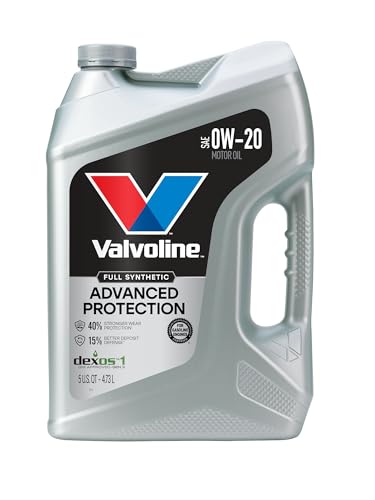
- Advanced protection against the four main causes of engine...
- Delivers 40% stronger wear protection than industry...
- Provides 15% better deposit defense vs. industry standards...
- Up to 2.5X better heat protection vs. industry standards to...
- Engineered for excellent low-temperature flow, reducing...
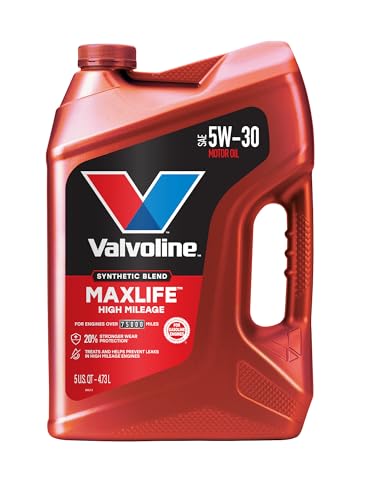
- Formulated for engines with 75,000 miles or more, Valvoline...
- Delivers 20% better wear protection and 15% better sludge...
- Extra detergents safeguard against friction, corrosion and...
- Advanced friction-fighting additives help maximize...
- Provides performance benefits for high mileage, new and...
Search NHTSA Database for Recalls
Search NHTSA Database for Vehicle Investigations
View Latest Vehicle Investigations
Search NHTSA Database for Vehicle Complaints
View Latest Vehicle Complaints
TSB/Document ID: LI14.30-N-075882
Replacement Service Bulletin Number:
MFR Communication Date: 2026-01-23
MFR Internal Campaign ID/Software Version:
Communication Type: Service Bulletin/Repair Instructions
NHTSA Components: ENGINE
MFR Component System:
MFR Component Subsystem:
Previous TSB | Next TSB |
Check engine light active - Fault P3007F1, P3007F2,
P300CA8, or P300CA9 present in CDI control unit
Topic number
LI14.30-N-075882
Version
7
Function group
14.30 - Secondary air injection
Date
1/23/26
Validity
Model 907 with engine 654
Reason for change
Complaint update
Complaint
Check engine warning light is active.
The following fault codes may be present in the engine control unit:
•
•
•
•
•
P3007F1 Leak detected in the intake air system or
P3007F2 Mass air flow malfunction in the intake air system (cylinder bank 1) or
P300CA8 Leak detected in the intake air system or
P300CA9 Mass air flow malfunction in the intake air system (cylinder bank 1) or
P300CA9 and P3007F1: Faults are present simultaneously in the quick test
In addition, the customer may report:
•
An “air leak” type noise from the engine compartment/intake air area, and/or
•
A “chugging” noise, especially during acceleration or under load.
These noise complaints can be present with or without the above fault codes.
Cause
Causes for FC P3007F1 or P300CA8:
Faults are set if:
•
•
•
•
•
•
If there is a leakage upstream of the exhaust gas turbocharger (see "Dichtring_Sealant.jpg").
If the housing intermediate flange at the high-pressure EGR valve (where the exhaust back pressure sensor
connects) is carbonized or clogged, or if there is carbonization/incomplete sealing of the high-pressure or lowpressure EGR valves. (See “Gehaeusezwischenflansch_intermediate_flange.jpg” and “verstopfter_Gehaeusezwischenflansch_clogged_Intermediate_Flange.jpg.”)
Note: Only relevant if the correction value in load range 1 is less than -8%.
If the intake manifold (charge air distribution line) or charge air cooler is carbonized (see "Saugrohr_intake_manifold.jpg").
If engine timing is misadjusted.
There is a defective hot film mass air flow sensor or a hot film mass air flow sensor that is affected by incorrect
airflow (this can be due to a clogged or deformed air filter). Refer to the attached file "Luftfilter_air_filter."
Cause for FC P3007F2 or P300CA9:
02.02.2026 15:48
© Copyright Mercedes-Benz AG
CCUSHWA
Page 1 / 12
Faults are set if:
•
•
•
•
There is a leak downstream of the exhaust gas turbocharger.
The charge air distribution line (intake manifold) is heavily carbonized (see "Saugrohr_intake_manifold.jpg").
There is carbonization or incomplete closure of the high-pressure exhaust gas recirculation valve, especially in
the housing intermediate flange at the EGR valve (linked to the exhaust back pressure sensor).
There is a defective hot film mass air flow sensor, or it is affected by incorrect airflow due to a clogged or deformed air filter (see "Luftfilter_air_filter").
Cause of fault code combination P300CA9 AND P3007F1:
Faults are set if:
•
There is carbonization or incomplete closure of the high-pressure exhaust gas recirculation valve, especially in
the housing intermediate flange at the EGR valve (linked to the exhaust back pressure sensor).
Charleston Plant Identification – VIN 11th Digit “T”:
For vehicles produced at the Charleston Plant (identified by “T” in the 11th digit of the VIN) with a production date on
or after 12/20/2023:
•
If fault code P3007F1 or P300CA8 is set, an air leak is found, and the cause is identified as a loose or mis-installed Clean Air Line from the factory, open an Initial Field Quality (Info Only) case.
•
Include the current Quick Test and photos showing the Clean Air Line issue.
For all other vehicles, continue diagnosis as per the standard instructions.
Remedy
In the case of fault code P3007F1 or P300CA8:
1) Check for Required ECU Software Update (Applies to P300CA8 only)
For vehicles with:
•
•
•
Code MU6 (dual-stage turbocharger) and CDI control unit N3/40 with software release G090:
Update the CDI Control Unit software to the latest version.
If the CDI control unit software is already up to date, continue to the steps below.
2) Verify Clean Air Line & Intake System Assembly
•
•
•
•
•
•
Inspect the clean air line between the air filter housing and the exhaust gas turbocharger for proper assembly.
Reference WIS documents: AR09.10-S-8130EA, AR09.40-S-0500EA (dual-stage turbo), AR09.20-S-0010EA,
and/or AR09.41-S-6817EA.
Confirm correct assembly and all connections:
Ensure proper seating and locking of all quick-release couplings (see provided images and WIS refs).
For dual-stage turbochargers, confirm the cast lug aligns with the tab. (See picture 1c.)
Note: Always replace the red sealing ring (see annex "Dichtring_Sealant_nok") during assembly/repairs.
3) Charge Air System / Intake Leak Check
•
•
•
•
Preferably, pressurize the system to 0.25 bar from the exhaust end pipe, with the intake air system sealed (see
"Adapter_Reinluftleitung_Clean_Air_Line_Model_Type_907").
Alternatively, use Xentry Diagnostics:
CDI Control Unit N3/40 → Tests → Manual Leak Test of the Charge Air System.
Optional: Use leak tester part number 000 588 18 21 00 (see WS09.00-P-0028B) to perform flue gas diagnosis
for leaks in the intake air system with UltraTraceUV. For more information, see WIS/WSM: Contents → Model
02.02.2026 15:48
© Copyright Mercedes-Benz AG
CCUSHWA
Page 2 / 12
•
Series → Van → V-Class / Vito → 09 - Air Intake, Charging → AD - Flue Gas Diagnosis for Leaks with UltraTraceUV.
If leaks are found, carry out necessary repairs.
4) Inspect Sealing Ring and Connections
•
•
Inspect the sealing ring between the exhaust gas turbocharger and the clean air line for damage with an endoscope (see annex "Dichtring_Sealant_nok").
Repair/replace as needed.
5) Visual Inspection for Carbonization/Damage
•
•
•
•
•
•
•
Inspect the following for severe carbon build-up or other inconsistencies:
Intake manifold (charge air distribution line) – see "Saugrohr_intake_manifold.jpg."
Housing intermediate flange at the high-pressure EGR valve (exhaust back pressure sensor connection, use a
flashlight).
Only necessary if the air intake correction value in load range 1 is less than -8%.
Charge air cooler.
Initiate repairs/cleaning as needed.
If issues are found in the intake manifold, also check the cylinder head intake ports.
6) Inspect Air Filter and MAF Sensor
•
•
•
Visually inspect the air filter for blockages, severe soiling, deformation, or damage (see "Luftfilter_air_filter").
The fault may be set if the hot film mass air flow sensor (MAF) element is oiled.
Replace air filter/MAF as needed.
7) Engine Timing
•
•
For vehicles with mileage over 90,000 km / 150,000 km, or with prior control assembly repairs:
Check and adjust engine timing as needed.
8) EGR Valve and Cooler Functional Checks
•
•
•
•
Actuate high-pressure and low-pressure exhaust gas recirculation (EGR) valves with Xentry Diagnostics.
Check their functionality and visually inspect all related parts for carbonization.
Replace any affected parts.
If significant issues are found with the low-pressure EGR valve, also clean just downstream of the DPF and
check/clean the low-pressure EGR cooler for carbon accumulation.
9) Finalize Repairs, Reset & Verification
1. Reset Correction Factors (Air Mass of Intake System):
•
CDI Control Unit N3/40 → Adaptations → Teach-in Processes → Reset Learned Values → Intake Air System.
2. Quick Test and Clear Fault Memory:
•
Conduct a system quick test and clear fault codes (see AD00.00-S-2000-04E).
•
Important: Reset correction factors before clearing memory; otherwise, fault codes may recur.
3. Disconnect Diagnostic Device:
•
As specified in AD00.00-S-2000-04E.
In the case of fault code P3007F2 or P300CA9:
1) Check for Required ECU Software Update (P300CA9 only)
02.02.2026 15:48
© Copyright Mercedes-Benz AG
CCUSHWA
Page 3 / 12
For vehicles with:
•
•
•
Code MU6 (dual-stage turbocharger) and CDI control unit N3/40 with software release G090:
Update the CDI control unit software first.
If the CDI control unit software is already up to date, continue to the steps below.
2) Charge Air System / Intake Leak Check
•
•
•
•
•
Preferably, pressurize the system to 0.25 bar from the exhaust end pipe, with the intake air system sealed (see
"Adapter_Reinluftleitung_Clean_Air_Line_Model_Type_907").
Alternatively, use Xentry Diagnostics:
CDI Control Unit N3/40 → Tests → Manual Leak Test of the Charge Air System.
Optional: Use leak tester part number 000 588 18 21 00 (see WS09.00-P-0028B) to perform flue gas diagnosis
for leaks in the intake air system with UltraTraceUV. For more information, see WIS/WSM: Contents → Model
Series → Van → V-Class / Vito → 09 - Air Intake, Charging → AD - Flue Gas Diagnosis for Leaks with UltraTraceUV.
If leaks are found, carry out necessary repairs.
3) Visual Inspection of Intake Manifold and System Components
•
•
•
•
•
•
•
•
•
Inspect the charge air distribution line (intake manifold) for carbon buildup.
Inspect the following (especially for P300CA9, but advisable for thoroughness):
High-pressure EGR valve
High-pressure EGR cooler (A6541409000)
EGR pipe (A6541400702)
Charge air mixing pipe (A6540902000) and intake manifold (charge air distribution line)
Housing intermediate flange (A6541407000)
Exhaust back pressure sensor area
Check all for carbonization, consistency, and proper installation. If any significant issues are found, perform necessary cleaning or repair measures.
4) Inspect Air Filter and MAF Sensor
•
•
•
Visually inspect the air filter for blockages, severe soiling, deformation, or damage (see "Luftfilter_air_filter").
The fault may be set if the hot film mass air flow sensor (MAF) element is oiled.
Replace air filter/MAF as needed.
5) Finalize Repairs, Reset & Verification
1. Reset Correction Factors (Air Mass of Intake System):
•
CDI Control Unit N3/40 → Adaptations → Teach-in Processes → Reset Learned Values → Intake Air System.
2. Quick Test and Clear Fault Memory:
•
Conduct a system quick test and clear fault codes (see AD00.00-S-2000-04E).
•
Important: Reset correction factors before clearing memory; otherwise, fault codes may recur.
3. Disconnect Diagnostic Device:
•
As specified in AD00.00-S-2000-04E.
In the case of fault code combination P300CA9 and P3007F1:
1)Inspect the housing intermediate flange on the high-pressure exhaust gas recirculation (EGR) valve, specifically at
the connection for the exhaust back pressure sensor. Use a flashlight to check for any inconsistencies or carbon buildup.
02.02.2026 15:48
© Copyright Mercedes-Benz AG
CCUSHWA
Page 4 / 12
2) Finalize Repairs, Reset & Verification
1. Reset Correction Factors (Air Mass of Intake System):
•
CDI Control Unit N3/40 → Adaptations → Teach-in Processes → Reset Learned Values → Intake Air System.
2. Quick Test and Clear Fault Memory:
•
Conduct a system quick test and clear fault codes (see AD00.00-S-2000-04E).
•
Important: Reset correction factors before clearing memory; otherwise, fault codes may recur.
3. Disconnect Diagnostic Device:
•
As specified in AD00.00-S-2000-04E.
References:
•
•
•
WIS documents as above
Visual aids and annexed images as referenced in the procedure
For details, consult vehicle-specific service documents and Xentry updates
Attachments
File
Description
Dichtring_Sealant.jpg
Gehaeusezwischenflansch_Intermedidate_Flange.jpg
Luftfilter_air_filter.jpg
02.02.2026 15:48
© Copyright Mercedes-Benz AG
CCUSHWA
Page 5 / 12
Adapter_Reinluftleitung_Clean_Air_Line_Model_Type_907.jpg
verstopfter_Gehaeusezwischenflansch_clogged_Intermedidate_Flange.jpg
Saugrohr_Intake_manifold_II.jpg
02.02.2026 15:48
© Copyright Mercedes-Benz AG
CCUSHWA
Page 6 / 12
Saugrohr_Intake_manifold.jpg
Einlasskanaele_ZK_inlet_ports_CH.jpg
2b.JPG
02.02.2026 15:48
© Copyright Mercedes-Benz AG
CCUSHWA
Page 7 / 12
2c.JPG
1c.JPG
02.02.2026 15:48
© Copyright Mercedes-Benz AG
CCUSHWA
Page 8 / 12
1b.JPG
2a.JPG
1a.JPG
2d.JPG
02.02.2026 15:48
© Copyright Mercedes-Benz AG
CCUSHWA
Page 9 / 12
3.JPG
4.JPG
02.02.2026 15:48
© Copyright Mercedes-Benz AG
CCUSHWA
Page 10 / 12
WIS-References
Document number
Title
Note
AR09.10-S-8130EA
Remove/install engine intake air duct
downstream of air filter
26.03.2024
AR09.40-S-0500EA
Remove/install air intake duct upstream of turbocharger
26.03.2024
AR09.20-S-0010EA
Remove/install resonance chamber
01.08.2023
AR09.41-S-6817EA
Remove/install charge air cooler
26.03.2024
AR09.10-D-8130TSM
Remove/install engine intake air duct
downstream of air filter
27.07.2022
AR09.40-D-0500TSM
Remove/install air intake duct upstream of turbocharger
29.07.2022
AD00.00-S-2000-04E
Connect STAR DIAGNOSIS and read
out fault memory
WS09.00-P-0028B
000 588 18 21 00 Leak tester
20.02.2023
Disclaimer
NOTE: The information contained in this document is intended for use by trained, professional technicians with the
knowledge to properly and safely perform diagnosis and repairs on Mercedes-Benz vehicles, using Mercedes-Benz
approved tools and equipment. It informs service technicians about conditions that could occur in certain vehicles and
provides information that could assist in proper vehicle diagnosis, service, or repair. It does not indicate that a defect
is present in any vehicle referenced in this document nor does it imply warranty coverage. DO NOT assume that a
symptom or condition, or a described cause of a symptom or condition, affects any particular vehicle or groups of vehicles, or that a described repair applies to any particular vehicle or groups of vehicles. There can be multiple causes
resulting in the same or similar symptoms or conditions described in this document, and trained professional service
02.02.2026 15:48
© Copyright Mercedes-Benz AG
CCUSHWA
Page 11 / 12
technicians must use their diagnostic skills to make evaluations on a case-by-case basis. The information contained
in this document does not guarantee warranty coverage nor does it extend the vehicle’s warranty in any way.
Symptoms
Power generation > Engine management > Indicator lamp > Engine diagnosis > lit
Control unit/fault code
Control unit
Fault text
N3/40 - Motor electronics 'MRD1' for combustion engine
'OM654' (CDI) (MRD1NFZ)
P3007F2 - The air mass flow in the intake air system (cylinder bank 1) has a malfunction.
P3007F1 - A leak was detected in the intake air system.
P300CA9 - The air mass flow in the intake air system (cylinder bank 1) has a malfunction.
P300CA8 - A leak was detected in the intake air system.
Operation numbers/damage codes
Op. no.
Operation text
02.02.2026 15:48
© Copyright Mercedes-Benz AG
Time
CCUSHWA
Damage
code
Note
Page 12 / 12

- CEL Doctor: The ANCEL AD310 is one of the best-selling OBD II scanners on the market and is recommended by Scotty Kilmer, a YouTuber and auto mechanic. It can easily determine the cause of the check engine light coming on. After repairing the vehicle's problems, it can quickly read and clear diagnostic trouble codes of emission system, read live data & hard memory data, view freeze frame, I/M monitor readiness and collect vehicle information.
- Sturdy and Compact: Equipped with a 2.5 foot cable made of very thick, flexible insulation. It is important to have a sturdy scanner as it can easily fall to the ground when working in a car. The AD310 OBD2 scanner is a well-constructed mechanic tool with a sleek design. It weighs 12 ounces and measures 8.9 x 6.9 x 1.4 inches. Thanks to its compact design and light weight, transporting the device is not a problem. The buttons are clearly labelled and the screen is large and displays results clearly.
- Accurate Fast and Easy to Use: The AD310 scanner can help you or your mechanic understand if your car is in good condition, provides exceptionally accurate and fast results, reads and clears engine trouble emission codes in seconds after you fixed the problem. This device will let you know immediately and fix the problem right away without any car knowledge. No need for batteries or a charger, get power directly from the OBDII Data Link Connector in your vehicle.
- OBDII Protocols and Car Compatibility: Many cheap scan tools do not really support all OBD2 protocols. AD310 scanner as it can support all OBDII protocols such as KWP2000, J1850 VPW, ISO9141, J1850 PWM and CAN. This device also has extensive vehicle compatibility with 1996 US-based, 2000 EU-based and Asian cars, light trucks, SUVs, as well as newer OBD2 and CAN vehicles both domestic and foreign. Pls confirm with our customer service whether it is compatible with your vehicle before purchasing.
- Home Necessity and Worthy to Own: This is an excellent code reader to travel or home with as it weighs less and it is compact in design. You can easily slide it in your backpack as you head to the garage, or put it on the dashboard, this will be a great fit for you. The AD310 is not only portable, but also accurate and fast in performance. Moreover, it covers various car brands and is suitable for people who just need a code reader to check their car.

- Multi-Functions - Practical Multi-Functions OBD2 code reader features built-in OBD2 DTC lookup library, which help you to determine the cause of the engine light, read code, erase code, view freeze frame, I/M ready, vehicle information, data flow, real-time curve, get vehicle speed information, calculate load value, engine coolant temperature, get engine speed.
- Wide Capability - Supports 9 protocols compatible with most 1996 US-Based, 2000 EU-Based and Asian cars, and newer OBD II & CAN domestic or import vehicles. Supports 6 languages - English,German, Dutch, Spanish, French, Italian.
- 2.8" LCD Display - Designed with a clear display 2.8" Large LCD screen - white backlight and contrast adjustment. No need any battery or charger, OBD reader gets the power directly from your vehicle through the OBDII Data Link Connector.
- Compact Design - Car diagnostic scanner is equipped with a 2.5 feet long cable and made of a very thick flexible insulator.There are 6 buttons on OBD2 Scanner:scroll up/down,enter/exit and buttons that quick query VIN vehicle number& the DTC fault code.
- ABS / Airbag codes NOT Supported - It is able to read and clear check engine information which is part of OBDII system, but it cannot work with non-OBDII systems, including ABS / Airbag / Oil Service Light, etc.

- 【Your Personal CEL Doctor – Read & Clear Engine Codes】The NT301 OBD2 scanner lets you read diagnostic trouble codes (DTCs), check em-issions readiness, turn off your Check Engine Light (CEL) or MIL, reset monitors, and view live data streams. It retrieves your vehicle's VIN instantly. Like all standard OBD2 scanners, it clears codes only after repairs are completed—if the issue persists, the code will return. Designed for DIYers who want to understand what’s really going on under the hood.
- 【Easy Code Reading – Just Plug & Play】Simply plug into the OBD2 port, turn the ignition to “ON” (engine off), and select the correct menu: Select OBDII-> Wait for seconds-> Select Read codes. For accurate results, ensure your vehicle is compatible and the OBD2 port is free from damage or wiring issues. No batteries needed— powered directly by your car.
- 【Live Data Graphing & Accuracy for Most OBD2 Vehicles】View and log live sensor data in graph form—monitor oxygen sensors, fuel trims, coolant temp, RPM, and more. Spot trends and suspicious values in real time. Compatible with most 1996+ gasoline cars, light trucks, and SUVs sold in the U.S., as well as many 2000+ European and Asian models. Also works on 12V diesel vehicles equipped with OBD2.
- 【S-mog Check Helper – Know Your Readiness Status at a Glance】With dedicated I/M readiness hotkeys and a simple Red-Yellow-Green LED indicator, you’ll instantly know if your vehicle is ready for em-issions testing. Built-in speaker provides audio feedback. No guesswork—just confidence before you head to the test center.
- 【A Must-Have Tool for Every Home Mechanic】Compact, rugged, and ready to use right out of the box. The 2.8” color screen is easy to read, even in daylight. No charging or setup required—just plug into the 16-pin DLC and start diagnosing. Recommended by professional mechanics on YouTube and trusted by DIYers worldwide.
Last update on 2026-03-24 / Affiliate links / Images from Amazon Product Advertising API
This product presentation was made with AAWP plugin.