
NHTSA ID Number: 11028215
Manufacturer Communication Number: 2080372/1
TSB/Document Date: 2026-02-04
Summary
Window Drop Glass Operation | Continental GT/GTC | 25-26MY. Condition: • Incorrect operation / function of the front and / or rear window drop glass • Front and / or rear drop glass fails to open / close or attempts to close and re-opens once contact has been made between the glass and applicable seal • DTC for window regulator motor no basic setting B148754 evident within any of the 4 window control modules (diagnostic address 42, 52, BB and BC) for loss of basic settings
If the PDF is very large, it may not load in the preview below.
Some older TSBs had multiple PDFs — visit the NHTSA Website to view all PDFs.
If the TSB PDF does not show, download or view it on the NHTSA Website.
Click on the (+) Plus Sign
Then Click on Associated Document(s)

- 💝【Questions? We’re Here Anytime】MK808S is a...
- 🔥🔥🔥【2026 NEWLY RELEASED BI-DIRECTIONAL...
- 【28+ MOST POPULAR RESET SERVICE FOR 150 MAKES】Autel...
- 【ALL SYSTEM DIAGNOSTICS, FACTORY-LEVEL SCANNER】The...
- 【AUT0 SCAN & AUT0V1N, 10X FASTER】How much have you spent...
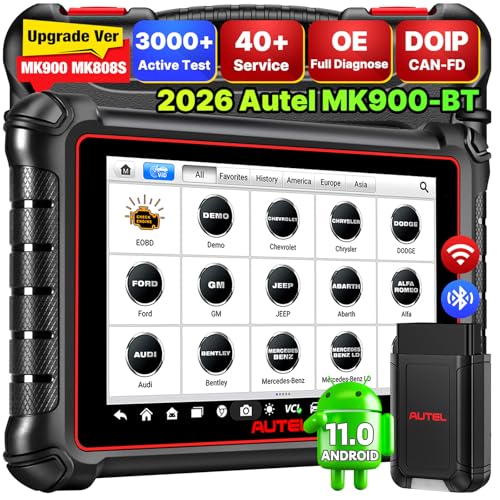
- 💯【Conta.ct us for Support Directly】If you met any...
- 🔥🔥🔥【2026 AUTEL FLAGSHIP MK900BT MK900-BT, NEW...
- 🚗【3000+ ACTIVE TESTS (50➡3000+), SAME AS MS...
- 🚗【40+ HOT SERVICES FOR 150 MAKES (28+➡40+)】Full...
- 🚗【OE ALL SYSTEM DIAGNOSE, AUTO SCAN 2.0: SCAN LICENSE...
Search NHTSA Database for Recalls
Search NHTSA Database for Vehicle Investigations
View Latest Vehicle Investigations
Search NHTSA Database for Vehicle Complaints
View Latest Vehicle Complaints
TSB/Document ID: 2080372/1
Replacement Service Bulletin Number:
MFR Communication Date: 2026-01-20
MFR Internal Campaign ID/Software Version:
Communication Type: Service Bulletin/Repair Instructions
NHTSA Components: STRUCTURE:BODY
MFR Component System:
MFR Component Subsystem:
Previous TSB | Next TSB |
50mm from rear edge of the front door glass
8.5mm ± 1mm
Interlock Point 5
(Roof up)
50mm from corner
11mm ± 1mm
Interlock Point 5
(Roof down)
50mm from top of glass
11mm ± 1mm
Interlock Point 6
(Roof up & down)
50mm from corner
11mm ± 1mm
Interlock Point 7
50mm behind rear div bar
8.5mm ± 1mm
Interlock Point 8
100mm from corner
8.5mm – 16mm
Profile Point 1
50mm in front of front div bar
10mm ± 1mm
Profile Point 2
50mm in front of front div bar
14mm ± 2mm
Profile Point 3
(Roof up)
50mm from upper corner
+0 mm / – 3 mm
Profile Point 3
(Roof down)
50mm from upper corner
+0 mm / – 3 mm
Profile Point 4
50mm from lower corner
+0 mm / – 3 mm
Point A
100mm behind front div bar
5mm ± 1mm
Point B
100mm infront of rear div bar
5mm ± 1mm
Point C
100mm behind rear div bar
5mm ± 2mm
Record all measured results as per the table below and
attach to existing Technical DISS query if required.
Before adjustment
After adjustment
In/Out of specification (Tick/Cross)
WINDOW ENTRY INTO CANT RAIL/ROOF SEAL
Windows should enter cant rail seal smoothly,
making contact with green area.
Too far inboard increases the risk of the cant rail
seal pinching, too far outboard will clash with
cant rail brightware (red squares)
For the front door, poor door profile point is a
major contributing factor here and should be
checked/adjusted if window found to be entering
seal incorrectly.
If this is not correct, it will cause the window to
bounce back causing a loss of basic settings.
Front Window example showing
correct operation
INTERNAL
Retailer Glass Measurement
Procedure for GT
BY634
For measurement specifications refer only to the
information in this TPI, refer to ElsaPro for all
adjustment instructions as required.
INTERNAL
INTERLOCK POINT 1
The steel rule shown in the images is for reference purposes
only. To avoid potential damage to vehicle surfaces, it is
recommended to use a plastic rule when performing
measurements or alignments.
From block to bright ware for all interlock points
Specification
7.5mm ± 1mm
(Interlock Tool WT10549/1)
If the measurement is out of
specification refer to ElsaPro
Repair Group 64 ‘Front door
quarter glass – To adjust’
Place block 50mm in
front of front div bar
INTERNAL
Record measurement for
all interlock points
INTERLOCK POINTS 2, 3, 4
4
Specification
8mm ± 1mm
(Interlock Tool WT10549
If the measurement is
out of specification
refer to ElsaPro
Place block 150mm
behind corner of
front div bar
INTERNAL
Place block 50mm
in front of rear div
bar
Place block 50mm
to rear of rear div
bar
Repair Group 64 ‘Slide
glass checking and
adjusting’
)
INTERLOCK POINT 5
Do not use a Steel Rule against the div bar to measure, use a plastic vernier/rule
5
Specification
11mm ± 1mm
(Ruler/vernier )
If the measurement is
out of specification refer
to ElsaPro
Repair Group 64 ‘Slide
glass checking and
adjusting’
50mm from seal
INTERNAL
Record measurement
INTERLOCK POINT 6
6
Specification
8mm ± 1mm
(Interlock Tool WT10549/1
If the measurement is
out of specification
refer to ElsaPro
Repair Group 64 ‘Slide
glass checking and
adjusting’
Place block 50mm from
corner point of bright ware
INTERNAL
Record measurement for all
interlock points
)
INTERLOCK POINT 7
Do not use a Steel Rule against the div bar to measure, use a plastic vernier/rule
7
Specification
11mm ± 1mm
(Ruler/vernier )
If the measurement is
out of specification refer
to ElsaPro
Repair Group 64 ‘Slide
glass checking and
adjusting’
50mm from seal
INTERNAL
Record measurement
PROFILE POINT 1
Specification
10mm ± 1mm
(Profile Tool WT10549/2
If the measurement is
out of specification refer
to ElsaPro
Repair Group 64 ‘Slide
glass checking and
adjusting’
50mm in front of front div
bar
INTERNAL
Flat against glass to
brightware
)
PROFILE POINT 2, 3, 4
4
Flat against glass to
brightware
Specification
10mm ± 2mm
(Profile Tool WT10549/2
50mm behind front
div bar
INTERNAL
50mm in front of
rear div bar
50mm behind
rear div bar
If the measurement is out
of specification refer to
ElsaPro
Repair Group 64 ‘Slide
glass checking and
adjusting’
)
PROFILE POINT 5
5
Flat against glass to
brightware
Specification
10mm ± 2mm
(Profile Tool WT10549/2
)
If the measurement is out
of specification refer to
ElsaPro
Repair Group 64 ‘Slide glass
checking and adjusting’
50mm from corner
point of bright ware
INTERNAL
Flat against glass to
brightware
PROFILE POINT 6
67
A
✓
Specification
Point A tool against glass is +2mm
Allowable up to 3mm refer to Point B
(Profile Tool WT10549/2)
Front
50mm
B
50mm from upper corner
INTERNAL
Flat against front
window, measure gap
If the measurement is out of
specification refer to ElsaPro
Repair Group 64 ‘Slide glass
checking and adjusting’
PROFILE POINT 7
7
A
✓
Specification
Point A tool against glass = +2mm
Allowable up to 3mm refer to Point B
(Profile Tool WT10549/2)
Front
50mm
B
50mm from lower corner
INTERNAL
Flat against front
window, measure gap
If the measurement is out
of specification refer to
ElsaPro
Repair Group 64 ‘Slide
glass checking and
adjusting’
WAIST SEAL MEASUREMENT POINT A
Specification
(A.1) 100mm from corner
(A.2) 5mm ± 1mm
(Ruler)
A.1
A.2
Mark on tape 100mm
from div bar (A.1)
INTERNAL
Measure from first lip rubber
seal to window glass (A.2)
If the measurement is
out of specification
refer to ElsaPro
Repair Group 64 ‘Slide
glass checking and
adjusting’
WAIST SEAL MEASUREMENT POINT B
B.2
Specification
(B.1) 100mm from corner
(B.2) 5mm ± 1mm
(Ruler)
If the measurement is out of
specification refer to ElsaPro
B.1
Repair Group 64 ‘Slide glass
checking and adjusting’
See image below, for OK and NOK after
adjustment/checking
NOK
OK
Mark on tape 100mm from
div bar (B.1)
INTERNAL
Measure from first lip rubber
seal to window glass (B.2)
WAIST SEAL MEASUREMENT POINT C
Specification
(C.1) 100mm from corner
(C.2) 5mm ± 2mm
(Ruler)
C.1
C.2
If the measurement is out of
specification refer to ElsaPro
Repair Group 64 ‘Slide glass
checking and adjusting’
Mark on tape 100mm
from div bar (C.1)
INTERNAL
Measure seal to
window gap (C.2)
Record all measured results as per the table below and
attach to existing Technical DISS query if required.
RECORDED MEASUREMENTS
Point
Interlock
Waist
Seal
INTERNAL
Specification
Interlock Point 1
50mm in front of front div bar
7.5mm ± 1mm
Interlock Point 2
150mm behind corner of front div bar
8mm ± 1mm
Interlock Point 3
50mm in front of rear div bar
8mm ± 1mm
Interlock Point 4
50mm to rear of rear div bar
8mm ± 1mm
Interlock Point 5
50mm from seal
11mm ± 1mm
Interlock Point 6
Profile
Position
50mm from corner point of bright ware
8mm ± 1mm
Interlock Point 7
50mm from seal
11mm ± 1mm
Profile Point 1
50mm in front of front div bar
10mm ± 1mm
Profile Point 2
50mm behind front div bar
10mm ± 2mm
Profile Point 3
50mm in front of rear div bar
10mm ± 2mm
Profile Point 4
50mm behind rear div bar
10mm ± 2mm
Profile Point 5
50mm from corner point of bright ware
10mm ± 2mm
Profile Point 6
50mm from upper corner
+0 mm / – 3 mm
Profile Point 7
50mm from lower corner
+0 mm / – 3 mm
Point A
100mm behind front div bar
5mm ± 1mm
Point B
100mm infront of rear div bar
5mm ± 1mm
Point C
100mm behind rear div bar
5mm ± 2mm
Before adjustment
After adjustment
In/Out of specification (Tick/Cross)
WINDOW ENTRY INTO CANT RAIL/ROOF SEAL
Windows should enter cant rail seal smoothly,
making contact with green area.
Too far inboard increases the risk of the cant rail
seal pinching, too far outboard will clash with
cant rail brightware (red squares)
For the front door, poor door profile point is a
major contributing factor here and should be
checked/adjusted if window found to be entering
seal incorrectly.
If this is not correct, it will cause the window to
bounce back causing a loss of basic settings.
Front Window example showing
correct operation
INTERNAL

- CEL Doctor: The ANCEL AD310 is one of the best-selling OBD II scanners on the market and is recommended by Scotty Kilmer, a YouTuber and auto mechanic. It can easily determine the cause of the check engine light coming on. After repairing the vehicle's problems, it can quickly read and clear diagnostic trouble codes of emission system, read live data & hard memory data, view freeze frame, I/M monitor readiness and collect vehicle information.
- Sturdy and Compact: Equipped with a 2.5 foot cable made of very thick, flexible insulation. It is important to have a sturdy scanner as it can easily fall to the ground when working in a car. The AD310 OBD2 scanner is a well-constructed mechanic tool with a sleek design. It weighs 12 ounces and measures 8.9 x 6.9 x 1.4 inches. Thanks to its compact design and light weight, transporting the device is not a problem. The buttons are clearly labelled and the screen is large and displays results clearly.
- Accurate Fast and Easy to Use: The AD310 scanner can help you or your mechanic understand if your car is in good condition, provides exceptionally accurate and fast results, reads and clears engine trouble emission codes in seconds after you fixed the problem. This device will let you know immediately and fix the problem right away without any car knowledge. No need for batteries or a charger, get power directly from the OBDII Data Link Connector in your vehicle.
- OBDII Protocols and Car Compatibility: Many cheap scan tools do not really support all OBD2 protocols. AD310 scanner as it can support all OBDII protocols such as KWP2000, J1850 VPW, ISO9141, J1850 PWM and CAN. This device also has extensive vehicle compatibility with 1996 US-based, 2000 EU-based and Asian cars, light trucks, SUVs, as well as newer OBD2 and CAN vehicles both domestic and foreign. Pls confirm with our customer service whether it is compatible with your vehicle before purchasing.
- Home Necessity and Worthy to Own: This is an excellent code reader to travel or home with as it weighs less and it is compact in design. You can easily slide it in your backpack as you head to the garage, or put it on the dashboard, this will be a great fit for you. The AD310 is not only portable, but also accurate and fast in performance. Moreover, it covers various car brands and is suitable for people who just need a code reader to check their car.

- Multi-Functions - Practical Multi-Functions OBD2 code reader features built-in OBD2 DTC lookup library, which help you to determine the cause of the engine light, read code, erase code, view freeze frame, I/M ready, vehicle information, data flow, real-time curve, get vehicle speed information, calculate load value, engine coolant temperature, get engine speed.
- Wide Capability - Supports 9 protocols compatible with most 1996 US-Based, 2000 EU-Based and Asian cars, and newer OBD II & CAN domestic or import vehicles. Supports 6 languages - English,German, Dutch, Spanish, French, Italian.
- 2.8" LCD Display - Designed with a clear display 2.8" Large LCD screen - white backlight and contrast adjustment. No need any battery or charger, OBD reader gets the power directly from your vehicle through the OBDII Data Link Connector.
- Compact Design - Car diagnostic scanner is equipped with a 2.5 feet long cable and made of a very thick flexible insulator.There are 6 buttons on OBD2 Scanner:scroll up/down,enter/exit and buttons that quick query VIN vehicle number& the DTC fault code.
- ABS / Airbag codes NOT Supported - It is able to read and clear check engine information which is part of OBDII system, but it cannot work with non-OBDII systems, including ABS / Airbag / Oil Service Light, etc.

- 【Your Personal CEL Doctor – Read & Clear Engine Codes】The NT301 OBD2 scanner lets you read diagnostic trouble codes (DTCs), check em-issions readiness, turn off your Check Engine Light (CEL) or MIL, reset monitors, and view live data streams. It retrieves your vehicle's VIN instantly. Like all standard OBD2 scanners, it clears codes only after repairs are completed—if the issue persists, the code will return. Designed for DIYers who want to understand what’s really going on under the hood.
- 【Easy Code Reading – Just Plug & Play】Simply plug into the OBD2 port, turn the ignition to “ON” (engine off), and select the correct menu: Select OBDII-> Wait for seconds-> Select Read codes. For accurate results, ensure your vehicle is compatible and the OBD2 port is free from damage or wiring issues. No batteries needed— powered directly by your car.
- 【Live Data Graphing & Accuracy for Most OBD2 Vehicles】View and log live sensor data in graph form—monitor oxygen sensors, fuel trims, coolant temp, RPM, and more. Spot trends and suspicious values in real time. Compatible with most 1996+ gasoline cars, light trucks, and SUVs sold in the U.S., as well as many 2000+ European and Asian models. Also works on 12V diesel vehicles equipped with OBD2.
- 【S-mog Check Helper – Know Your Readiness Status at a Glance】With dedicated I/M readiness hotkeys and a simple Red-Yellow-Green LED indicator, you’ll instantly know if your vehicle is ready for em-issions testing. Built-in speaker provides audio feedback. No guesswork—just confidence before you head to the test center.
- 【A Must-Have Tool for Every Home Mechanic】Compact, rugged, and ready to use right out of the box. The 2.8” color screen is easy to read, even in daylight. No charging or setup required—just plug into the 16-pin DLC and start diagnosing. Recommended by professional mechanics on YouTube and trusted by DIYers worldwide.
Last update on 2026-03-24 / Affiliate links / Images from Amazon Product Advertising API
This product presentation was made with AAWP plugin.