
NHTSA ID Number: 11028338
Manufacturer Communication Number: SB26-K-001
TSB/Document Date: 2026-02-05
Summary
SERVICE BULLETIN - SOME CUSTOMERS MAY COMPLAIN THAT THE VEHICLE WILL NOT MOVE FORWARD AFTER SHIFTING INTO DRIVE FROM PARK OR FROM REVERSE. DEALERS MAY FIND THAT THIS CONDITION IS CAUSED BY A SPACER PLATE IN THE VALVE BODY BEING OUT OF SPECIFICATION. AS A RESULT OF THE SPACER PLATE BEING OUT OF SPEC, THE CHECK BALL WILL BECOME WORN CAUSING THE VEHICLE NOT TO MOVE INTO DRIVE FROM PARK OR REVERSE. ISUZU RECOMMENDS DEALERS TO REPLACE BOTH THE SPACER PLATE AND ALL CHECK BALLS.
If the PDF is very large, it may not load in the preview below.
Some older TSBs had multiple PDFs — visit the NHTSA Website to view all PDFs.
If the TSB PDF does not show, download or view it on the NHTSA Website.
Click on the (+) Plus Sign
Then Click on Associated Document(s)

- 💝【Questions? We’re Here Anytime】MK808S is a...
- 🔥🔥🔥【2026 NEWLY RELEASED BI-DIRECTIONAL...
- 【28+ MOST POPULAR RESET SERVICE FOR 150 MAKES】Autel...
- 【ALL SYSTEM DIAGNOSTICS, FACTORY-LEVEL SCANNER】The...
- 【AUT0 SCAN & AUT0V1N, 10X FASTER】How much have you spent...
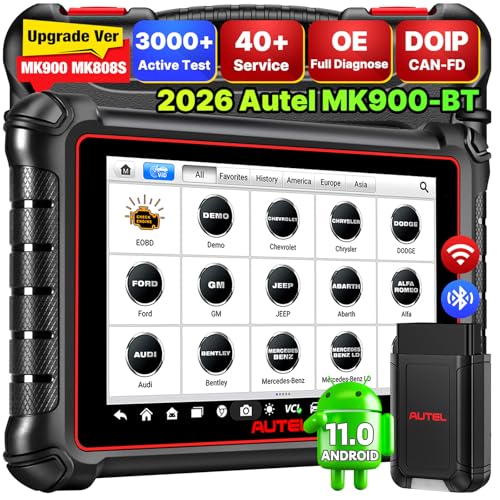
- 💯【Conta.ct us for Support Directly】If you met any...
- 🔥🔥🔥【2026 AUTEL FLAGSHIP MK900BT MK900-BT, NEW...
- 🚗【3000+ ACTIVE TESTS (50➡3000+), SAME AS MS...
- 🚗【40+ HOT SERVICES FOR 150 MAKES (28+➡40+)】Full...
- 🚗【OE ALL SYSTEM DIAGNOSE, AUTO SCAN 2.0: SCAN LICENSE...
Search NHTSA Database for Recalls
Search NHTSA Database for Vehicle Investigations
View Latest Vehicle Investigations
Search NHTSA Database for Vehicle Complaints
View Latest Vehicle Complaints
TSB/Document ID: SB26-K-001
Replacement Service Bulletin Number:
MFR Communication Date: 2026-01-30
MFR Internal Campaign ID/Software Version:
Communication Type: Service Bulletin/Repair Instructions
NHTSA Components: POWER TRAIN
MFR Component System: TRANSMISSION
MFR Component Subsystem:
Previous TSB | Next TSB |
BULLETIN NUMBER:
SB26-K-001
IMPORTANT SERVICE
INFORMATION FOR:
SERVICE MANAGER
SERVICE ADVISOR
PARTS DEPARTMENT
WARRANTY PERSONNEL
ISSUE DATE:
FEBUARY 2026
GROUP:
TRANSMISSION
NO FORWARD GEAR WHEN SHIFTING FROM PARK TO DRIVE AND/OR
REVERSE TO DRIVE
AFFECTED VEHICLES
All Isuzu Vehicles equipped with a 6L90 Transmission
INFORMATION
Some customers may complain that the vehicle will not move forward after shifting into
Drive from Park or from Reverse. Dealers may find that this condition is caused by a
spacer plate in the valve body being out of specification (See Figures 1 and 2)
Figure 1
Figure 2
As a result of the spacer plate being out of spec, the check ball will become worn causing
the vehicle not to move into Drive from Park or Reverse. Isuzu recommends dealers to
replace both the spacer plate and all check balls. See Figure 3.
Figure 3
PARTS INFORMATION
6L90 Repair Parts
Part Number
Description
Quantity Required
8242724670
Spacer Plate
1*
7552717260
Transmission Pan Gasket
1**
8242724680
Filter Plate
1***
29005P2020
ATF Dextron VI (Quarts)
7 qts****
*Included with the spacer plate are eight (8) plastic check balls.
**The transmission pan gasket is reusable. Only replace if damaged/leaking.
***Included with the filter plate are O-rings for the pass thru connector and fluid passage
seals.
****Transmission fluid is shipped in case quantities. One (1) Case equals twenty-four (24)
one quart bottles.
SPACER PLATE AND CHECK BALL REPLACEMENT
1. Install wheel chocks and apply the parking brake.
2. Obtain a plastic sheet or similar and cover the exhaust pipe near the transmission
pan.
3. Place a suitable drain pan under the transmission.
4. Remove the eighteen (18) transmission pan bolts. Allow the transmission to drain
and remove the pan. See Figure 4.
Figure 4
5. Remove the fluid filter assembly by pulling straight out. Place aside for reuse.
NOTE: Do not bend or twist the filter neck.
6. Disconnect the vehicle wire harness electrical connector from the transmission
electrical connector passage sleeve.
7. Pull down on the slide lock (1). See Figure 5.
Figure 5
8. Pull the sleeve straight out (DO NOT TWIST) using DT-47715 Electrical Connector
Passage Sleeve Remover/Installer and J-42183 Driver Handle (2). Refer to Figure
5.
9. Using DT-48285 Torx Plus Socket, remove the six (6) bolts securing the valve body
to the transmission assembly. See Figure 6.
Important: Note the position of the manual shift shaft position switch in relation to
the shift detent lever. The switch will need to be in the same position when
reassembling Step 29.
Figure 6
10. Place the valve body on a clean workbench and ONLY remove the speed sensor
electrical connector (1). See Figure 7.
Figure 7
11. Remove manual shift shaft position switch connector and the two bolts for the
detent plate and manual shift shaft position switch. See Figure 8.
Figure 8
a. Remove the bolt (1) for the manual shift shaft position switch. Refer to Figure
8
b. Disconnect the connector for the manual shift shaft position switch.
c. Remove the harness clip (3) for the manual shift shaft position switch.
d. Remove the bolt (2) on the detent plate. Place the detent plate aside. Refer to
Figure 8.
12. Separate the control solenoid valve assembly by removing the eleven (11) bolts.
Place aside in a clean location and discard the old filter plate. See Figure 9.
NOTE: Remember the location for each bolt as each bolt has a different length.
Figure 9
13. Remove the twelve (12) bolts on the valve body (transmission side). See Figure
10.
NOTE: Pay close attention to the bolt lengths when removed since they are not all
the same as some are similar in length.
Figure 10
14. Remove the six (6) remaining bolts on the valve body (control solenoid side). See
Figure 11.
Figure 11
15. With the upper valve body (transmission side) facing down, separate the lower
valve body at the point indicated by an arrow in Figure 12.
Figure 12
16. Locate the check balls and remove them.
17. Install and verify that ALL eight new check balls are installed as shown in Figure
13.
NOTE: Earlier versions of the 6L90 transmission came equipped with seven check
balls. Eight are now required as shown in Figure 13.
Important: Do not use any type of grease or other material to hold the check ball
valves in place during assembly. Grease will cause the valves to not operate
properly, resulting in damage to the transmission.
Figure 13 – Location of the 8th check ball circled in red
18. Install the new spacer plate on the upper housing (transmission side).
Important: Do not use the old spacer plate. Install a NEW spacer plate ONLY.
Reusing an old spacer plate may cause internal transmission leaks and
transmission damage.
NOTE: Be sure that none of the check balls have fallen out during the installation
of the control valve body spacer.
19. Place the lower valve body onto the new spacer plate and upper valve body.
Carefully flip the valve body so that the lower valve body (pan side) is facing down.
20. Install the twelve (12) M5x36mm bolts in the sequence shown below. Torque to 8
N•m (71 lb. in). See Figure 14.
NOTE: These bolts will be torqued in a later step.
Figure 14
21. Remove the old pump seals and replace them with new ones. See Figure 15.
Figure 15
22. Install the new filter plate assembly on the control solenoid valve assembly. See
Figure 16.
Important: Use care when handling the control valve body assembly. If dropped,
damage to the control solenoid valve body assembly internal components,
including the TCM, may result.
Important: Replace with a NEW filter plate. Reusing an old filter plate may cause
damage to the control solenoid valve assembly.
Figure 16 – (1) Filter Plate
23. Install the control solenoid valve assembly onto the valve body by hand
tightening the eleven (11) bolts. See Figure 17.
Figure 17
1: M5X53mm
2: M5x45mm
3: M5X55mm
24. Install the manual shift shaft position switch and the detent plate. See Figure 18.
Figure 18
a. Install and hand tighten the M5 x 55mm bolt (1) for the manual shift shaft position
Switch. Refer to Figure 18.
b. Install the Manual shift shaft position switch harness clip (3). Refer to Figure 18.
NOTE: The wiring harness clip (3) on the manual shift shaft position switch does
not need to be replaced if damaged or missing. The clip functions only as a
manufacturing assembly aid to keep the harness clear during an automated bolt
installation process. If the clip is damaged, simply remove and discard.
c. Connect and lock the manual shift shaft position switch electrical connector to the
control solenoid valve assembly.
d. Install the bolt (2) for the detent plate. Torque 8 N•m (71 lb. in). Refer to Figure
18.
e. Align the switch activator slide with the manual valve link. See Figure 19.
f. Confirm that the manual shift shaft position switch is aligned with the manual valve
link. Refer to Figure 19.
IMPORTANT: Be sure to align the manual shift shaft in the same position as
removed in Step 9. Failure to align the manual shift shaft position switch will result
in a no-start condition and/or DTC’s being set.
Figure 19
25. Tighten all 18 bolts in the sequence shown below. Torque to 8 N•m (71 lb. in). See
Figure 20.
Figure 20
26. Inspect the contact area between the "heat sink" area of the control solenoid valve
assembly and the valve body. There should be no visible gap. See Figure 21.
a. If a gap exists, loosen all 18 bolts and re-tighten in the required sequence
shown in Figure 20. Torque to 8 N•m (71 lb. in).
b. If no gap exists, proceed to Step 27.
Figure 21
27. Install the input and output speed sensor connector (1). See Figure 22
Figure 22
28. Remove the old center support fluid passage seals and replace them with new
seals. See Figure 23.
Figure 23
29. Install the valve body into the transmission while lining up the manual shift shaft
position switch with the detent lever guide pin. See Figure 24.
Important: Be sure to line up the manual shift shaft position switch activator slide
with the detent lever guide pin. Failure to line up the manual shift shaft position
switch activator slide with the guide pin will result in a no start condition and/or
DTC’s to be set.
Figure 24
30. Hand tighten the six (6) bolts before the final torque sequence. Torque the six
(6) bolts to 8 N•m (71 lb. in). See Figure 25.
Figure 25
31. Install the transmission filter (4) in the transmission assembly. See Figure 26.
NOTE: The old filter can be reused as it is not required to be replaced.
Figure 26
32. Remove and replace the O-rings seals (3) and (4) on the electrical connector
passage sleeve. See Figure 27.
Figure 27
33. Use the DT-47715 Electrical Connector Passage Sleeve Remover/Installer and J42183 Driver Handle (2) to install the electrical connector passage sleeve. Refer
to Figure 27.
34. Push the slide lock (1) in towards the transmission to lock the electrical passage
sleeve into place. Refer to Figure 27.
35. Connect the vehicle wiring harness electrical connector to the transmission
electrical connector passage sleeve.
Important: Be sure that the electrical connector passage sleeve is inserted all the
way in.
36. Using an appropriate cleaner, clean the transmission pan.
37. Install the gasket on the pan and install the eighteen (18) pan bolts. Tighten in the
sequence shown below and torque to 9 N•m (80 lb. in) See Figure 28.
Figure 28
38. Remove the dipstick and fill the transmission with approximately 6.0 quarts of the
appropriate transmission fluid. Reinstall the dipstick.
39. Check transmission fluid level using the following procedure. Do the following:
a. Apply the parking brake and place the shift lever in PARK (P).
b. Start the engine and allow engine to come to an idle.
c. Depress the brake pedal and move the shift lever through each gear range,
pausing for about 3 seconds in each range. Then, move the shift lever back to
PARK (P).
d. Allow the engine to idle 500-800 rpm for at least 1 minute. Slowly release the
brake pedal.
e. Allow the transmission to warm up to operating temperature. Once the
transmission has warmed up, check the transmission fluid level and adjust as
necessary.
NOTE: Use IDSS scan tool data to verify that transmission temperature is between
158°F - 176°F (70°C - 80°C).
f. Clear all DTC’s.
Important: It is recommended that the transmission reset adapts be completed
anytime the following is done:
• Transmission internal service/overhaul
• Valve body repair or replacement
• Control solenoid valve assembly replacement
• TCM software/calibration update
• Any service in response to a shift quality concern
40. Perform the Reset Transmission Adapts:
Scan Tool Output Control Tests Transmission Reset Transmission Adapts
41. Follow the on-screen instructions.
42. Once Reset Transmission Adapts has been completed, verify proper transmission
operation.
WARRANTY INFORMATION
Labor Code
Description
K6730
6L90 Spacer Plate and Check Ball
Replacement
Labor Hours
See
published
time.

- CEL Doctor: The ANCEL AD310 is one of the best-selling OBD II scanners on the market and is recommended by Scotty Kilmer, a YouTuber and auto mechanic. It can easily determine the cause of the check engine light coming on. After repairing the vehicle's problems, it can quickly read and clear diagnostic trouble codes of emission system, read live data & hard memory data, view freeze frame, I/M monitor readiness and collect vehicle information.
- Sturdy and Compact: Equipped with a 2.5 foot cable made of very thick, flexible insulation. It is important to have a sturdy scanner as it can easily fall to the ground when working in a car. The AD310 OBD2 scanner is a well-constructed mechanic tool with a sleek design. It weighs 12 ounces and measures 8.9 x 6.9 x 1.4 inches. Thanks to its compact design and light weight, transporting the device is not a problem. The buttons are clearly labelled and the screen is large and displays results clearly.
- Accurate Fast and Easy to Use: The AD310 scanner can help you or your mechanic understand if your car is in good condition, provides exceptionally accurate and fast results, reads and clears engine trouble emission codes in seconds after you fixed the problem. This device will let you know immediately and fix the problem right away without any car knowledge. No need for batteries or a charger, get power directly from the OBDII Data Link Connector in your vehicle.
- OBDII Protocols and Car Compatibility: Many cheap scan tools do not really support all OBD2 protocols. AD310 scanner as it can support all OBDII protocols such as KWP2000, J1850 VPW, ISO9141, J1850 PWM and CAN. This device also has extensive vehicle compatibility with 1996 US-based, 2000 EU-based and Asian cars, light trucks, SUVs, as well as newer OBD2 and CAN vehicles both domestic and foreign. Pls confirm with our customer service whether it is compatible with your vehicle before purchasing.
- Home Necessity and Worthy to Own: This is an excellent code reader to travel or home with as it weighs less and it is compact in design. You can easily slide it in your backpack as you head to the garage, or put it on the dashboard, this will be a great fit for you. The AD310 is not only portable, but also accurate and fast in performance. Moreover, it covers various car brands and is suitable for people who just need a code reader to check their car.

- Multi-Functions - Practical Multi-Functions OBD2 code reader features built-in OBD2 DTC lookup library, which help you to determine the cause of the engine light, read code, erase code, view freeze frame, I/M ready, vehicle information, data flow, real-time curve, get vehicle speed information, calculate load value, engine coolant temperature, get engine speed.
- Wide Capability - Supports 9 protocols compatible with most 1996 US-Based, 2000 EU-Based and Asian cars, and newer OBD II & CAN domestic or import vehicles. Supports 6 languages - English,German, Dutch, Spanish, French, Italian.
- 2.8" LCD Display - Designed with a clear display 2.8" Large LCD screen - white backlight and contrast adjustment. No need any battery or charger, OBD reader gets the power directly from your vehicle through the OBDII Data Link Connector.
- Compact Design - Car diagnostic scanner is equipped with a 2.5 feet long cable and made of a very thick flexible insulator.There are 6 buttons on OBD2 Scanner:scroll up/down,enter/exit and buttons that quick query VIN vehicle number& the DTC fault code.
- ABS / Airbag codes NOT Supported - It is able to read and clear check engine information which is part of OBDII system, but it cannot work with non-OBDII systems, including ABS / Airbag / Oil Service Light, etc.

- 【Your Personal CEL Doctor – Read & Clear Engine Codes】The NT301 OBD2 scanner lets you read diagnostic trouble codes (DTCs), check em-issions readiness, turn off your Check Engine Light (CEL) or MIL, reset monitors, and view live data streams. It retrieves your vehicle's VIN instantly. Like all standard OBD2 scanners, it clears codes only after repairs are completed—if the issue persists, the code will return. Designed for DIYers who want to understand what’s really going on under the hood.
- 【Easy Code Reading – Just Plug & Play】Simply plug into the OBD2 port, turn the ignition to “ON” (engine off), and select the correct menu: Select OBDII-> Wait for seconds-> Select Read codes. For accurate results, ensure your vehicle is compatible and the OBD2 port is free from damage or wiring issues. No batteries needed— powered directly by your car.
- 【Live Data Graphing & Accuracy for Most OBD2 Vehicles】View and log live sensor data in graph form—monitor oxygen sensors, fuel trims, coolant temp, RPM, and more. Spot trends and suspicious values in real time. Compatible with most 1996+ gasoline cars, light trucks, and SUVs sold in the U.S., as well as many 2000+ European and Asian models. Also works on 12V diesel vehicles equipped with OBD2.
- 【S-mog Check Helper – Know Your Readiness Status at a Glance】With dedicated I/M readiness hotkeys and a simple Red-Yellow-Green LED indicator, you’ll instantly know if your vehicle is ready for em-issions testing. Built-in speaker provides audio feedback. No guesswork—just confidence before you head to the test center.
- 【A Must-Have Tool for Every Home Mechanic】Compact, rugged, and ready to use right out of the box. The 2.8” color screen is easy to read, even in daylight. No charging or setup required—just plug into the 16-pin DLC and start diagnosing. Recommended by professional mechanics on YouTube and trusted by DIYers worldwide.
Last update on 2026-03-24 / Affiliate links / Images from Amazon Product Advertising API
This product presentation was made with AAWP plugin.