
NHTSA ID Number: 11028358
Manufacturer Communication Number: IK2300038
TSB/Document Date: 2026-02-05
Summary
This document will walk the user through correcting the battery State of Charge (SOC) calibration. It has been found on some electric vehicles that the SOC calibration can become incorrect over time. Often times this is from the vehicle sitting a long period without use or charging the batteries. This will result in the SOC value on the cluster becoming inaccurate compared to the SOC value in the battery packs. This may also result in a low value for the vehicle range estimate on the EGC.
If the PDF is very large, it may not load in the preview below.
Some older TSBs had multiple PDFs — visit the NHTSA Website to view all PDFs.
If the TSB PDF does not show, download or view it on the NHTSA Website.
Click on the (+) Plus Sign
Then Click on Associated Document(s)

- 💝【Questions? We’re Here Anytime】MK808S is a...
- 🔥🔥🔥【2026 NEWLY RELEASED BI-DIRECTIONAL...
- 【28+ MOST POPULAR RESET SERVICE FOR 150 MAKES】Autel...
- 【ALL SYSTEM DIAGNOSTICS, FACTORY-LEVEL SCANNER】The...
- 【AUT0 SCAN & AUT0V1N, 10X FASTER】How much have you spent...
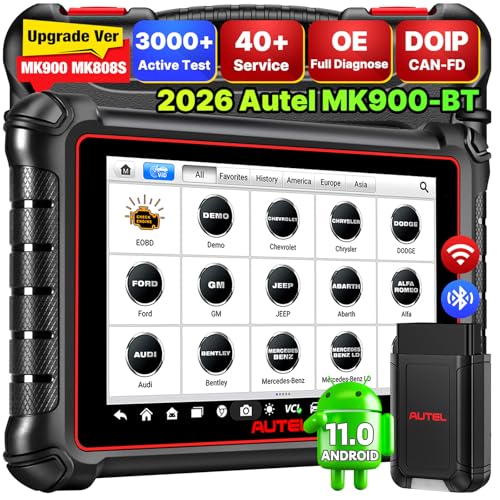
- 💯【Conta.ct us for Support Directly】If you met any...
- 🔥🔥🔥【2026 AUTEL FLAGSHIP MK900BT MK900-BT, NEW...
- 🚗【3000+ ACTIVE TESTS (50➡3000+), SAME AS MS...
- 🚗【40+ HOT SERVICES FOR 150 MAKES (28+➡40+)】Full...
- 🚗【OE ALL SYSTEM DIAGNOSE, AUTO SCAN 2.0: SCAN LICENSE...
Search NHTSA Database for Recalls
Search NHTSA Database for Vehicle Investigations
View Latest Vehicle Investigations
Search NHTSA Database for Vehicle Complaints
View Latest Vehicle Complaints
TSB/Document ID: IK2300038
Replacement Service Bulletin Number:
MFR Communication Date: 2026-01-20
MFR Internal Campaign ID/Software Version:
Communication Type: Service Bulletin/Repair Instructions
NHTSA Components: ELECTRICAL SYSTEM
MFR Component System:
MFR Component Subsystem:
Previous TSB | Next TSB |
Countries:
CANADA, UNITED STATES Document ID: IK2300038
Availability:
ISIS, Bus ISIS, IsSIR
Revision:
1
Major System:
Created:
3/21/2025
Current Language: English
Last Modified: 1/20/2026
Other Languages: NONE
Author:
Viewed:
Ryan Hendrickson
281
Less Info
Coding Information
Hide Details
Copy Link
Copy Relative Link
Bookmark
Add to Favorites
Provide Feedback
View My Bookmarks
Helpful
Not Helpful
3
0
Title : Electric Vehicle State of Charge Calibration
Applies To : All Electric Vehicles
CHANGE LOG
Please refer to the change log text box below for recent changes to this article:
1/20/2025 - Added Note in Diagnostic Step Section.
04/23/2025 - Initial Article Release.
DESCRIPTION
This document will walk the user through correcting the battery State of Charge (SOC) calibration.
It has been found on some electric vehicles that the SOC calibration can become incorrect over time. Often times this is from the vehicle sitting a
long period without use or charging the batteries. This will result in the SOC value on the cluster becoming inaccurate compared to the SOC value
in the battery packs. This may also result in a low value for the vehicle range estimate on the EGC.
SYMPTOMS
Estimated range remaining displayed on the cluster is low for the given remaining SOC.
SOC decreases significantly faster than expected while operating the vehicle.
DTC/Light
Description
N/A
N/A
SPECIAL TOOLS / SOFTWARE
Tool Description
Tool Number
Service Diagnostic Solutions (SDS)
Electric Vehicle “Y” Adaptor Cable
08-801-01
Nexiq USB 2 or Nexiq USB 3
Electric Vehicle “Y” Adaptor Cable 08-801-01 must be used when diagnosing and recording signals with SDS.
The EV Y adapter cable can only be used with the NEXIQ USB2 or NEXIQ USB3 adapter.
SERVICE PARTS INFORMATION
Kit Description
Part number
Qty. Required
Notes
N/A
N/A
N/A
N/A
DIAGNOSTIC STEPS
WARNING: To prevent personal injury and / or death, or damage to property, NEVER service a high-voltage vehicle without completing
High-Voltage Safety training. Before working on vehicle, read and obey High-Voltage Safety, and Lock-Out Tag-Out safety procedures
and information.
NOTE: It is a good practice to confirm the BMS calibration is up to date. Please review IK4300030 for instructions on updating the BMS.
Pre-Entry conditions
No DTCs related to batteries, cell voltage, or State of Charge (5919-x, 5923-x, 8100-x). If there are DTCs for these items please follow the
appropriate FCAP/GUIDE for the DTC.
Battery health report can be taken at any SOC if the vehicle cannot be charged or driven. It is preferred that the SOC be either 30-50% or 90100% for the most accurate results. It is preferred that we do not evaluate the SOC in the 60-65% range.
After driving/charging the vehicle will need to be parked with the key off for 60 minutes or more. When the key is turned on to connect
with SDS be sure to turn off all additional loads such as fans, heat, A/C, lights, etc. The purpose of waiting 60 minutes after any charging or
load being placed on the batteries is to allow the pack voltages to stabilize.
Step Action
DIAGNOSTIC:
1
Using IK4300027, capture a battery health report.
Open battery health report and review values for battery pack temperatures,
see figure 1 below.
Are all values at 50°F (10°C) or above?
Decision
Yes. Continue to step 2.
No. Charge/drive the vehicle to warm
batteries. See section Warming the High
Voltage Batteries below (Link). Then repeat
key off 60 minutes and retest this step.
Figure 1: Battery Health Report (example)
Item 1: High Voltage Battery Current Draw
Item 2: Cluster Display SOC Value
Item 3: Average High Voltage Battery Pack Temp
Item 4: High Voltage Battery Pack Voltage
Item 5: Average Cell Voltage
Step Action
Decision
2
Yes. Continue to step 3.
DIAGNOSTIC:
Using the battery health report, review the high voltage amperage draw.
Is the value at 1.5A or below?
No. Open a technical service case file and
share the battery health report on the
case.
Step Action
Decision
DIAGNOSTIC:
3
Yes. Continue to step 4.
Using the battery health report, review the battery pack voltage and SOC values
from the 6 or 9 high voltage batteries.
Are the SOC values with 5% of each other highest to lowest?
Step Action
Decision
DIAGNOSTIC:
4
No. Open a technical service case file and
share the battery health report on the
case.
Yes. No change is needed.
Review the battery pack SOC values.
Average the battery pack SOC values (sum of all values, then divide by the
count of numbers that were added).
Round to the nearest whole number and record the value.
Next review the "Display SOC%" value.
No. Continue to step 5.
Is the average battery pack SOC value within 10% of the "Display SOC%" value?
Step Action
DIAGNOSTIC:
5
Review the average battery pack SOC
value.
Please select from the following:
Decision
0-19% SOC. Open a case file and share the battery health report on the case.
20-55% SOC. Continue to step 6.
56-70% SOC. Drive or Charge the vehicle to achieve a SOC value of 20-55% or
71-100%.
71-100% SOC. Continue to step 6.
Step Action
DIAGNOSTIC:
Change the State of Charge values in the BMS. See instructions below. (Link to
Repair Steps)
6
Decision
SOC was at or below 55%. Charge to
100%, restart at step 1 to confirm the
readings.
It is recommended to confirm the battery pack average SOC value compared to the
SOC was at or above 56%.
"Display SOC%" when at both the lower range, 20-55%, and again at the upper
Drive/discharge to achieve approximately
range, 90-100%.
40%, restart at step 1 to confirm the
readings.
Please select from the following:
WARMING THE HIGH VOLTAGE BATTERIES
If the high voltage batteries are below 50*F then it will be difficult to have confidence in evaluating the readings or having confidence after a change
is made. There are three ways to warm up the batteries.
If the batteries are at a high state of charge it is recommended to drive the vehicle for the purpose of warming the batteries.
If the batteries are at a lower state of charge it is recommended to charge the vehicle for the purpose of warming the batteries. Note that
charging with a level 2 (AC) charger is preferred in this case as the slower charge rate will give the batteries more time to warm up.
Parking indoors overnight is another option as the batteries will warm naturally.
When driving or charging is completed it is recommended to park indoors if possible to avoid losing the increased temperature of the high voltage
batteries.
(Return to Diagnostics step 1)
REPAIR STEPS
SDS BMS state of charge parameter change instructions
1) Open SDS and connect to the vehicle. No need for a health report at this time.
2) On the left side menu select VCU Programming.
Figure 2 - Select VCU Programming
3) Select VCU and BMS Programming
Figure 3 - Select VCU and BMS
Programming
4)Expand BMS Programming
Figure 4 - Expand BMS Programming
5) Edit Display SOC, Maximum SOC, and Minimum SOC to the average battery pack SOC value identified in step 4.
In the example below a parameter that has not been edited yet will be white in color and once edited will be shaded light purple in color. Set all
three values to the same number as you identified in step 4.
Figure 5 - Edit Values
6) Then select the Program button at the top of the screen to program in the new values. Follow the onscreen prompts to complete the
programming.
Figure 6 - Program Values
7) Return to Diagnostics step 6. (Link to Diagnostics step 6)
OTHER RESOURCES
SDS user guide. 4328790
EV resource center. RC0900002
SRT homepage Link
Master Service Information Link
Hide Details
Feedback Information
Viewed:
280
Helpful:
3
Not Helpful: 0
No Feedback Found
Copyright © 2026 Navistar, Inc.
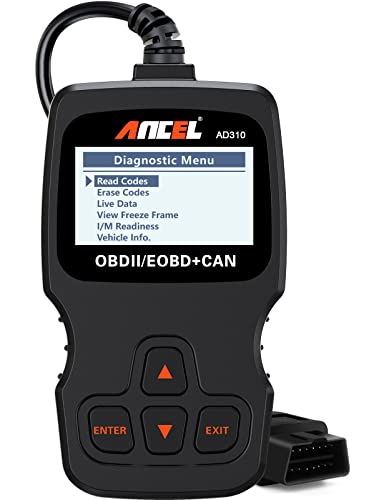
- CEL Doctor: The ANCEL AD310 is one of the best-selling OBD II scanners on the market and is recommended by Scotty Kilmer, a YouTuber and auto mechanic. It can easily determine the cause of the check engine light coming on. After repairing the vehicle's problems, it can quickly read and clear diagnostic trouble codes of emission system, read live data & hard memory data, view freeze frame, I/M monitor readiness and collect vehicle information.
- Sturdy and Compact: Equipped with a 2.5 foot cable made of very thick, flexible insulation. It is important to have a sturdy scanner as it can easily fall to the ground when working in a car. The AD310 OBD2 scanner is a well-constructed mechanic tool with a sleek design. It weighs 12 ounces and measures 8.9 x 6.9 x 1.4 inches. Thanks to its compact design and light weight, transporting the device is not a problem. The buttons are clearly labelled and the screen is large and displays results clearly.
- Accurate Fast and Easy to Use: The AD310 scanner can help you or your mechanic understand if your car is in good condition, provides exceptionally accurate and fast results, reads and clears engine trouble emission codes in seconds after you fixed the problem. This device will let you know immediately and fix the problem right away without any car knowledge. No need for batteries or a charger, get power directly from the OBDII Data Link Connector in your vehicle.
- OBDII Protocols and Car Compatibility: Many cheap scan tools do not really support all OBD2 protocols. AD310 scanner as it can support all OBDII protocols such as KWP2000, J1850 VPW, ISO9141, J1850 PWM and CAN. This device also has extensive vehicle compatibility with 1996 US-based, 2000 EU-based and Asian cars, light trucks, SUVs, as well as newer OBD2 and CAN vehicles both domestic and foreign. Pls confirm with our customer service whether it is compatible with your vehicle before purchasing.
- Home Necessity and Worthy to Own: This is an excellent code reader to travel or home with as it weighs less and it is compact in design. You can easily slide it in your backpack as you head to the garage, or put it on the dashboard, this will be a great fit for you. The AD310 is not only portable, but also accurate and fast in performance. Moreover, it covers various car brands and is suitable for people who just need a code reader to check their car.

- Multi-Functions - Practical Multi-Functions OBD2 code reader features built-in OBD2 DTC lookup library, which help you to determine the cause of the engine light, read code, erase code, view freeze frame, I/M ready, vehicle information, data flow, real-time curve, get vehicle speed information, calculate load value, engine coolant temperature, get engine speed.
- Wide Capability - Supports 9 protocols compatible with most 1996 US-Based, 2000 EU-Based and Asian cars, and newer OBD II & CAN domestic or import vehicles. Supports 6 languages - English,German, Dutch, Spanish, French, Italian.
- 2.8" LCD Display - Designed with a clear display 2.8" Large LCD screen - white backlight and contrast adjustment. No need any battery or charger, OBD reader gets the power directly from your vehicle through the OBDII Data Link Connector.
- Compact Design - Car diagnostic scanner is equipped with a 2.5 feet long cable and made of a very thick flexible insulator.There are 6 buttons on OBD2 Scanner:scroll up/down,enter/exit and buttons that quick query VIN vehicle number& the DTC fault code.
- ABS / Airbag codes NOT Supported - It is able to read and clear check engine information which is part of OBDII system, but it cannot work with non-OBDII systems, including ABS / Airbag / Oil Service Light, etc.

- 【Your Personal CEL Doctor – Read & Clear Engine Codes】The NT301 OBD2 scanner lets you read diagnostic trouble codes (DTCs), check em-issions readiness, turn off your Check Engine Light (CEL) or MIL, reset monitors, and view live data streams. It retrieves your vehicle's VIN instantly. Like all standard OBD2 scanners, it clears codes only after repairs are completed—if the issue persists, the code will return. Designed for DIYers who want to understand what’s really going on under the hood.
- 【Easy Code Reading – Just Plug & Play】Simply plug into the OBD2 port, turn the ignition to “ON” (engine off), and select the correct menu: Select OBDII-> Wait for seconds-> Select Read codes. For accurate results, ensure your vehicle is compatible and the OBD2 port is free from damage or wiring issues. No batteries needed— powered directly by your car.
- 【Live Data Graphing & Accuracy for Most OBD2 Vehicles】View and log live sensor data in graph form—monitor oxygen sensors, fuel trims, coolant temp, RPM, and more. Spot trends and suspicious values in real time. Compatible with most 1996+ gasoline cars, light trucks, and SUVs sold in the U.S., as well as many 2000+ European and Asian models. Also works on 12V diesel vehicles equipped with OBD2.
- 【S-mog Check Helper – Know Your Readiness Status at a Glance】With dedicated I/M readiness hotkeys and a simple Red-Yellow-Green LED indicator, you’ll instantly know if your vehicle is ready for em-issions testing. Built-in speaker provides audio feedback. No guesswork—just confidence before you head to the test center.
- 【A Must-Have Tool for Every Home Mechanic】Compact, rugged, and ready to use right out of the box. The 2.8” color screen is easy to read, even in daylight. No charging or setup required—just plug into the 16-pin DLC and start diagnosing. Recommended by professional mechanics on YouTube and trusted by DIYers worldwide.
Last update on 2026-03-24 / Affiliate links / Images from Amazon Product Advertising API
This product presentation was made with AAWP plugin.