
NHTSA ID Number: 11028365
Manufacturer Communication Number: IK2600283
TSB/Document Date: 2026-02-05
Summary
This document aims to enable technicians to: 1. Accurately identify N-series medium duty engine control systems. 2. Understand the programming intricacies related to these systems. 3. Autonomously execute programming tasks without needing technical support.
If the PDF is very large, it may not load in the preview below.
Some older TSBs had multiple PDFs — visit the NHTSA Website to view all PDFs.
If the TSB PDF does not show, download or view it on the NHTSA Website.
Click on the (+) Plus Sign
Then Click on Associated Document(s)
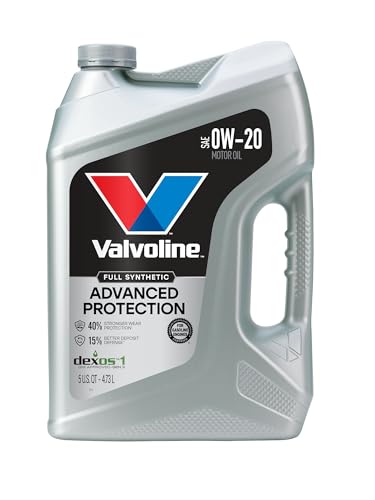
- Advanced protection against the four main causes of engine...
- Delivers 40% stronger wear protection than industry...
- Provides 15% better deposit defense vs. industry standards...
- Up to 2.5X better heat protection vs. industry standards to...
- Engineered for excellent low-temperature flow, reducing...
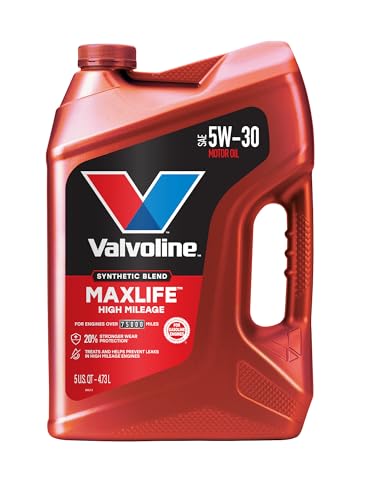
- Formulated for engines with 75,000 miles or more, Valvoline...
- Delivers 20% better wear protection and 15% better sludge...
- Extra detergents safeguard against friction, corrosion and...
- Advanced friction-fighting additives help maximize...
- Provides performance benefits for high mileage, new and...
Search NHTSA Database for Recalls
Search NHTSA Database for Vehicle Investigations
View Latest Vehicle Investigations
Search NHTSA Database for Vehicle Complaints
View Latest Vehicle Complaints
TSB/Document ID: IK2600283
Replacement Service Bulletin Number:
MFR Communication Date: 2026-01-29
MFR Internal Campaign ID/Software Version:
Communication Type: Service Bulletin/Repair Instructions
NHTSA Components: ENGINE
MFR Component System:
MFR Component Subsystem:
Previous TSB | Next TSB |
Countries:
AUSTRALIA, BAHAMAS, BOLIVIA, BRAZIL,
BELIZE, CANADA, CHILE, TAIWAN,
COLOMBIA, COSTA RICA, DOMINICAN
REPUBLIC, ECUADOR, EL SALVADOR, GUAM,
GUATEMALA, GUYANA, HAITI, HONDURAS,
Document
JAMAICA, KOREA, SOUTH KOREA, MEXICO,
IK2600283
ID:
ARUBA, NEW ZEALAND, NICARAGUA,
PANAMA, PERU, PUERTO RICO, RUSSIA,
SOUTH AFRICA, TRINIDAD AND TOBAGO,
UNITED STATES, URUGUAY, VENEZUELA,
Curaçao
Availability:
Major
System:
Current
Language:
Other
Languages:
ISIS, Bus ISIS, FleetISIS, IsSIR
Revision: 5
PROGRAMMING SUPPORT
Created:
English
Last
1/29/2026
Modified:
NONE
Author:
Viewed:
344
5/20/2025
Matthew
Carrigan
Less Info
Coding Information
Hide Details
Copy Link
Copy Relative Link
Bookmark
Add to Favorites
Provide Feedback
View My Bookmarks
Helpful
Not Helpful
1
0
Title : Vehicle Programming Information Associated with Engine: N9/N10 (2014-2017)
Applies To : N9/N10 (2014-2017)
CHANGE LOG
Please refer to the change log text box below for recent changes to this article:
01/29/2026 - Added IK2600300 N9/N10 & N13 Baud Rate Information Associated With Vehicle Programming
01/02/2026 - Added NavKal error 95 info
09/19/2025 - Added NavKal Error 8 to Baud Rate section
07/09/2025 - Fixed broken links
06/16/2025 - Added VPRC Link
DESCRIPTION
This document aims to enable technicians to:
1. Accurately identify N-series medium duty engine control systems.
2. Understand the programming intricacies related to these systems.
3. Autonomously execute programming tasks without needing technical support.
Table of Contents
Timeline
Connecting To A
N9/N10 Engine
Switching Baud
Rates
Hardware/Software
Integrations
Source Addresses
N9/N10 Horsepower
Quotes
How N9/N10 Modules
Work
N9/N10 Module Parts
Information
N9/N10 Engine
Swaps
Timeline
Common Programming Issues With
N9/N10 Systems
Return to Top
Software/Hardware Integrations
Navistar Engine Diagnostics (NED): Supported. Used for diagnostics & parameter changes.
NavKal: Supported. Used for flashing the entire ECM.
HeRo: Supported.
DLB: Supported.
360 Write Up: Supported.
DLC Fleet Tool: Supported.
The programming station works with this engine type.
Return to Top
How N9/N10 Modules Work
Baud Rate: From the beginning of N9/N10 engines (2014) until roughly August 2015 build dates, N9/N10 engines
communicated at a 250k baud rate. In August 2015, International introduced N9/N10 powered trucks that communicated at a
500k baud rate. You can tell which baud rate you vehicle communicates at by looking at your 9-pin data link connector. A
black connecter indicates 250k baud rate. A green data link connector indicates 500k baud rate. The same N9/N10 ECM can
communicate at either 250k or 500k - just not both baud rates at the same time. The only way to switch an N9/N10 ECM
from a 250k baud rate communication to 500k communicaation (or visa versa) is to isolate the ECM as the only module on
the data link (the programming station works well for this), then program with NavKal as a blank module to a VIN that has the
desried baud rate
ECM: Engine Control Module. The ECM holds both the caibration and the parameters. The N9/N10 ECM's are dealer
programmable usign NavKal. Both the calibration and paramter can be changed/programmed
DCU: Doser Control Unit. The DCU contains a calibration and is dealer programmable using NavKal.
250k DCU's are dealer programmable through NavKal
500k DCU's are not programmable. Do NOT Attempt to Reprogram Them
There are different DCU part numbers for 250k DCU's vs 500k DCU's. See "N9/N10 Module Parts Information" section
below for part numbers.
ACM: Aftertreament Control Module. The ACM contains a calibration and parameters and is dealer programmable through
NavKal. The ECM must be present on the data link in order to program the ACM. There are different ACM part numbers. See
"N9/N10 Module Parts Information" section below for part numbers.
Functional info: This type of ECM/DCU/ACM communicates on the 1939 (CAN) data link. Only the 1939 data link is used for
communicating with NED. The 1939 data link is used for the entire NavKal process
Return to Top
Connecting To A N9/N10 Engine
When NED connects to a N9/N10, you should see data similar to the screenshot above (further description is below)
Engine Type
N9/N10 SCR (2014-2017)
Software Identification
Will show an 8 digit ECM calibration name
ACM Calibration Identification
Will show an 8 digit ACM calibration name
DCU Calibration
Vehicle Identification Number
Engine Serial Number
Transmission Type
Rated Power
Total Miles
Total Fuel Used
Total Engine Hours
(not shown in screenshot above)
Will show an 8 digit DCU calibration
Will show the full 17 digit VIN
Will shows the full 14 digit ESN
Should correctly reflect the installed transmission (unless the vehicle has
an Eaton automated manual transmission - then it is normal for NED to
show an Allison transmission)
Should correctly show the rated horsepower
Should show correct total vehicle distance
NavKal shows total miles from the ECM parameter for total miles
NED shows total miles from the instrument cluster
Should show correct total fuel used
Should show correct total engine hours
When connecting with NED or NavKal to an N9/N10 engine, if you have to manually select the engine type,
you will select the option shown below.
Return to Top
Source Addresses
The ECM broadcasts source address 0 (zero).
The DCU broadcasts source address 61 (sixty one).
The ACM broadcasts source address 85 (eighty five).
The ECM, DCU, and ACM source addresses are broadcast only on the 1939 data link.
These source addresses can be seen in the sniffer in either NED or NavKal.
If you are using a Nexiq Communication cable, you could check the Nexiq Device Tester to see if source addresses 0,61, &
85 shows on the 1939 data link.
Return to Top
N9/N10 Module Parts Information
If you need engine identification information, please see IK2600242.
SID numbers are important to consider when replacing an i6 ECM of this era. See TR2600003 for more information on ECM
SID numbers.
Look up ECM part number by VIN. The correct ECM should have "SID914" on label. It is very common to use an ECM with
the wrong SID number for this specific engine type - however, even if it programs, it will lose some parameters (ESN,
ESRC...) after the programming is complete
There are different ACM part numbers depending on the baud rate ( 250k vs 500k )
Baud Rate
ACM Part Number
DCU Part Number
250k
3988097c2
7094050c1
500k
4063287c1
7098582c1
Both ACM part numbers can be programmed to either 250k or 500k baud rate
The difference in ACM part numbers indicates the baud rate the ACM will be programmed to when you get it from the
Parts dept.
Return to Top
Switching Baud Rates:
Switching the baud rate of N9/N10 modules is a larger topic that required its own article. Please see IK2600300 for comprehensive baud rate
information associated with N9/N10 engines.
Return to Top
N9/N10 Horsepower Quotes
Horsepower increases are supported for N9/N10 engines. Follow the process outlined in IK2600069 to submit a case file for
a horsepower quote. If the engine you're considering is already rated at the highest possible rating, then no increases are
available. These are a few different ratings that are highest in their class. See the chart below for those highest ratings. There
is no need to submit a case requesting a horsepower quote for an engine that is already at one of these ratings - as there are
no increases available.
Baud Rate Rating
Engine Torque Range Horsepower Torque
250k
N9
Standard
315
950
250k
N9
High
330
950
250k
N10
Standard
310
1050
250k
N10
High
350
1150
500k
12NWD
N9
Standard
315
950
500k
12NWG
N9
High
330
950
500k
12NWE
N10
Standard
310
1050
500k
12NWJ
N10
High
350
1150
International does not support changes from standard torque ratings (and visa versa). So, if you have an N9 engine with
rating 12NWD, it is not possible to increase to a higher rating. If you submit a case file with this type of request, it will receive
the responce that there is no increases available.
Return to Top
N9/N10 Engine Swaps
See IK2600047 for information about engine swaps. Programming changes may be needed in order to accommodate an
engine swap. There are some instances where International CANNOT support and engine swap. If you have any doubts
about whether your engine swap will be supported by International, please start a case file with the Vehicle Programming
group and we will let you know if International will support the swap. It is advisable to do this BEFORE swapping the
engine. The potential negative outcome would be that you install and engine that International cannot support – then we
would not be able to provide you with the correct programming.
Return to Top
Common Programming Issues With N9/N10 Systems
NavKal Error 117 Module Type: ...623..
This error can be caused by communication from other modules interfering with NavKal's communication on the data
link
Fix - either pull transmission/ABS fuses, or use programming station.
NavKal Error 8 indicates that NavKal expected to see a module on the data link, but couldn't detect it. For N9/N10 that can
be caused by a replacement module having a different baud rate than the rest of the vehicle.
Fix - IK2600252 provides troubleshooting steps and direction.
NavKal Error 84 or 89 indicates that you are using an ECM that has a wrong SID number
Possible Symptom: ECM loses VIN or ESN upon key cycle after NavKal programming is completed.
Fix - Use ECM that says "SID914" on the label. See TR2600003 for more information on the ECM SID numbers.
NavKal Error 95 indicates that one of the NavKal calibration files downloaded onto your computer is corrupt.
Fix - See IK2600291 for detailed instructions.
NavKal newly installed module not detected. It is possible that the newly installed module has a different baud rate than the
old module
For an explanation of how N9/N10 baud rate works, see section titled "How N9/N10 modules work" above.
For information on module part numbers by baud rate see section titled "N9/N10 Modules Parts Information" above.
For information on switching the module's baud rate see the section titled "Switching Baud Rates" above.
Return to Top
Other Resources
Master Service Information Site
RC2600001 - Vehicle Programming Resource Center
Return to Top
Hide Details
Feedback Information
Viewed:
343
Helpful:
1
Not Helpful: 0
No Feedback Found
Copyright © 2026 Navistar, Inc.

- CEL Doctor: The ANCEL AD310 is one of the best-selling OBD II scanners on the market and is recommended by Scotty Kilmer, a YouTuber and auto mechanic. It can easily determine the cause of the check engine light coming on. After repairing the vehicle's problems, it can quickly read and clear diagnostic trouble codes of emission system, read live data & hard memory data, view freeze frame, I/M monitor readiness and collect vehicle information.
- Sturdy and Compact: Equipped with a 2.5 foot cable made of very thick, flexible insulation. It is important to have a sturdy scanner as it can easily fall to the ground when working in a car. The AD310 OBD2 scanner is a well-constructed mechanic tool with a sleek design. It weighs 12 ounces and measures 8.9 x 6.9 x 1.4 inches. Thanks to its compact design and light weight, transporting the device is not a problem. The buttons are clearly labelled and the screen is large and displays results clearly.
- Accurate Fast and Easy to Use: The AD310 scanner can help you or your mechanic understand if your car is in good condition, provides exceptionally accurate and fast results, reads and clears engine trouble emission codes in seconds after you fixed the problem. This device will let you know immediately and fix the problem right away without any car knowledge. No need for batteries or a charger, get power directly from the OBDII Data Link Connector in your vehicle.
- OBDII Protocols and Car Compatibility: Many cheap scan tools do not really support all OBD2 protocols. AD310 scanner as it can support all OBDII protocols such as KWP2000, J1850 VPW, ISO9141, J1850 PWM and CAN. This device also has extensive vehicle compatibility with 1996 US-based, 2000 EU-based and Asian cars, light trucks, SUVs, as well as newer OBD2 and CAN vehicles both domestic and foreign. Pls confirm with our customer service whether it is compatible with your vehicle before purchasing.
- Home Necessity and Worthy to Own: This is an excellent code reader to travel or home with as it weighs less and it is compact in design. You can easily slide it in your backpack as you head to the garage, or put it on the dashboard, this will be a great fit for you. The AD310 is not only portable, but also accurate and fast in performance. Moreover, it covers various car brands and is suitable for people who just need a code reader to check their car.

- Multi-Functions - Practical Multi-Functions OBD2 code reader features built-in OBD2 DTC lookup library, which help you to determine the cause of the engine light, read code, erase code, view freeze frame, I/M ready, vehicle information, data flow, real-time curve, get vehicle speed information, calculate load value, engine coolant temperature, get engine speed.
- Wide Capability - Supports 9 protocols compatible with most 1996 US-Based, 2000 EU-Based and Asian cars, and newer OBD II & CAN domestic or import vehicles. Supports 6 languages - English,German, Dutch, Spanish, French, Italian.
- 2.8" LCD Display - Designed with a clear display 2.8" Large LCD screen - white backlight and contrast adjustment. No need any battery or charger, OBD reader gets the power directly from your vehicle through the OBDII Data Link Connector.
- Compact Design - Car diagnostic scanner is equipped with a 2.5 feet long cable and made of a very thick flexible insulator.There are 6 buttons on OBD2 Scanner:scroll up/down,enter/exit and buttons that quick query VIN vehicle number& the DTC fault code.
- ABS / Airbag codes NOT Supported - It is able to read and clear check engine information which is part of OBDII system, but it cannot work with non-OBDII systems, including ABS / Airbag / Oil Service Light, etc.

- 【Your Personal CEL Doctor – Read & Clear Engine Codes】The NT301 OBD2 scanner lets you read diagnostic trouble codes (DTCs), check em-issions readiness, turn off your Check Engine Light (CEL) or MIL, reset monitors, and view live data streams. It retrieves your vehicle's VIN instantly. Like all standard OBD2 scanners, it clears codes only after repairs are completed—if the issue persists, the code will return. Designed for DIYers who want to understand what’s really going on under the hood.
- 【Easy Code Reading – Just Plug & Play】Simply plug into the OBD2 port, turn the ignition to “ON” (engine off), and select the correct menu: Select OBDII-> Wait for seconds-> Select Read codes. For accurate results, ensure your vehicle is compatible and the OBD2 port is free from damage or wiring issues. No batteries needed— powered directly by your car.
- 【Live Data Graphing & Accuracy for Most OBD2 Vehicles】View and log live sensor data in graph form—monitor oxygen sensors, fuel trims, coolant temp, RPM, and more. Spot trends and suspicious values in real time. Compatible with most 1996+ gasoline cars, light trucks, and SUVs sold in the U.S., as well as many 2000+ European and Asian models. Also works on 12V diesel vehicles equipped with OBD2.
- 【S-mog Check Helper – Know Your Readiness Status at a Glance】With dedicated I/M readiness hotkeys and a simple Red-Yellow-Green LED indicator, you’ll instantly know if your vehicle is ready for em-issions testing. Built-in speaker provides audio feedback. No guesswork—just confidence before you head to the test center.
- 【A Must-Have Tool for Every Home Mechanic】Compact, rugged, and ready to use right out of the box. The 2.8” color screen is easy to read, even in daylight. No charging or setup required—just plug into the 16-pin DLC and start diagnosing. Recommended by professional mechanics on YouTube and trusted by DIYers worldwide.
Last update on 2026-03-24 / Affiliate links / Images from Amazon Product Advertising API
This product presentation was made with AAWP plugin.