
NHTSA ID Number: 11028441
Manufacturer Communication Number: TSB_2079690_6
TSB/Document Date: 2026-02-06
Summary
This bulleitn provides informaiotn on the combined software update KD2; 03.10.00/C (28.13.01).
If the PDF is very large, it may not load in the preview below.
Some older TSBs had multiple PDFs — visit the NHTSA Website to view all PDFs.
If the TSB PDF does not show, download or view it on the NHTSA Website.
Click on the (+) Plus Sign
Then Click on Associated Document(s)
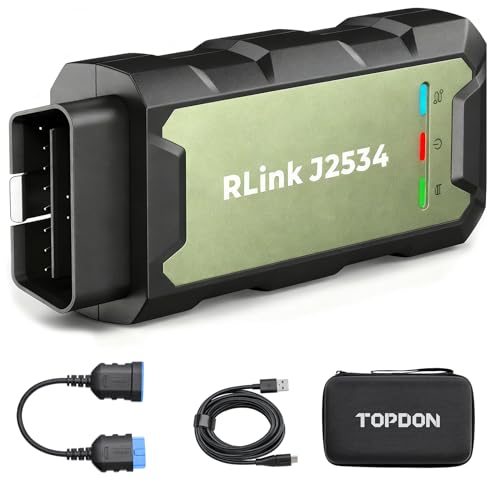
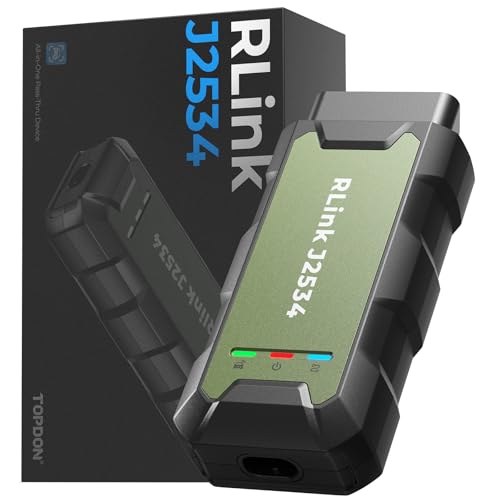
- Advanced VCI Box, Industry-leading J2534 Pass-Thru...
- High-Speed OEM-Level Diagnostics & Programming: Unlock true...
- Coverage for 17 Car Brands & Ultra Reliability: Works...
- User-Friendly RLink Platform & Expert Support: TOPDON’s...
- 6.6 ft USB-C Cable & Portable Storage Case: The RLink J...
Search NHTSA Database for Recalls
Search NHTSA Database for Vehicle Investigations
View Latest Vehicle Investigations
Search NHTSA Database for Vehicle Complaints
View Latest Vehicle Complaints
TSB/Document ID: TSB_2079690_6
Replacement Service Bulletin Number:
MFR Communication Date: 2026-01-21
MFR Internal Campaign ID/Software Version:
Communication Type: Service Bulletin/Repair Instructions
NHTSA Components: ELECTRICAL SYSTEM
MFR Component System:
MFR Component Subsystem:
Previous TSB | Next TSB |
ZN Connection offline
Technical Service Bulletin
00 Combined software update 03.10.00/C (28.13.01) KD2
Transaction No.: 2079690/6
Release date: Jan 21, 2026
Condition
Model(s) Year(s) VIN Range Vehicle Specific Equipment
A5, S5 (FU), A6 Sportback
e-tron, S6 Sportback e-
tron (GH), Q5, Q5
Sportback e-tron, SQ5,
$Q5 Sportback e-tron 2025 All Not applicable
(GU), Q6 e-tron, Q6
Sportback e-tron, SQ6 e-
tron, and SQ6 Sportback
e-tron (GF)
REVISION HISTORY
Revision Date Purpose
6 - Revised header (Included market 4NA)
5 11/26/2025 | Revised Service (Updated verbiage, Add adaptation instructions)
4 11/10/2025 | Revised header (Updated PR codes)
Revised Condition (Added model table)
The following TSB describes the specific flashing procedure that must be used on the vehicle.
©
Please note that all open field campaigns must have been performed in advance. Please work through
them according to their publication date
The following complaints are resolved with this software update:
¢« Optimizations to display and user settings.
* Optimizations to the navigation system (depiction, route calculation, route guidance, navigation).
* Optimizations to connectivity (APN, Bluetooth, radio, navigation, eCall).
¢ Optimizations to operation (voice assistant) and navigation system.
* Optimizations to traffic sign recognition (general optimization of recognition, malfunctions and deactivation of
assist systems).
« — Improved driving characteristics (moving off, hold function, juddering).
¢« Avoidance of incorrect warning lamps.
* Optimizations to charging (charging times, app, SOC display, charging difficulties).
* Improvements to mobile key (key detection, keyless system).
* Optimizations to child presence detection (avoidance of incorrect triggering).
* — Sharing digital key is now possible (up to 5 digital keys, including main key).
The physical key is required to perform the software update. The digital key and the digital key card
cannot be used to perform the software update.
Only applies to vehicles with PR number 2F1 - After the update, the digital key must first be reset to enable the
digital key to be shared with other people.
Perform the procedure described below to reactivate sharing of the digital key via the myAudi app.
NOTE: If a digital key is already in use, resetting the key user will remove this digital key and it must be set up
again.
Requirements:
* Make sure that a physical key (remote control key) is available.
* Make sure that the key user’s device is available.
* Make sure a key user has already been created for the vehicle
* Make sure the vehicle has mobile reception, is online and has a valid time signal (sufficient satellite reception).
Procedure part 1 (prior to software update):
1. The ignition of the vehicle must be switched on with the physical key (remote control key).
2. If there a digital key has already been adapted, it must be deleted BEFORE the software update:
a. Open the “Digital key” menu option in the MMI.
b. Select the “Management?” tab and then “Primary device management”.
c. Select “Remove primacy device”. The physical key must be inside the vehicle.
d. Confirm that you want to remove the main device.
Please note: The digital keys will be deactivated on the main device. The customer will receive a push notification
from the myAudi app and can then remove the keys from the wallet app. The push notification has no effect on the
following steps.
Procedure part 2 (following software update):
Following the software update, the digital key must be set up again, deleted again and then set up again. This
initiates the process in the backend that enables the digital key to be shared.
Set up the digital key together with the customer.
Then delete the digital key again. Only by deleting the digital key is the process in the backend initiated, enabling
the digital key to be shared.
1. Open the “Digital key” menu option in the MMI.
2. Select the “Management” tab and then “Primary device management’.
3. Select “Remove primary device”. The physical key must be inside the vehicle.
4. Confirm that you want to remove the main device.
The digital keys will be deactivated on the main device. The customer will receive a push notification from the
myAudi app and can then remove the keys from the wallet app. The push notification has no effect on the following
steps.
After a short wait, the customer will be able to add the digital key in the myAudi app again. Sharing the digital key is
now possible.
©
If it is not possible during the workshop procedure to set up the digital key, then delete it and set it up
again once after the software update has been performed. Please provide the customer with the following
instructions to set up digital key:
Requirements:
* Make sure that a physical key (remote control key) is available.
* Make sure that the key user’s device is available.
* Make sure a key user has already been created for the vehicle
* Make sure the digital key has already been set up for the key user. If this is not the case, a digital key must
first be set up. Make sure the vehicle has mobile reception, is online and has a valid time signal (sufficient
satellite reception).
Procedure:
To be able to share the digital key with other people, it is necessary to follow the deletion procedure once and set up
the digital key again after. Proceed as follows:
If a digital key has not yet been set up for the key user, set one up first using the myAudi app. Only proceed when
the digital key has been set up for the key user.
The ignition of the vehicle must be switched on with the physical key (remote control key).
The existing digital key for the key user must then be deleted again.
1. Open the “Digital key” menu option in the MMI.
2. Select the “Management” tab and then “Primary device management”.
3. Select “Remove primary device”. The physical key must be inside the vehicle.
4. Confirm that you want to remove the main device.
Please note: The digital keys will be deactivated on the main device. You will receive a push notification from the
myAudi app, and the key can then be removed from the wallet app.
After a short wait, the digital key can be added in the myAudi app again. It is now possible to use the digital key and
the “Share key” function
©
Please inform the customer that Mobile Data is turned off automatically after the software update and
may need to be reactivated.
Information for the customer after the software update:
Various settings must be re-adjusted after the software update. For this reason, a customer letter has been
attached to this TSB. Please print this document and give it to the customer when returning the vehicle.
Applies to vehicles with high-voltage components:
To prevent the high-voltage battery from charging during the software update, the high-voltage charging cable on
vehicles with high-voltage components must be unplugged BEFORE the SVM code is entered.
Please note that charging the high-voltage battery during a software update can cause damage to the high-voltage
components.
Technical Background
Not applicable.
Production Solution
Implemented from week 34 onwards (depending on model).
Service
Please read the following information carefully.
The total duration of the combined software update (including preliminary and follow-up work) is
approximately 3.5 hours.
There are different procedures for the software update for PPE and PPC models.
Prerequisites for flashing:
* The driver’s door must remain open for the duration of the flashing procedure. Please do not run the
diagnostic interface cable through the window because the window regulators will be initialized in a later step.
* Please activate privacy mode (mobile data off).
* Please switch off the background lighting in the HMI to prevent negative interference.
* Please only place one vehicle key inside the vehicle. The key must be placed on the hazard warning lights
switch in the Audi Q6 e-tron and Audi A6 e-tron (PPE) and on the reader coil in the Audi A5, Audi Q5 and Audi
AG (PPC).
* Before entering each code, check whether the current date/time is displayed in the vehicle. If not, move the
vehicle to a location where there is GPS reception, or set the date and time manually. Otherwise, an update
will not be possible, or it will be aborted.
* No additional/other work may be performed on the vehicle for the entire duration of the update.
* — The firewall settings which correspond to the latest release notes of the current ODIS version at Elsa2Go>>
Service References>>Vehicle Diagnostics always apply.
©
The vehicle must be put in bus sleep mode before the function “SVM — Authorized Multiple Code
Entry” is run. Please start the update directly after a bus sleep.
Prepare vehicle for flashing:
¢ Put the vehicle in bus sleep mode (5 minutes).
— Ensure the vehicle is locked (close all doors, trunk, and hood)
— It is absolutely critical to allow the vehicle to sleep between retry attempts after a failure
* Connect battery charger unit in accordance with specifications in “Standards for workshop equipment”.
* Switch on Ignition.
- Please note for Q6/A6 e-tron that ignition will automatically be switched off once the driver leaves the
driver’s seat (in this case switch on ignition without sitting in the driver’s seat).
* Switch off electrical equipment (blower, seat heater, lights, etc.).
* Move selector lever to P.
* Connect the diagnostic tester to the vehicle using a USB cable (with door open and window closed).
* The driver’s door must remain open for the duration of the flashing procedure. Please do not run the
diagnostic interface cable through the window because the window regulators will be initialized in a later
step.
A diagnostic tester with the following Audi brand version or higher is required: 2.39.4
©
We strongly recommend flashing using a USB cable. This ensures that data transmission is as reliable
as possible.
Infrastructure mode is not permissible as it is very prone to interference/errors.
For the Q6 e-tron and all later Audi models, you must ensure that port 8080 on your diagnostic device is
enabled for incoming TCP connections.
Please contact your local IT administrator regarding anything above.
If you have any support-related queries, please contact ODIS service support.
Performing software update
©
If flashing is aborted, error messages are shown or messages are shown in the instrument cluster during
the software update, please refer to the separate TSB 2079692 00 Aid for TSB 2079690 (00 Combined
software update 03.10.00/C (28.13.01) KD2).
If the fault code 8024 is displayed, an incorrect SVM code was entered. Please note that various SVM codes
are available (distinction between PPE and PPC).
Procedure to begin flashing:
* Select “flash”.
« Select “SVM — Authorized Multiple Code Entry’.
* Perform the software update using the function “SVM — Authorized Multiple Code Entry” and the following
SVM codes:
« PPE SVM Code (Q6 e-tron, Q6 e-tron Sportback, A6 e-tron Sportback):
BLKD2PPE, DUCLDRM0046,DUCDOORWR
* PPC SVM Code (Audi Q5, A5 Sportback):
BLKD2PPC,DUCLDRM0046,DUCDOORWR
O
After the function “SVM — Authorized Multiple Code Entry” is run, the vehicle is identified, the data is calculated in
the backend and then transmitted to the vehicle, and the update phase starts in the vehicle.
* | When the update phase starts, a message will prompt you to unplug the diagnostic interface.
Unplugging the diagnostic interface and vehicle diagnostic tester during the update phase is possible. The vehicle
diagnostic tester indicates when the diagnostic interface can be unplugged.
Further information on how to proceed is displayed on the vehicle diagnostic tester.
©
You can track the progress of the update on the display in the vehicle. Information on the progress is also
displayed on the vehicle diagnostic tester. For this software update, the progress may not be displayed in
the vehicle during the first 20 to 30 minutes. The display in the vehicle switches on and off multiple times
and remains switched off (is dark) for several minutes. A reliable indication of the progress is only shown
after 20 to 30 minutes. You must not perform any actions on the vehicle during this time (e.g. switch the
ignition on/off, select a gear).
You are permitted work on other customer vehicles during the update phase if the diagnostic interface has
been unplugged.
Procedure if diagnostic interface has been unplugged:
* The diagnostic interface must not be plugged back in while the software update is running!
* To view flash progress in the vehicle, tap the ‘bell icon’ on the top left of the MMI > scroll down and select
“RPC installation’.
— The following message in the vehicle indicates that the update was successful: “Install update finished
successful”.
— The following message in the vehicle indicates that the update was not successful: “Installation error”.
* — In both cases, the function “SVM — Authorized Multiple Code Entry” must be run again to ensure successful
feedback documentation or, if flashing was aborted, to receive further instructions.
* To do this, plug the vehicle diagnostic tester back in and run the function “SVM — Authorized Multiple Code
Entry’.
Procedure after flashing:
* Once the function “SVM — Authorized Multiple Code Entry’ is finished (special functions display), unplug the
vehicle diagnostic tester from the vehicle
* After the update, it is very important to open and close all vehicle doors once (adaptive cruise assist
initialization).
* — If applicable, please press the triggered manual release mechanism back into its starting position (see figure 1
below).
* Deactivate privacy mode (mobile data on)
* Please then check the tire pressures and initialize (i.e. store) these again.
* Please then perform a bus sleep cycle of at least 5 minutes (please close all doors and hooa).
* Please perform a road test/calibration drive at a speed above 40 km/h. Please activate the cruise control
system and the ACC system during the calibration drive to check that they are working.
¢ Plug the vehicle diagnostic tester back into the vehicle.
* End the flashing procedure (the flash log will be sent online, and the event memory will be erased
automatically).
©
After the software update, please check whether the vehicle is equipped with either of the PR numbers
QI4 or QI7. If this is the case, please use the following procedure and perform the following adaptations in
HCP3 (diagnostic address 0017 — Instrument cluster)
Adaption channels can be accessed via “Self-diagnosis” Mode > Select “0017 — Instrument cluster” in “Control
Module List” Tab > Choose “Adaption’” in “Control module ODB” dropdown
Required adaptation channels/measured values:
0x0306 - Distance until next target data container inspection
0x0307 - Time until next target data container inspection
0x22A4 - Distance until next inspection
0x22A5 - Time until next inspection
If Ox0306 is not equal to 0x22A4
Read out value from 0x0306 and write to adaptation channel 0x22A4
If the values in the channels are the same, no action is required
If Ox0307 is not equal to 0x22A5
Read out value from 0x0307 and write to adaptation channel 0x22A5
If the values in the channels are the same, no action is required
(1) notice
To be able to share the digital key, it is necessary to follow the digital key deletion procedure once and
set up the digital key again after. Follow procedure described in the Condition section.
Figure 1. Door manual release mechanism.
Prior to the update attempt, the installed software version of the vehicle can be found in the MMI (Settings > System
> About).
KD2 “installed software version” = 03.10.00/C
at Te
Model & hardware
Model MMI
Android versic
Android security patch leve
Kernel version
5.4,.147-android1 2-9-g4f2c24585ca6-ab615
#1 Mon Mar 10 12:46:41 UTC 2025
Build number
Figure 2. MMI screenshot showing KD2 “installed software version”.
A total of 150 TU will be paid for this software update. This TSB only describes the flashing procedure in
the vehicle. The specific billing information for performing the combined software update is stored in the
respective “Customer complaint TSB”. Final billing is performed via the respective "Customer complaint
TSB".
When carrying out this TSB, time stamps are not required for billing under warranty. You are therefore permitted to
work on other vehicles at the same time. The update can also be performed by non-productive personnel.
All part and service references provided in this TSB (2079690) are subject to change and/or removal. Always check
with your Parts Department and/or ETKA for the latest information and parts bulletins. Please check the Repair
Manual for fasteners, bolts, nuts, and screws that require replacement during the repair.
©2026 Audi of America, Inc. All rights reserved. The information contained in this document is based on the latest
information available at the time of printing and is subject to the copyright and other intellectual property rights of
Audi of America, Inc., its affiliated companies, and its licensors. All rights are reserved to make changes at any time
without notice. No part of this document may be reproduced, stored in a retrieval system, or transmitted in any form
or by any means, electronic, mechanical, photocopying, recording, or otherwise, nor may these materials be
modified or reposted to other sites, without the prior expressed written permission of the publisher.

- CEL Doctor: The ANCEL AD310 is one of the best-selling OBD II scanners on the market and is recommended by Scotty Kilmer, a YouTuber and auto mechanic. It can easily determine the cause of the check engine light coming on. After repairing the vehicle's problems, it can quickly read and clear diagnostic trouble codes of emission system, read live data & hard memory data, view freeze frame, I/M monitor readiness and collect vehicle information.
- Sturdy and Compact: Equipped with a 2.5 foot cable made of very thick, flexible insulation. It is important to have a sturdy scanner as it can easily fall to the ground when working in a car. The AD310 OBD2 scanner is a well-constructed mechanic tool with a sleek design. It weighs 12 ounces and measures 8.9 x 6.9 x 1.4 inches. Thanks to its compact design and light weight, transporting the device is not a problem. The buttons are clearly labelled and the screen is large and displays results clearly.
- Accurate Fast and Easy to Use: The AD310 scanner can help you or your mechanic understand if your car is in good condition, provides exceptionally accurate and fast results, reads and clears engine trouble emission codes in seconds after you fixed the problem. This device will let you know immediately and fix the problem right away without any car knowledge. No need for batteries or a charger, get power directly from the OBDII Data Link Connector in your vehicle.
- OBDII Protocols and Car Compatibility: Many cheap scan tools do not really support all OBD2 protocols. AD310 scanner as it can support all OBDII protocols such as KWP2000, J1850 VPW, ISO9141, J1850 PWM and CAN. This device also has extensive vehicle compatibility with 1996 US-based, 2000 EU-based and Asian cars, light trucks, SUVs, as well as newer OBD2 and CAN vehicles both domestic and foreign. Pls confirm with our customer service whether it is compatible with your vehicle before purchasing.
- Home Necessity and Worthy to Own: This is an excellent code reader to travel or home with as it weighs less and it is compact in design. You can easily slide it in your backpack as you head to the garage, or put it on the dashboard, this will be a great fit for you. The AD310 is not only portable, but also accurate and fast in performance. Moreover, it covers various car brands and is suitable for people who just need a code reader to check their car.

- Multi-Functions - Practical Multi-Functions OBD2 code reader features built-in OBD2 DTC lookup library, which help you to determine the cause of the engine light, read code, erase code, view freeze frame, I/M ready, vehicle information, data flow, real-time curve, get vehicle speed information, calculate load value, engine coolant temperature, get engine speed.
- Wide Capability - Supports 9 protocols compatible with most 1996 US-Based, 2000 EU-Based and Asian cars, and newer OBD II & CAN domestic or import vehicles. Supports 6 languages - English,German, Dutch, Spanish, French, Italian.
- 2.8" LCD Display - Designed with a clear display 2.8" Large LCD screen - white backlight and contrast adjustment. No need any battery or charger, OBD reader gets the power directly from your vehicle through the OBDII Data Link Connector.
- Compact Design - Car diagnostic scanner is equipped with a 2.5 feet long cable and made of a very thick flexible insulator.There are 6 buttons on OBD2 Scanner:scroll up/down,enter/exit and buttons that quick query VIN vehicle number& the DTC fault code.
- ABS / Airbag codes NOT Supported - It is able to read and clear check engine information which is part of OBDII system, but it cannot work with non-OBDII systems, including ABS / Airbag / Oil Service Light, etc.

- 【Your Personal CEL Doctor – Read & Clear Engine Codes】The NT301 OBD2 scanner lets you read diagnostic trouble codes (DTCs), check em-issions readiness, turn off your Check Engine Light (CEL) or MIL, reset monitors, and view live data streams. It retrieves your vehicle's VIN instantly. Like all standard OBD2 scanners, it clears codes only after repairs are completed—if the issue persists, the code will return. Designed for DIYers who want to understand what’s really going on under the hood.
- 【Easy Code Reading – Just Plug & Play】Simply plug into the OBD2 port, turn the ignition to “ON” (engine off), and select the correct menu: Select OBDII-> Wait for seconds-> Select Read codes. For accurate results, ensure your vehicle is compatible and the OBD2 port is free from damage or wiring issues. No batteries needed— powered directly by your car.
- 【Live Data Graphing & Accuracy for Most OBD2 Vehicles】View and log live sensor data in graph form—monitor oxygen sensors, fuel trims, coolant temp, RPM, and more. Spot trends and suspicious values in real time. Compatible with most 1996+ gasoline cars, light trucks, and SUVs sold in the U.S., as well as many 2000+ European and Asian models. Also works on 12V diesel vehicles equipped with OBD2.
- 【S-mog Check Helper – Know Your Readiness Status at a Glance】With dedicated I/M readiness hotkeys and a simple Red-Yellow-Green LED indicator, you’ll instantly know if your vehicle is ready for em-issions testing. Built-in speaker provides audio feedback. No guesswork—just confidence before you head to the test center.
- 【A Must-Have Tool for Every Home Mechanic】Compact, rugged, and ready to use right out of the box. The 2.8” color screen is easy to read, even in daylight. No charging or setup required—just plug into the 16-pin DLC and start diagnosing. Recommended by professional mechanics on YouTube and trusted by DIYers worldwide.
Last update on 2026-03-23 / Affiliate links / Images from Amazon Product Advertising API
This product presentation was made with AAWP plugin.