
NHTSA ID Number: 11028706
Manufacturer Communication Number: TSB 2025-006
TSB/Document Date: 2026-02-11
Summary
This document steps you through the procedure for adding additional, necessary sealing measures to the CREW Roof Top Tent.
If the PDF is very large, it may not load in the preview below.
Some older TSBs had multiple PDFs — visit the NHTSA Website to view all PDFs.
If the TSB PDF does not show, download or view it on the NHTSA Website.
Click on the (+) Plus Sign
Then Click on Associated Document(s)

- 💝【Questions? We’re Here Anytime】MK808S is a...
- 🔥🔥🔥【2026 NEWLY RELEASED BI-DIRECTIONAL...
- 【28+ MOST POPULAR RESET SERVICE FOR 150 MAKES】Autel...
- 【ALL SYSTEM DIAGNOSTICS, FACTORY-LEVEL SCANNER】The...
- 【AUT0 SCAN & AUT0V1N, 10X FASTER】How much have you spent...
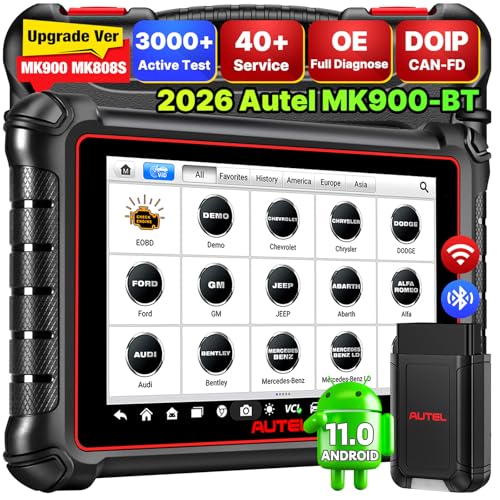
- 💯【Conta.ct us for Support Directly】If you met any...
- 🔥🔥🔥【2026 AUTEL FLAGSHIP MK900BT MK900-BT, NEW...
- 🚗【3000+ ACTIVE TESTS (50➡3000+), SAME AS MS...
- 🚗【40+ HOT SERVICES FOR 150 MAKES (28+➡40+)】Full...
- 🚗【OE ALL SYSTEM DIAGNOSE, AUTO SCAN 2.0: SCAN LICENSE...
Search NHTSA Database for Recalls
Search NHTSA Database for Vehicle Investigations
View Latest Vehicle Investigations
Search NHTSA Database for Vehicle Complaints
View Latest Vehicle Complaints
TSB/Document ID: TSB 2025-006
Replacement Service Bulletin Number:
MFR Communication Date: 2026-02-11
MFR Internal Campaign ID/Software Version: TSB 2025-006
Communication Type: Service Bulletin/Repair Instructions
NHTSA Components: UNKNOWN OR OTHER
MFR Component System:
MFR Component Subsystem:
Previous TSB | Next TSB |
TSB 2025-006 CREW Tent Sealing
Rev01072026
Overview:
This document steps you through the procedure for adding additional, necessary sealing measures to the CREW
Roof Top Tent. Please contact Storyteller should you have any questions or need any assistance with these
instructions.
Applicable Vehicles: All Crew MODEs
Safety Alert: This procedure requires working on a ladder. Prior to beginning work, ensure the unit is
parked on solid, level ground in a safe environment for repair work.
Tools and Supplies Needed: *indicates items provided by Storyteller Overland
●
●
●
●
●
●
●
●
●
●
●
34 feet - Trim Lok 1/2" Wide Foam Rubber Seal (McMaster # 93085K42)*
Corner cap set (16 caps)*
(1) Seal Bond 105 or Permatex 81158 tube*
3M Tape Primer 94*
Caulk Gun
Wool dauber/foam brush & Q-tip for tape primer application
Isopropyl alcohol
Rags
4mm Allen wrench (for front shield name plate screws)
Blue Loctite
57 in-lbs. (6.4 Nm) Torque Wrench with 4mm Hex Bit
Flat Rate Time: 3.5 hours
Repair Procedure:
1.
Inspect tent corner wiring holes for full coverage of sealant.
a. There are 2 wiring holes in each of the 8 corner caps that
need to be sealed - 16 holes total. See figure 1 for
reference of wiring hole location in each corner cap
b. Inspect each corner cap to ensure both wiring holes are
filled with sealant to prevent water ingress as shown in
figure 2.
Figure 1
Figure 2
c.
If there is incomplete sealant or no sealant present in any of the wiring holes, use the provided
sealant to inject sealant into the wiring hole to seal it up. Once all 16 holes are confirmed to be
sealed, proceed to step 2
2. Install corner caps to tent corner blocks
a. There are a variety of corner caps provided with the repair kit. The flat caps are for the upper
corner blocks and the angled caps with a slot on the bottom are for the lower corner blocks. The
caps also vary depending on their installation position and whether they have a wire passthrough
feature or not as shown in figure 3 for example
Wire
passthrough
Slot
Flat
Cap
No wire
passthrough
Figure 3
1
Rev01072026
b.
c.
d.
e.
f.
Starting at any one of the tent corners, identify the proper caps to install into the corner block
Apply a small bead of the provided
sealant to all 4 sides of the cap just behind
the outer face flange as shown in figure 4.
Align and press the cap into the
corresponding corner block opening until
it is fully seated. Some sealant squish-out
is intended and acceptable as shown in
figure 5
For corners with a wire passthrough, use
the sealant to seal around the wire and
inside the wire passthrough, see figure 6
Figure 4
Repeat step 2 for all 16 corner caps on all
8 corner blocks.
Figure 5
3. Open tent halfway
Figure 6
a. Ensure unit is parked in an area with adequate
clearance to fully open the tent.
b. With M-power system turned on, navigate to the Tent page on the ModeCOM screen
c. Press the open button then follow the on-screen prompt to initiate the open cycle
d. When the tent is opened about halfway (stage 1 arm is fully extended and stops moving as
shown in figure 7) stop the opening sequence by pressing the STOP button on the screen
Stage 1 fully extended
Figure 7
2
Rev01072026
4. Prep tent for applying side and rear seal
a. Clean the bottom flat surface of the upper tent corner blocks
and extrusions (see figure 8) along the sides and rear of the
tent using Isopropyl Alcohol and a clean rag
b. Apply a full even layer of 3M tape primer 94 to the cleaned
bottom surface of the upper corner blocks and side extrusions
c. Allow tape primer to dry for 10 minutes before proceeding
Clean bottom surface
of upper extrusions
and corner blocks
5. Apply seals to sides and rear edges
a. Starting with the rear edge of the tent, apply the seal to the
bottom flat surface of the corner blocks and extrusion from
side to side, see figure 9. Ensure seal is stuck straight along the
flat surface.
b. Trim the seal ends to match the corner block profile
c. Next apply the seal along both sides of the tent, see figure 10.
Cut the seal to butt into the rear seal at the back of the tent
Figure 8
Trim seal ends
to match corner
block angle
Apply seal to
sides of tent
Figure 10
6. Apply seal to front edge of tent
a. On ModeCOM screen, continue opening the tent to fully open
b. Using a 4mm Allen Wrench, carefully remove the front shield
nameplate assembly shown in figure 11. Set plates and
hardware aside for reinstallation later
Figure 11
seal along rear
edge side to
side
Figure 9
Remove name plate
3
Rev01072026
c.
d.
e.
f.
Using a clean rag and isopropyl alcohol
Use Q-tip to apply tape
clean the bottom flat surface of the
primer
along front edge
upper corner blocks and front edge
extrusion that the seal will be applied
to
Once cleaned and alcohol is dried, use
a Q-tip to apply 3M Tape Primer 94
along the bottom flat surface as shown
in figure 12
Allow tape primer to dry for 10
minutes before proceeding
Figure 12
These next few steps will require 2
people. Once tape primer is dried and before peeling the backer off, feed a 6-foot section of the
seal along the front edge of the tent with the adhesive side up. We found it easiest to feed the
seal ends from the middle of the front end of the tent behind the tent hinges toward the outside,
leaving a little bit hanging loose in the front. See figure 13
Figure 13
Fold backer
toward front
g.
If needed, trim the side seals to allow the
seal being installed to the front to fully
span from side to side. Then, peel about 12
inches of the adhesive backer from one
end of the seal and fold the backer toward
the front of the van as shown in figure 14.
Figure 14
4
Rev01072026
h.
i.
Pull the seal toward the other side of the van to then peel the adhesive backer off about 12
inches from that end, and fold it toward the front of the van just like in step 6g.
With the adhesive backer peeled about 12 inches from both ends, center the seal along the front
of the tent and peel the remaining backer off the seal. See figure 15
Peel off remaining
backer
Figure 15
j.
k.
l.
While pulling the seal taut, carefully align the seal
with the flat surface of both upper corner blocks
directly in front of the side seal and press to stick
to the flat surface. See figure 16. Do not worry
about pressing the middle of the seal - the tent
will be closed to stick the seal in the middle.
Remove all items from the tent, including the
mattress and set aside. Fully close the tent using
the ModeCOM screen to allow the seal to stick
across the front
While the tent is closed, use a knife to trim the
seal to match the corner block profile as shown in
figure 17
Cut seal to
match profile
Stick seal to corner
blocks in front of
side seals
Figure 16
Figure 17
5
Rev01072026
7. Finish seal installation
a. After the tent has been closed for a few minutes,
open the tent again.
b. Apply the provided sealant at all 4 joints of the seals
as shown in figure 18. Do not apply too much that
makes the sealant lump taller than the seals. There
should be just enough sealant to seal between the
edges of the 2 seals.
c. Reinstall the front shield nameplate using blue
Loctite on all screws and torque to 57 in-lbs (6.4 Nm).
d. Allow the sealant to cure for at least 1 hour.
Apply sealant
e. Ensure all items have been removed from the tent
to seal joints
including the mattress.
Figure 18
f. After 1 hour of cure, fully close the tent
8. Water Leak Testing
a. With tent closed, set up a hose to spray on top of the tent to simulate heavy rain as shown in
figure 19
b. Spray water onto the tent for about 2 minutes then stop the water.
c. Without opening the tent, peek inside the tent for any signs of water leaking. If any leaks are
present, identify the area leaking to determine resolution. Reach out to Storyteller Overland with
pictures and videos for further assistance if needed.
d. If no leaks are present, continue the water testing with the tent closed for a period of 10
minutes.
e. Again, with the tent closed check inside the tent for any signs of leaks.
f. If no leaks are present, open the tent to fully inspect tent for any water leaks. When opening the
tent for the first time after testing, there will likely be water pooled up on top of the tent. Having
all van doors closed when opening the tent is highly suggested.
g. If any leaks are present, identify the area leaking to determine resolution. Reach out to
Storyteller Overland with pictures and videos for further assistance if needed.
Figure 19
6
Rev01072026

- CEL Doctor: The ANCEL AD310 is one of the best-selling OBD II scanners on the market and is recommended by Scotty Kilmer, a YouTuber and auto mechanic. It can easily determine the cause of the check engine light coming on. After repairing the vehicle's problems, it can quickly read and clear diagnostic trouble codes of emission system, read live data & hard memory data, view freeze frame, I/M monitor readiness and collect vehicle information.
- Sturdy and Compact: Equipped with a 2.5 foot cable made of very thick, flexible insulation. It is important to have a sturdy scanner as it can easily fall to the ground when working in a car. The AD310 OBD2 scanner is a well-constructed mechanic tool with a sleek design. It weighs 12 ounces and measures 8.9 x 6.9 x 1.4 inches. Thanks to its compact design and light weight, transporting the device is not a problem. The buttons are clearly labelled and the screen is large and displays results clearly.
- Accurate Fast and Easy to Use: The AD310 scanner can help you or your mechanic understand if your car is in good condition, provides exceptionally accurate and fast results, reads and clears engine trouble emission codes in seconds after you fixed the problem. This device will let you know immediately and fix the problem right away without any car knowledge. No need for batteries or a charger, get power directly from the OBDII Data Link Connector in your vehicle.
- OBDII Protocols and Car Compatibility: Many cheap scan tools do not really support all OBD2 protocols. AD310 scanner as it can support all OBDII protocols such as KWP2000, J1850 VPW, ISO9141, J1850 PWM and CAN. This device also has extensive vehicle compatibility with 1996 US-based, 2000 EU-based and Asian cars, light trucks, SUVs, as well as newer OBD2 and CAN vehicles both domestic and foreign. Pls confirm with our customer service whether it is compatible with your vehicle before purchasing.
- Home Necessity and Worthy to Own: This is an excellent code reader to travel or home with as it weighs less and it is compact in design. You can easily slide it in your backpack as you head to the garage, or put it on the dashboard, this will be a great fit for you. The AD310 is not only portable, but also accurate and fast in performance. Moreover, it covers various car brands and is suitable for people who just need a code reader to check their car.

- Multi-Functions - Practical Multi-Functions OBD2 code reader features built-in OBD2 DTC lookup library, which help you to determine the cause of the engine light, read code, erase code, view freeze frame, I/M ready, vehicle information, data flow, real-time curve, get vehicle speed information, calculate load value, engine coolant temperature, get engine speed.
- Wide Capability - Supports 9 protocols compatible with most 1996 US-Based, 2000 EU-Based and Asian cars, and newer OBD II & CAN domestic or import vehicles. Supports 6 languages - English,German, Dutch, Spanish, French, Italian.
- 2.8" LCD Display - Designed with a clear display 2.8" Large LCD screen - white backlight and contrast adjustment. No need any battery or charger, OBD reader gets the power directly from your vehicle through the OBDII Data Link Connector.
- Compact Design - Car diagnostic scanner is equipped with a 2.5 feet long cable and made of a very thick flexible insulator.There are 6 buttons on OBD2 Scanner:scroll up/down,enter/exit and buttons that quick query VIN vehicle number& the DTC fault code.
- ABS / Airbag codes NOT Supported - It is able to read and clear check engine information which is part of OBDII system, but it cannot work with non-OBDII systems, including ABS / Airbag / Oil Service Light, etc.

- 【Your Personal CEL Doctor – Read & Clear Engine Codes】The NT301 OBD2 scanner lets you read diagnostic trouble codes (DTCs), check em-issions readiness, turn off your Check Engine Light (CEL) or MIL, reset monitors, and view live data streams. It retrieves your vehicle's VIN instantly. Like all standard OBD2 scanners, it clears codes only after repairs are completed—if the issue persists, the code will return. Designed for DIYers who want to understand what’s really going on under the hood.
- 【Easy Code Reading – Just Plug & Play】Simply plug into the OBD2 port, turn the ignition to “ON” (engine off), and select the correct menu: Select OBDII-> Wait for seconds-> Select Read codes. For accurate results, ensure your vehicle is compatible and the OBD2 port is free from damage or wiring issues. No batteries needed— powered directly by your car.
- 【Live Data Graphing & Accuracy for Most OBD2 Vehicles】View and log live sensor data in graph form—monitor oxygen sensors, fuel trims, coolant temp, RPM, and more. Spot trends and suspicious values in real time. Compatible with most 1996+ gasoline cars, light trucks, and SUVs sold in the U.S., as well as many 2000+ European and Asian models. Also works on 12V diesel vehicles equipped with OBD2.
- 【S-mog Check Helper – Know Your Readiness Status at a Glance】With dedicated I/M readiness hotkeys and a simple Red-Yellow-Green LED indicator, you’ll instantly know if your vehicle is ready for em-issions testing. Built-in speaker provides audio feedback. No guesswork—just confidence before you head to the test center.
- 【A Must-Have Tool for Every Home Mechanic】Compact, rugged, and ready to use right out of the box. The 2.8” color screen is easy to read, even in daylight. No charging or setup required—just plug into the 16-pin DLC and start diagnosing. Recommended by professional mechanics on YouTube and trusted by DIYers worldwide.
Last update on 2026-03-23 / Affiliate links / Images from Amazon Product Advertising API
This product presentation was made with AAWP plugin.