
NHTSA ID Number: 11028723
Manufacturer Communication Number: T-SB-0002-26
TSB/Document Date: 2026-02-11
Summary
Long-term or off-site storage requires special care to maintain vehicle condition. The following guidelines should be performed to minimize vehicle component/part degradation due to extended vehicle storage conditions. Long-term storage can affect a vehicle’s systems and components. Any problems that are found should be corrected immediately.
If the PDF is very large, it may not load in the preview below.
Some older TSBs had multiple PDFs — visit the NHTSA Website to view all PDFs.
If the TSB PDF does not show, download or view it on the NHTSA Website.
Click on the (+) Plus Sign
Then Click on Associated Document(s)

- 💝【Questions? We’re Here Anytime】MK808S is a...
- 🔥🔥🔥【2026 NEWLY RELEASED BI-DIRECTIONAL...
- 【28+ MOST POPULAR RESET SERVICE FOR 150 MAKES】Autel...
- 【ALL SYSTEM DIAGNOSTICS, FACTORY-LEVEL SCANNER】The...
- 【AUT0 SCAN & AUT0V1N, 10X FASTER】How much have you spent...
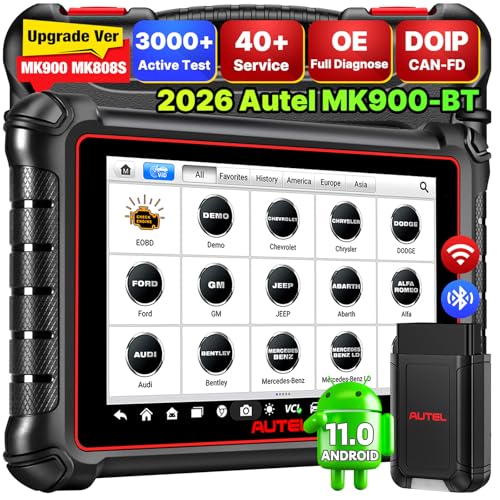
- 💯【Conta.ct us for Support Directly】If you met any...
- 🔥🔥🔥【2026 AUTEL FLAGSHIP MK900BT MK900-BT, NEW...
- 🚗【3000+ ACTIVE TESTS (50➡3000+), SAME AS MS...
- 🚗【40+ HOT SERVICES FOR 150 MAKES (28+➡40+)】Full...
- 🚗【OE ALL SYSTEM DIAGNOSE, AUTO SCAN 2.0: SCAN LICENSE...
Search NHTSA Database for Recalls
Search NHTSA Database for Vehicle Investigations
View Latest Vehicle Investigations
Search NHTSA Database for Vehicle Complaints
View Latest Vehicle Complaints
TSB/Document ID: T-SB-0002-26
Replacement Service Bulletin Number:
MFR Communication Date: 2026-01-28
MFR Internal Campaign ID/Software Version: T-SB-0002-26
Communication Type: Service Bulletin/Repair Instructions
NHTSA Components: UNKNOWN OR OTHER
MFR Component System:
MFR Component Subsystem:
Previous TSB | Next TSB |
T-SB-0002-26
January 28, 2026
Long-Term Vehicle Storage Guidelines
Service
Category
General
Section
Pre-Delivery Service
Market USA
Applicability
YEAR(S)
MODEL(S)
2026
4Runner, 4Runner HV, 86,
bZ, bZ Woodland, C-HR
BEV, Camry HV, Corolla,
Corolla Cross, Corolla Cross
HV, Corolla Hatchback,
Corolla HV, Crown, Crown
Signia, GR Corolla, Grand
Highlander, Grand
Highlander HV, Highlander,
Highlander HV, Land
Cruiser, Prius, Prius PHV,
RAV4 HV, RAV4 PHV,
Sequoia HV, Sienna HV,
Supra, Tacoma, Tacoma
HV, Tundra, Tundra HV
ADDITIONAL INFORMATION
SUPERSESSION NOTICE
The information contained in this bulletin supersedes Service Bulletin No. T-SB-0009-25.
Applicability has been updated to include 2026 model year C-HR BEV vehicles.
Applicability has been updated to remove 2026 model year C-HR vehicles.
Service Bulletin No. T-SB-0009-25 is obsolete and any printed versions should be discarded.
© 2026 Toyota Motor Sales, USA
Page 1 of 10
T-SB-0002-26
January 28, 2026
Page 2 of 10
Long-Term Vehicle Storage Guidelines
Introduction
Long-term or off-site storage requires special care to maintain vehicle condition. The following
guidelines should be performed to minimize vehicle component/part degradation due to extended
vehicle storage conditions. Long-term storage can affect a vehicle’s systems and components.
Any problems that are found should be corrected immediately.
Refer to the table below for a definition of terms used in this bulletin.
Table 1.
TERM
ACRONYM
Conventional Vehicle
CV
A vehicle with only a gasoline engine for propulsion
DEFINITION
Electrified Vehicle
A vehicle that utilizes a hybrid, plug-in hybrid, fuel cell, or
battery electric system for propulsion
Hybrid Electric Vehicle
HEV
A vehicle with both a gasoline engine and an HV battery
Plug-in Hybrid
Electric Vehicle
PHEV
BEV
Fuel Cell Electric Vehicle
FCEV
A vehicle with both a hydrogen fuel cell and an HV battery
State of Charge
SOC
The remaining capacity available in a battery
12-Volt
12V
Standard 12V battery used to power electrical systems
separate from high voltage components
High Voltage
HV
HV battery used to power the electrified vehicle
A vehicle with both a gasoline engine and an HV battery that
can be charged externally
A vehicle with only an HV battery that can be
charged externally
Electrified vehicles are equipped with two types of batteries, an HV battery and a 12V battery.
Conventional vehicles are equipped with only a 12V battery.
Warranty Information
OP CODE
DESCRIPTION
TIME
OFP
T1
T2
N/A
Not Applicable to Warranty
–
–
–
–
© 2026 Toyota Motor Sales, USA
T-SB-0002-26
January 28, 2026
Page 3 of 10
Long-Term Vehicle Storage Guidelines
Required Tools & Equipment
SPECIAL SERVICE TOOLS (SST)
PART NUMBER
QTY
DSS-5000 Battery Diagnostic Tool*
DSS-5000P T
1
DCA-8000 Battery Diagnostic Tool*
DCA-8000P T
1
CPX-900 Battery & System Analyzer
CPX-900P
1
*Essential SST.
NOTE
Additional SSTs may be ordered by calling 1-800-368-6787 or by visiting
Home – Service Resources – Toyota Tools and Equipment Program.
Summary Chart for Long-Term Storage
Below are items that should be checked periodically and their frequency.
ACTION
12V Battery Maintenance
FREQUENCY
After 60 days,
Then Every 30 days
HV Battery Charging (HEV / PHEV / FCEV Models)
Monthly
HV Battery Charging (BEV Models)
Monthly
Tire Inflation Pressure
Monthly
Parts Rust Inspection
Monthly
Engine / Hybrid System Starting and Vehicle Movement
Every 6 Weeks
Vehicle Movement (BEV / FCEV models)
Monthly
A/C Compressor Lubrication (Conventional Vehicles)
Monthly
A/C Compressor Lubrication (Electrified Vehicles)
Monthly
Disc Brake Rotor Surface Rust Removal
Every 8 Weeks
Attention to the procedures listed in this bulletin will work to ensure each vehicle is in the best
possible condition prior to customer delivery.
© 2026 Toyota Motor Sales, USA
T-SB-0002-26
January 28, 2026
Page 4 of 10
Long-Term Vehicle Storage Guidelines
Parking and Paint Protection Procedure
Storage areas should be paved, well-lit, and secure. If your off-site storage lot is NOT paved,
spread gravel to minimize mud and dust. Make sure vehicles are driven carefully when
moving them to or from a long-term lot. This will help minimize damage to the paint finish
from road grit or gravel.
Park vehicles from right to left AT LEAST three feet apart. Leave enough space front and
rear to easily walk between rows.
Turn OFF ALL electrical accessories, make sure windows and sunroof are closed, and
check that the transmission is in Park (First or Reverse for manual transmission vehicles).
Do NOT apply the parking brake. Ensure vehicles with electronic parking brakes DO NOT
engage and the Auto function has been DISABLED (Refer to Owner’s Manual for details).
Make sure the plastic door edge protectors are in place and fold in the side view mirror
(if applicable).
Anti-rust covers or anti-rust film should remain on vehicle during storage.
1. Anti-rust covers (behind wheel) should be removed at PDS.
2. Anti-rust film (applied to wheel) should be removed just before delivery to customer.
Wash vehicles frequently.
© 2026 Toyota Motor Sales, USA
T-SB-0002-26
January 28, 2026
Page 5 of 10
Long-Term Vehicle Storage Guidelines
12V Battery Maintenance
If a vehicle is put into storage, the State Of Charge (SOC) of its 12V battery will gradually
decrease. To prevent the 12V battery from becoming discharged during storage, proper
maintenance is necessary.
To reduce battery drain during long-term storage, remove the battery ground (–) cable of each
vehicle and reinstall it just before delivery to the customer. When the battery ground (–) cable
is reconnected, check and reset electrical components, such as the clock, radio, etc., and
reinitialize ALL applicable systems / functions.
Refer to the applicable Repair Manual for complete details:
Repair Manual – General – Introduction – Repair Instruction – Precaution
After 60 days, and every 30 days thereafter, inspect the 12V battery with the DSS-5000 or
DCA-8000 battery diagnostic tool, or the CPX-900 battery & system analyzer. If charging is
required, use the DCA-8000. Refer to the DSS-5000 Instruction Manual, the
DCA-8000 Instruction Manual, and/or the CPX-900 Instruction Manual for complete battery
maintenance procedures.
When removing the vehicle from storage, connect the negative (–) terminal. Please refer to
the applicable Repair Manual for torque specifications:
Repair Manual – General – Maintenance – Battery – Installation
NOTE
BEFORE disconnecting the 12V, confirm the shift position is in the “P” position. The vehicle
CANNOT be shifted from the “P” position with the 12V battery disconnected.
If the negative (–) terminal of the 12V battery is reconnected on electrified models, even if the
vehicle is powered ON (Ready ON), the hybrid system may NOT start. In this case, depress the
brake pedal, open and close any of the doors, and press the Power button to start the hybrid system
(the Ready light is ON). If the hybrid system still does NOT start (the Ready light is OFF), refer to
the applicable model and model year Repair Manual.
© 2026 Toyota Motor Sales, USA
T-SB-0002-26
January 28, 2026
Page 6 of 10
Long-Term Vehicle Storage Guidelines
HV Battery Charging (HEV / PHEV / FCEV Models)
HEV / PHEV / FCEVs store electricity in the HV battery. When the vehicle is not used for a period
of 30 days or more, the HV battery may discharge, thus reducing vehicle travel range. To prevent
the HV battery from fully discharging it is necessary to maintain the charge level of the
HV battery.
Charging the HV Battery
1. Park the vehicle in open air or connect the
exhaust extraction hose to the exhaust pipe.
Figure 1.
2. Apply the parking brake.
3. With the brake pedal depressed, select the
power switch to the “START” mode, and
check that the “READY” light in the
combination meter illuminates when the
hybrid system starts (the “READY” light
is ON).
4. Turn off all lights and accessories.
5. Check that the shift lever is in the
“P” position.
6. Keep the “READY” light on and charge the
HV battery for 30 minutes.
NOTE
If the amount of charging energy is small, the display may NOT indicate the energy flow.
Ensure there is a sufficient amount of fuel for the vehicle to run for at least 30 minutes.
HINT
The HV battery can also be charged by driving the vehicle for 30 minutes.
© 2026 Toyota Motor Sales, USA
T-SB-0002-26
January 28, 2026
Page 7 of 10
Long-Term Vehicle Storage Guidelines
HV Battery Charging (BEV Models)
BEVs store electricity received via an external power source in the HV battery. When the BEV is
not used for a period of 30 days or more, the HV battery may discharge, thus reducing vehicle
travel range. To prevent the HV battery from fully discharging it is necessary to maintain the
charge level of the HV battery.
1. If the warning light is displayed ON within the instrument cluster, charge the HV battery via the
AC charging method.
Table 2.
CONNECTED
POWER SOURCE
Charging Voltage
Charging Current
Charging Time
CHARGER
DC CHARGING
Avoid using
DC charger
for supplementary
charging during
long-term storage,
prefer AC charging
AC
CHARGING CABLE
AC CHARGING
AC 220 – 230 V
32 A
16 A
8 – 10 A
Approximately
30 Minutes
Approximately
60 Minutes
Approximately
90 Minutes
2. After charging has been completed, verify the HV battery warning light is OFF before
storing the vehicle long-term. If the HV battery warning light is still ON after charging,
repeat the charging process.
NOTE
Model specific information for charging the HV battery, charging equipment, and charging method
can be referenced from the Owner’s Manual. See section 1 – 3: Charging with the EV system. Avoid
using the DC charger for supplementary charging during long-term storage.
Tire Inflation Pressure
If the vehicle is parked for long periods without being moved, a flat spot may develop on each tire
surface in contact with the ground, even if the tires are inflated to specification. Tire inflation
pressure should be checked once a month.
Tire inflation pressure for storage ONLY: 43 psi.
NOTE
Tire pressures may vary due to changes in ambient temperatures and may require adjustment.
© 2026 Toyota Motor Sales, USA
T-SB-0002-26
January 28, 2026
Page 8 of 10
Long-Term Vehicle Storage Guidelines
Parts Rust Inspection
If the vehicles in your storage area are exposed to a sea breeze and/or significant precipitation,
corrosion with rust in some parts may occur. If rust is found, remove it, and treat it by applying
rust inhibitor to prevent recurrence.
Engine / Hybrid System Starting and Vehicle Movement
If the vehicle is stored over an extended period of time, starting and running the engine/hybrid
system periodically will ensure smooth running operation.
1. If the vehicle is equipped with a gasoline engine, start and operate the engine at an engine
speed of less than 1,500 rpm for 15 minutes or longer.
2. Raise engine speed above 3,000 rpm 10 times to eliminate moisture from the exhaust.
NOTE
Make sure to allow sufficient clearance at the rear of the vehicle to prevent other vehicles stored
behind from getting damaged by exhaust gas.
3. Drive the vehicle AT LEAST 30 feet to lubricate the transmission/transaxle and differential(s),
and to prevent tire flat-spot damage.
Vehicle Movement (BEV / FCEV models)
If the vehicle is stored over an extended period of time drive the vehicle AT LEAST 30 feet to
lubricate the transmission/transaxle and differential(s), and to prevent tire flat-spot damage.
© 2026 Toyota Motor Sales, USA
T-SB-0002-26
January 28, 2026
Page 9 of 10
Long-Term Vehicle Storage Guidelines
A/C Compressor Lubrication
To minimize the possibility of damage to the A/C compressor while storing a vehicle, perform the
following recommended maintenance procedures AT LEAST once a month to lubricate
the compressor.
Conventional Vehicles
1. Turn OFF the A/C and blower switches before starting the vehicle.
2. Start/Ready-On the vehicle.
If the vehicle is equipped with a gasoline engine, allow the engine to warm up until
engine idle drops below 1,000 rpm.
3. Turn ON the A/C system (including the rear A/C) using the following settings:
A. A/C Switch: ON
B. Blower Speed: High
C. Engine Speed: Below 1,000 rpm
4. Keep the A/C ON with engine idling for AT LEAST one minute (in dual A/C vehicles, leave ON
for two minutes).
5. Turn OFF the A/C system and cycle the ignition to the OFF position.
Electrified Vehicles
1. Turn OFF the A/C and blower switches before starting the HEV / PHEV / BEV /
Fuel-cell system.
2. Start the HEV / PHEV / BEV / Fuel-cell system.
3. Turn ON the A/C system (including the rear A/C) using the following settings:
A. A/C Switch: ON
B. Blower Speed: High
4. Keep A/C ON with above conditions for at least one minute (in PHEV, BEV, Dual A/C
vehicles, leave ON for two minutes).
5. Turn OFF A/C system and cycle power switch to OFF position.
© 2026 Toyota Motor Sales, USA
T-SB-0002-26
January 28, 2026
Page 10 of 10
Long-Term Vehicle Storage Guidelines
Disc Brake Rotor Surface Rust Removal
The brake rotors are made of cast iron and may show gradual buildup of surface rust during
long-term storage. AT LEAST once every eight weeks, drive the vehicle and use the brakes
normally. This regular usage will help prevent severe rust buildup and the possibility of unwanted
brake vibration concerns due to rust.
Figure 2. Slight Rust on Rotor
(Easy to Remove by Braking)
Figure 3. Severe Rust on Rotor
(Hard to Remove by Braking)
Drive the vehicle on a level road in a safe area and apply the brakes normally. Repeat the
brake application several times. Refer to the table below to determine how many brake applications
are required based on speed limits and traffic conditions in your area.
Table 3.
SPEED
COMPLETED STOPS
60 – 0 mph (95 – 0 km/h)
5
40 – 0 mph (65 – 0 km/h)
10
30 – 0 mph (50 – 0 km/h)
20
20 – 0 mph (30 – 0 km/h)
30
NOTE
Electrified vehicles may require additional braking applications.
If brake vibration still occurs AFTER the braking cycle, determine the root cause of the brake
vibration and repair.
Brake rotor resurfacing may be required if the rust is severe and resulted in excessive rotor
thickness variation.
© 2026 Toyota Motor Sales, USA

- CEL Doctor: The ANCEL AD310 is one of the best-selling OBD II scanners on the market and is recommended by Scotty Kilmer, a YouTuber and auto mechanic. It can easily determine the cause of the check engine light coming on. After repairing the vehicle's problems, it can quickly read and clear diagnostic trouble codes of emission system, read live data & hard memory data, view freeze frame, I/M monitor readiness and collect vehicle information.
- Sturdy and Compact: Equipped with a 2.5 foot cable made of very thick, flexible insulation. It is important to have a sturdy scanner as it can easily fall to the ground when working in a car. The AD310 OBD2 scanner is a well-constructed mechanic tool with a sleek design. It weighs 12 ounces and measures 8.9 x 6.9 x 1.4 inches. Thanks to its compact design and light weight, transporting the device is not a problem. The buttons are clearly labelled and the screen is large and displays results clearly.
- Accurate Fast and Easy to Use: The AD310 scanner can help you or your mechanic understand if your car is in good condition, provides exceptionally accurate and fast results, reads and clears engine trouble emission codes in seconds after you fixed the problem. This device will let you know immediately and fix the problem right away without any car knowledge. No need for batteries or a charger, get power directly from the OBDII Data Link Connector in your vehicle.
- OBDII Protocols and Car Compatibility: Many cheap scan tools do not really support all OBD2 protocols. AD310 scanner as it can support all OBDII protocols such as KWP2000, J1850 VPW, ISO9141, J1850 PWM and CAN. This device also has extensive vehicle compatibility with 1996 US-based, 2000 EU-based and Asian cars, light trucks, SUVs, as well as newer OBD2 and CAN vehicles both domestic and foreign. Pls confirm with our customer service whether it is compatible with your vehicle before purchasing.
- Home Necessity and Worthy to Own: This is an excellent code reader to travel or home with as it weighs less and it is compact in design. You can easily slide it in your backpack as you head to the garage, or put it on the dashboard, this will be a great fit for you. The AD310 is not only portable, but also accurate and fast in performance. Moreover, it covers various car brands and is suitable for people who just need a code reader to check their car.

- Multi-Functions - Practical Multi-Functions OBD2 code reader features built-in OBD2 DTC lookup library, which help you to determine the cause of the engine light, read code, erase code, view freeze frame, I/M ready, vehicle information, data flow, real-time curve, get vehicle speed information, calculate load value, engine coolant temperature, get engine speed.
- Wide Capability - Supports 9 protocols compatible with most 1996 US-Based, 2000 EU-Based and Asian cars, and newer OBD II & CAN domestic or import vehicles. Supports 6 languages - English,German, Dutch, Spanish, French, Italian.
- 2.8" LCD Display - Designed with a clear display 2.8" Large LCD screen - white backlight and contrast adjustment. No need any battery or charger, OBD reader gets the power directly from your vehicle through the OBDII Data Link Connector.
- Compact Design - Car diagnostic scanner is equipped with a 2.5 feet long cable and made of a very thick flexible insulator.There are 6 buttons on OBD2 Scanner:scroll up/down,enter/exit and buttons that quick query VIN vehicle number& the DTC fault code.
- ABS / Airbag codes NOT Supported - It is able to read and clear check engine information which is part of OBDII system, but it cannot work with non-OBDII systems, including ABS / Airbag / Oil Service Light, etc.

- 【Your Personal CEL Doctor – Read & Clear Engine Codes】The NT301 OBD2 scanner lets you read diagnostic trouble codes (DTCs), check em-issions readiness, turn off your Check Engine Light (CEL) or MIL, reset monitors, and view live data streams. It retrieves your vehicle's VIN instantly. Like all standard OBD2 scanners, it clears codes only after repairs are completed—if the issue persists, the code will return. Designed for DIYers who want to understand what’s really going on under the hood.
- 【Easy Code Reading – Just Plug & Play】Simply plug into the OBD2 port, turn the ignition to “ON” (engine off), and select the correct menu: Select OBDII-> Wait for seconds-> Select Read codes. For accurate results, ensure your vehicle is compatible and the OBD2 port is free from damage or wiring issues. No batteries needed— powered directly by your car.
- 【Live Data Graphing & Accuracy for Most OBD2 Vehicles】View and log live sensor data in graph form—monitor oxygen sensors, fuel trims, coolant temp, RPM, and more. Spot trends and suspicious values in real time. Compatible with most 1996+ gasoline cars, light trucks, and SUVs sold in the U.S., as well as many 2000+ European and Asian models. Also works on 12V diesel vehicles equipped with OBD2.
- 【S-mog Check Helper – Know Your Readiness Status at a Glance】With dedicated I/M readiness hotkeys and a simple Red-Yellow-Green LED indicator, you’ll instantly know if your vehicle is ready for em-issions testing. Built-in speaker provides audio feedback. No guesswork—just confidence before you head to the test center.
- 【A Must-Have Tool for Every Home Mechanic】Compact, rugged, and ready to use right out of the box. The 2.8” color screen is easy to read, even in daylight. No charging or setup required—just plug into the 16-pin DLC and start diagnosing. Recommended by professional mechanics on YouTube and trusted by DIYers worldwide.
Last update on 2026-03-23 / Affiliate links / Images from Amazon Product Advertising API
This product presentation was made with AAWP plugin.