
NHTSA ID Number: 11027260
Manufacturer Communication Number: V9324032073520_2
TSB/Document Date: 2026-01-07
Summary
How to perform Component Measurement Process
If the PDF is very large, it may not load in the preview below.
Some older TSBs had multiple PDFs — visit the NHTSA Website to view all PDFs.
If the TSB PDF does not show, download or view it on the NHTSA Website.
Click on the (+) Plus Sign
Then Click on Associated Document(s)

- 💝【Questions? We’re Here Anytime】MK808S is a...
- 🔥🔥🔥【2026 NEWLY RELEASED BI-DIRECTIONAL...
- 【28+ MOST POPULAR RESET SERVICE FOR 150 MAKES】Autel...
- 【ALL SYSTEM DIAGNOSTICS, FACTORY-LEVEL SCANNER】The...
- 【AUT0 SCAN & AUT0V1N, 10X FASTER】How much have you spent...
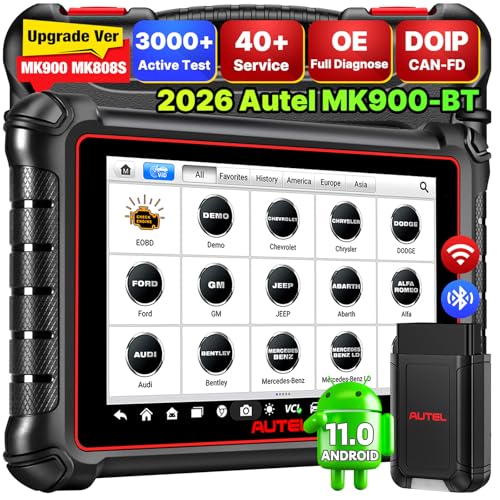
- 💯【Conta.ct us for Support Directly】If you met any...
- 🔥🔥🔥【2026 AUTEL FLAGSHIP MK900BT MK900-BT, NEW...
- 🚗【3000+ ACTIVE TESTS (50➡3000+), SAME AS MS...
- 🚗【40+ HOT SERVICES FOR 150 MAKES (28+➡40+)】Full...
- 🚗【OE ALL SYSTEM DIAGNOSE, AUTO SCAN 2.0: SCAN LICENSE...
Search NHTSA Database for Recalls
Search NHTSA Database for Vehicle Investigations
View Latest Vehicle Investigations
Search NHTSA Database for Vehicle Complaints
View Latest Vehicle Complaints
TSB/Document ID: V9324032073520_2
Replacement Service Bulletin Number:
MFR Communication Date: 2025-12-16
MFR Internal Campaign ID/Software Version:
Communication Type: Service Bulletin/Repair Instructions
NHTSA Components: ELECTRICAL SYSTEM
MFR Component System:
MFR Component Subsystem:
Previous TSB | Next TSB |
Fig. 13
Reference Information – HV adapters and text descriptions
adapters before performing the
HV component measurements
(Fig. 14).
•
This procedure is essential to
ensure that the HV adapters
are in good condition prior to
using them.
•
Perform the VAS 6558A
resistance measurement
calibration routine whenever
prompted to do so during the
GFF test plan (Fig. 15).
•
The pointed tips from the VAS
6558A kit are not used with the
HV measurement adapters, but
are needed for performing the
calibration. Install the pointed
tips when prompted to “merge”
the red and black probes.
•
Take care to press the button
on the red probe only as
instructed.
•
For the first run-through, the
“overall system” check should
be performed (Fig. 16).
•
The “individual HV component”
check is used to repeat the
measurements for validation
purposes on a single
component that is suspicious or
questionable after running
through the complete
measurements of all
components.
•
At individual components on
the auxiliary circuit, the
measurements may be
repeated directly at the
component using the
appropriate HV measurement
adapter VAS 6558A/36A or
Fig. 14
Fig. 15
Fig. 16
VAS 6558A/37A as needed,
depending on the connector
type.
•
Take care to observe small
changes in the text.
•
In the example shown, the first
test will be a series of
measurements at the DC
charging connection of the HV
battery (e.g., with VAS 6558A
/35 adapter plugged into the
HV battery DC connection (Fig.
17).
•
Later the measurement is done
at the DC charging connection
to the HV battery (e.g., with
VAS 6558A/35 disconnected
from the HV battery and
connected only to the HV
connector leading up to the
charging socket (Fig. 18).
•
Designation of battery HV
connections used in the GFF
test plan (Fig. 19):
Fig. 17
Fig. 18
Fig. 19
a.
TNS connection of the
AX2 - High-Voltage
Battery 1
b.
AUX connection of the
AX2 - High-Voltage
Battery 1.
c.
DC charging socket of the
AX2 - High-Voltage
Battery 1.
Reference information – Connection of HV measurement adapters to vehicle
•
Example of HV adapter
connections at HV battery (Fig.
20):
a.
b.
VAS 6558A/35 connected
to TNS (traction
connector) of the HV
battery.
VAS 6558A/36A
connected to AUX
(auxiliary connector) of
the HV battery.
•
Example of black lead of VAS
6558A clipped to chassis
ground point at HV battery (Fig.
21).
•
Note that measurements of all
auxiliary components are
generally taken through the
auxiliary harness. After a
measurement is taken with all
of the components on the
auxiliary harness still
connected, all of the
components are disconnected,
and then reconnected one at a
time.
•
Example diagrams of HV
adapter connections and
designations of connectors at
HV battery as provided through
functional description
attachments within the GFF
test plan.
•
At auxiliary AUX and traction
network TNS connectors (Fig.
22)
•
At DC charging connector (Fig.
23)
Fig. 20
Fig. 21
Fig. 22
Fig. 23
•
Example of VAS 6558A/35
adapter connected with the DC
charging socket to the AX2 High-Voltage Battery 1 (Fig. 24)
and associated diagram (Fig.
25).
•
Note that the HV adapters are
never connected inline between
two components in this
measurement procedure!
•
Example of VAS 6558A/35
adapter connected with the JX1
- Electric Drive Power and
Control Electronics (Fig. 26).
•
Note that the measurements of
the rear electric drive JX1 are
taken through the HV harness,
because it is not possible to
Fig. 24
Fig. 25
disconnect the HV connector
from the JX1 – however, in
vehicles equipped with all
wheel drive, it is necessary to
then remove the HV connector
from the JX4 - Electric Drive
Power and Control Electronics
2 before taking measurements
of the JX1 (Fig. 27).
•
Under no circumstances should
the HV measurements be taken
with front (JX1) and rear (JX4)
connected to the HV harness at
the same time. Such
measurements would be
inconclusive and must be
repeated.
•
Measurements at the JX4 are
similar to the JX1, with the
exception that the VAS 6558A
/35 adapter is connected
directly into the HV connector
of the JX4 rather than through
the HV harness.
Fig. 26
Fig. 27
Fig. 28
Fig. 29
•
When taking the insulation
resistance measurements at
certain HV components with
250 Volts between HV+ and
HV- the normal value may be
low enough to cause what
appears to be an incorrect
result.
•
The insulation resistance test is
being used in this way to check
the HV component against a
good reference value and is not
being used to measure
insulation resistance against
the vehicle chassis.
•
In the example shown (Fig. 30)
the value 7818.01 Ohm is
within the normal range for the JX1- power electronics.
•
If the measurement is repeated
the value may increase, but
repeat measurements are not
necessary in this case (Fig. 31
and 32).
Fig. 30
Fig. 31
Fig. 32
•
Example showing connection of
the HV adapter VAS 6558A
/36A to the HV auxiliary
harness (Fig. 33 and 34).
•
The measurement of all
components on the HV
auxiliary harness is taken
through the harness first with
all components connected,
then with the harness only (all
components disconnected),
and lastly with each component
individually (reconnected one at
a time).
•
Example diagrams, showing
how single HV components are
normally measured one at a
time, through the auxiliary
Fig. 33
Fig. 34
harness. Diagrams are shown
for two components only, all
other components on the
auxiliary harness are checked
similarly (Fig. 35 and 36)
Fig. 35
Fig. 36
•
To remove the HV connector at
the -VX81- A/C Compressor,
first remove the harness
retainer clip (circled) from the
bracket (Fig. 37).
•
In vehicles equipped with fourwheel drive, a long right angle
pick tool with a solid handle is
useful for accessing the HV
connector (circled) of the -A19 Voltage Converter (Fig. 38).
Fig. 37
•
When removing the HV
connector, care must be taken
to avoid making contact
between the B+ post of the A19 - Voltage Converter and
chassis ground. The B+ post is
connected to the 12V battery
positive terminal through the
main fuse block SA.
•
After completing the entire set
of measurements for all
components in the HV system,
perform a repeat measurement
of any individual component
that was suspicious or
questionable.
•
For components on the HV
auxiliary harness, a direct
measurement at the
component is achieved using
the appropriate HV
measurement adapter VAS
6558A/36A or VAS 6558A/37A
as needed to match the
connector type on the
component being measured.
•
In the example shown (Fig. 39)
the VAS 6558A/37A is being
used to perform the
measurement directly at the Z132- Heating Element (PTC) 3
– Water Heater (Battery
Coolant Heating).
•
The VAS 6558A cannot
measure capacitance, therefore
a separate multimeter must be
used.
•
The VAG 1526B multimeter is
not distributed within North
America. Instead, the Fluke 83V or equivalent with a suitable
Fig. 38
Fig. 39
Reference information – Capacitance measurements
capacitance measurement
range and resolution may be
used (i.e., maximum
capacitance 9,999 µF,
accuracy ±(1% + 2), maximum
resolution 0.01 nF).
Fig. 40
•
Before taking a capacitance
measurement, it is necessary
to discharge any energy stored
in the capacitor being
measured (Fig. 40).
•
To discharge the capacitor,
perform a continuous voltage
measurement until 0.1V or less
is displayed.
•
Pay attention to whether the
capacitance measurement on
the multimeter display is given
as µF or nF, which will vary
according to auto-ranging
behavior (Fig. 41).
•
Select the units of capacitance
(either µF or nF) that matches
the value as it is displayed on
the multimeter
•
Then enter the value directly
from the multimeter according
to the units selected (Fig. 42).
•
Equivalent units:
Fig. 41
Fig. 42
‒
1,000 nF = 1 µF
‒
1 nF = 0.001 µF
Reference information – Diode test mode measurements
•
The diode test mode of the
VAS 6558A is used to test the
individual components (Fig. 43).
•
The response of the forward
voltage drop varies, according
to circuits contained in the
components.
•
Before doing the diode test, a
voltage measurement is taken
until any voltage present in the
capacitors of the component is
dissipated (Fig. 44).
•
The measurement using the
diode test mode will be
conducted when the button is
pressed, after the voltage
measurement is completed
(Fig. 45).
•
For the example given at -JX1power electronics in the
reverse direction, the voltage
4.43 V indicates the result is
OK and open circuit in the
blocking direction (Fig. 46).
Fig. 43
Fig. 44
Fig. 45
Fig. 46
•
For the example given at -JX1power electronics in the
forward direction, the voltage
drop 0.46V is acceptable for
the particular component under
test (Fig. 47).
•
The response of the forward
voltage drop varies, according
to circuits contained in the
components.
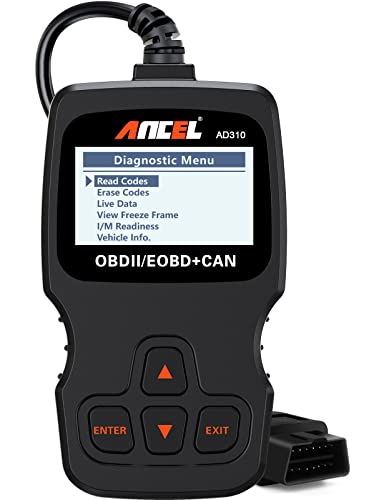
- CEL Doctor: The ANCEL AD310 is one of the best-selling OBD II scanners on the market and is recommended by Scotty Kilmer, a YouTuber and auto mechanic. It can easily determine the cause of the check engine light coming on. After repairing the vehicle's problems, it can quickly read and clear diagnostic trouble codes of emission system, read live data & hard memory data, view freeze frame, I/M monitor readiness and collect vehicle information.
- Sturdy and Compact: Equipped with a 2.5 foot cable made of very thick, flexible insulation. It is important to have a sturdy scanner as it can easily fall to the ground when working in a car. The AD310 OBD2 scanner is a well-constructed mechanic tool with a sleek design. It weighs 12 ounces and measures 8.9 x 6.9 x 1.4 inches. Thanks to its compact design and light weight, transporting the device is not a problem. The buttons are clearly labelled and the screen is large and displays results clearly.
- Accurate Fast and Easy to Use: The AD310 scanner can help you or your mechanic understand if your car is in good condition, provides exceptionally accurate and fast results, reads and clears engine trouble emission codes in seconds after you fixed the problem. This device will let you know immediately and fix the problem right away without any car knowledge. No need for batteries or a charger, get power directly from the OBDII Data Link Connector in your vehicle.
- OBDII Protocols and Car Compatibility: Many cheap scan tools do not really support all OBD2 protocols. AD310 scanner as it can support all OBDII protocols such as KWP2000, J1850 VPW, ISO9141, J1850 PWM and CAN. This device also has extensive vehicle compatibility with 1996 US-based, 2000 EU-based and Asian cars, light trucks, SUVs, as well as newer OBD2 and CAN vehicles both domestic and foreign. Pls confirm with our customer service whether it is compatible with your vehicle before purchasing.
- Home Necessity and Worthy to Own: This is an excellent code reader to travel or home with as it weighs less and it is compact in design. You can easily slide it in your backpack as you head to the garage, or put it on the dashboard, this will be a great fit for you. The AD310 is not only portable, but also accurate and fast in performance. Moreover, it covers various car brands and is suitable for people who just need a code reader to check their car.

- Multi-Functions - Practical Multi-Functions OBD2 code reader features built-in OBD2 DTC lookup library, which help you to determine the cause of the engine light, read code, erase code, view freeze frame, I/M ready, vehicle information, data flow, real-time curve, get vehicle speed information, calculate load value, engine coolant temperature, get engine speed.
- Wide Capability - Supports 9 protocols compatible with most 1996 US-Based, 2000 EU-Based and Asian cars, and newer OBD II & CAN domestic or import vehicles. Supports 6 languages - English,German, Dutch, Spanish, French, Italian.
- 2.8" LCD Display - Designed with a clear display 2.8" Large LCD screen - white backlight and contrast adjustment. No need any battery or charger, OBD reader gets the power directly from your vehicle through the OBDII Data Link Connector.
- Compact Design - Car diagnostic scanner is equipped with a 2.5 feet long cable and made of a very thick flexible insulator.There are 6 buttons on OBD2 Scanner:scroll up/down,enter/exit and buttons that quick query VIN vehicle number& the DTC fault code.
- ABS / Airbag codes NOT Supported - It is able to read and clear check engine information which is part of OBDII system, but it cannot work with non-OBDII systems, including ABS / Airbag / Oil Service Light, etc.

- 【Your Personal CEL Doctor – Read & Clear Engine Codes】The NT301 OBD2 scanner lets you read diagnostic trouble codes (DTCs), check em-issions readiness, turn off your Check Engine Light (CEL) or MIL, reset monitors, and view live data streams. It retrieves your vehicle's VIN instantly. Like all standard OBD2 scanners, it clears codes only after repairs are completed—if the issue persists, the code will return. Designed for DIYers who want to understand what’s really going on under the hood.
- 【Easy Code Reading – Just Plug & Play】Simply plug into the OBD2 port, turn the ignition to “ON” (engine off), and select the correct menu: Select OBDII-> Wait for seconds-> Select Read codes. For accurate results, ensure your vehicle is compatible and the OBD2 port is free from damage or wiring issues. No batteries needed— powered directly by your car.
- 【Live Data Graphing & Accuracy for Most OBD2 Vehicles】View and log live sensor data in graph form—monitor oxygen sensors, fuel trims, coolant temp, RPM, and more. Spot trends and suspicious values in real time. Compatible with most 1996+ gasoline cars, light trucks, and SUVs sold in the U.S., as well as many 2000+ European and Asian models. Also works on 12V diesel vehicles equipped with OBD2.
- 【S-mog Check Helper – Know Your Readiness Status at a Glance】With dedicated I/M readiness hotkeys and a simple Red-Yellow-Green LED indicator, you’ll instantly know if your vehicle is ready for em-issions testing. Built-in speaker provides audio feedback. No guesswork—just confidence before you head to the test center.
- 【A Must-Have Tool for Every Home Mechanic】Compact, rugged, and ready to use right out of the box. The 2.8” color screen is easy to read, even in daylight. No charging or setup required—just plug into the 16-pin DLC and start diagnosing. Recommended by professional mechanics on YouTube and trusted by DIYers worldwide.
Last update on 2026-03-27 / Affiliate links / Images from Amazon Product Advertising API
This product presentation was made with AAWP plugin.