
NHTSA ID Number: 11028485
Manufacturer Communication Number: V0125092080124_3
TSB/Document Date: 2026-02-06
Summary
Software Version Management
If the PDF is very large, it may not load in the preview below.
Some older TSBs had multiple PDFs — visit the NHTSA Website to view all PDFs.
If the TSB PDF does not show, download or view it on the NHTSA Website.
Click on the (+) Plus Sign
Then Click on Associated Document(s)
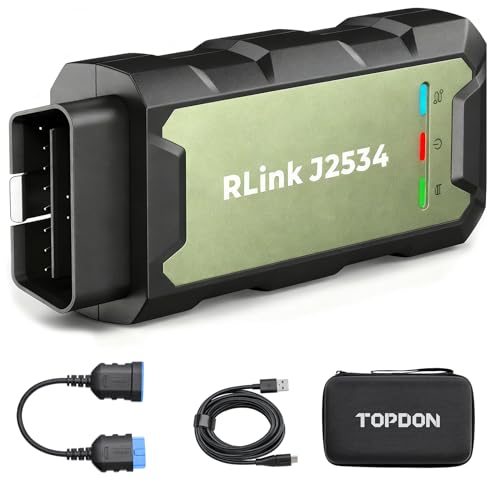
- Advanced VCI Box, Industry-leading J2534 Pass-Thru...
- High-Speed OEM-Level Diagnostics & Programming: Unlock true...
- Coverage for 17 Car Brands & Ultra Reliability: Works...
- User-Friendly RLink Platform & Expert Support: TOPDON’s...
- 6.6 ft USB-C Cable & Portable Storage Case: The RLink J...
Search NHTSA Database for Recalls
Search NHTSA Database for Vehicle Investigations
View Latest Vehicle Investigations
Search NHTSA Database for Vehicle Complaints
View Latest Vehicle Complaints
TSB/Document ID: V0125092080124_3
Replacement Service Bulletin Number:
MFR Communication Date: 2026-01-05
MFR Internal Campaign ID/Software Version: ID.S 5.43KD
Communication Type: Service Bulletin/Repair Instructions
NHTSA Components: UNKNOWN OR OTHER
MFR Component System:
MFR Component Subsystem:
Previous TSB | Next TSB |
6. Read 12V battery data
To ensure the battery data for the later battery adaptation does not have to be specially freed up, this is read
at this point and must be written down as follows:
•
In the “Test plan” tab, press the “Select self-test” button
•
Select “Service work”
•
Select “Checks on 12V system”
•
Select “Read 12V battery adaptation” and attach to test plan
•
In the “Test plan” tab, start the “Read 12V battery adaptation” test program with the “Perform test”
button.
•
Write down the returned data (recommended: copy and save on the ODIS tester).
•
Then continue with “7. Perform software compound update”.
7. Perform software compound update
NOTICE
The following points must be observed before and during the update:
– The ODIS tester must be updated to the latest version. See: Elsa2Go > Infomedia > Current ODIS
Service Version.
– The ignition and the radio/ navigation device must be switched on.
– Make sure that a suitable 12V battery charger is connected to support the 12V battery.
– During the software update switch off all unnecessary electric consumers (for example ventilation, seat
heater, lights and so on).
– Make sure that during the software update no electro-magnetic radiation sources (for example, mobile
phones or cordless phones) are used in or near the vehicle.
– To ensure the highest transmission stability for software update of control units only USB hardwire
connection of the diagnosis interface -VAS 6154B or VAS6154A- is allowed. A WiFi connection can
lead to a failure of the software update.
– The driver’s door must remain open during the software update.
– The vehicle must remain in park (gear position “P”) during the software update.
– Place one vehicle key on the reader coil (flatly in the center console cupholder).
7.1 Perform software update part 1 (S4210F543)
Start software update part 1:
•
In the “Test plan” tab, press the “Select self-test” button
•
Select “Software version management”
•
Select “Adapting software” and attach to test plan
•
In the “Test plan” tab, start the “Adapting software” test program with the “Perform test” button.
•
Select “1. Update software via action code”
‒
•
Enter action code 1: S4210F543
Start software compound update and follow remaining program process.
NOTICE
Do not continue if a Windows Firewall notification appears (see figure 14). Attempting to proceed without
resolving incorrect firewall settings can cause the update to fail.
– All network options must checked. See service references noted under “2. Review prerequisites and
perform preliminary work”
Figure 14. Windows Firewall notification (error)
CAUTION
The update may take several minutes to start. Multiple control units are updated during this procedure.
Some control units require a longer update time than others.
– DO NOT cancel the update procedure, turn the ignition off, remove the battery charger, or interrupt the
update procedure in any way. Doing so could cause irreparable damage to control units.
– If the software update fails for any reason, ODIS feedback must be sent prior to further diagnosis. This
ensures the failure/error is reported. Failure to do so may result in non-payment of consequential
requests for additional time or parts.
•
If there is an “NOT OK” note for one or several control units (see figure 15), the update must be
attempted again (go back to step 7).
Figure 15: Example “NOT OK” response
•
If there is an “OK” (correct) note after all control unit names in the results list, continue with the test
plan.
•
In the event of error messages: See information under "17. Support”.
CAUTION
Do not proceed to the next step without 100% successful completion of this step!
– In case of errors, see: “17. Support”
– If errors cannot be resolved, then ODIS feedback must be sent prior to further diagnosis.
•
Only after the final “OK” result is finished without any errors, continue with “7.2. ICAS1 factory reset”.
7.2 ICAS1 factory reset
Before carrying out the second action code, a factory reset must be carried out on ICAS1 as follows:
•
In the “Test plan” tab, press the “Select self-test” button
•
Select "Software Version Management (SVM)"
•
Select "Special measures"
•
Select "Special functions"
•
Select “ResetToFactory” and attach to test plan
•
In the “Test plan” tab, start the “ResetToFactory” test program with the “Perform test” button.
‒
Select “1. ECU Reset (to Factory Setting)” (see figure 16)
‒
Enter diagnostic address 0019 and follow the test program.
Figure 16: Factory Reset
•
Then continue with “7.3. Perform software update part 2 (F543)”.
7.3 Perform software update part 2 (F543)
Start software update part 2:
•
In the “Test plan” tab, press the “Select self-test” button
•
Select “Software version management”
•
Select “Adapting software” and attach to test plan
•
In the “Test plan” tab, start the “Adapting software” test program with the “Perform check” control
button.
•
Select “1. Update software via action code”
‒
•
Enter action code 2: F543
Start software compound update and follow remaining program process.
CAUTION
The update may take several minutes to start. Multiple control units are updated during this procedure.
Some control units require a longer update time than others.
– DO NOT cancel the update procedure, turn the ignition off, remove the battery charger, or interrupt the
update procedure in any way. Doing so could cause irreparable damage to control units.
– If the software update fails for any reason, ODIS feedback must be sent prior to further diagnosis. This
ensures the failure/error is reported. Failure to do so may result in non-payment of consequential
requests for additional time or parts.
•
If there is an “NOT OK” note for one or several control units (see figure 17), the update must be
attempted again (go back to step 7).
Figure 17: Example “NOT OK” response
•
If there is an “OK” (correct) note after all control unit names in the results list, continue with the test
plan.
•
In the event of error messages: See information under "17. Support”.
CAUTION
Do not proceed to the next step without 100% successful completion of this step!
– In case of errors, see: “17. Support”
– If errors cannot be resolved, then ODIS feedback must be sent prior to further diagnosis.
•
Only after the final “OK” result is finished without any errors, continue with “8. Perform function restore
(FES)”.
8. Perform function restore (FES)
Perform the function restoration (FES) as follows:
•
In the “Test plan” tab, press the “Select self-test” button
•
Select "Software Version Management (SVM)"
•
Select “Function clearing system (FES)” (see figure 18)
•
Select “3. Restore function”
•
Enter diagnostic address 0019 and carry out function restoration.
Figure 18: Function enable system (FES)
CAUTION
Do not proceed to the next step without 100% successful completion of this step!
– In case of errors, see: “17. Support”
– If errors cannot be resolved, then ODIS feedback must be sent prior to further diagnosis.
•
Then continue with “9. Perform VKMS adaptation”.
9. Perform VKMS adaptation
Perform the VKMS adaptation as follows:
•
In the “Test plan” tab, press the “Select self-test” button
•
Select “Diagnostic capable systems”
•
Select “0025 – Immobilizer”
•
Select “0025 – VKMS functions”
•
Select and perform "VKMS adaptation” (see figure 19)
Figure 19: VKMS adaptation
•
Then continue with “10. Adapt 12V battery”.
10. Adapt 12V battery
Perform the 12V battery adaptation as follows.
•
In the “Test plan” tab, press the “Select self-test” button
•
Select “Service work”
•
Select “Tests on the 12V system”
•
Select “Carry out 12V battery adjustment” (see figure 20) and attach to test plan
•
In the “Test plan” tab, start the “Carry out 12V battery adjustment” test program with the “Perform test”
button.
•
Follow the instructions in the test program and input the data recorded under “4. Read 12V battery
data”
Figure 20: 12V battery adaptation
•
Then continue with “11. Complete test plan”.
11. Complete GFF tests in test plan list
With the software update there is the possibility that several basic settings/parameters may be lost on the
affected vehicles.
•
Complete Guided Fault Finding (GFF) tests pertaining to basic settings (i.e., windows and steering
angle sensor) as populated in the test plan list.
•
The event entry in the diagnostic address 0015: U101300: Control module not coded, active/static
causes static entries in further control units of the driver assist system.
‒
•
The event entry in the diagnostic address 0044: B1168F2: Steering angle sensor no initialization, active
/static causes static entries in further control units of the driver assist system.
‒
•
Possible remedy: Perform Guided Fault Finding (GFF): “0015 - Replace control unit”
Possible remedy: Perform basic setting with Guided Fault Finding (GFF). Then delete the event
memory list again.
End the diagnostic session with the diagnosis stop button (see figure 21).
Figure 21: Diagnosis stop button
•
When prompted to continue GFF select “NO” (see figure 22). The fault memory will then be
automatically deleted.
Figure 22: Do not continue GFF
•
Static faults created by the flash process will remain.
•
When prompted, select “YES” to populate a new test plan list (see figure 23).
Figure 23: Calculate new test plan list
•
Complete all GFF tests that remain in the test plan list.
•
If applicable, refer to technical bulletin(s) that address irrelevant DTCs (ghost codes).
•
Then continue with “12. Test drive the vehicle”.
12. Test drive vehicle
Test drive the vehicle in order to establish the dynamic calibration and correct function of the vehicle.
•
The software flash may result in the loss of adaptation of the Travel Assist Function. The steps below
must be performed after completion of the flash.
‒
Note the customer’s selected cruise control mode (see figure 24).
‒
Cycle through all modes until “ACC” mode is selected.
‒
With “ACC” mode selected, perform the road test above 20 mph/35 kph to calibrate the 3-phase
motor. Note, a momentary loss of acceleration during the calibration is normal.
‒
After the 3-phase motor calibration is completed, press the “SET” button to activate the ACC
system.
‒
Once the ACC system is activated, the procedure is complete.
‒
Return the cruise control settings back to the previous customer settings.
Figure 24:
NOTICE
Static faults may be stored during the software update and the ID. Light may not operate correctly after the
software update. It may be necessary to perform the following to allow the faults to be erased and restore
normal ID. Light function:
– 1. Drive the vehicle a short distance (around the parking lot, for example).
– 2. Perform a bus sleep.
•
Then continue with “13. Perform bus sleep”.
13. Perform bus sleep
A bus sleep is performed with the ODIS tester as follows:
•
In the “Test plan” tab, press the “Select self-test” button
•
Select “Diagnostic capable systems”
•
Select “0019 – Diagnosis interface for data bus”
•
Select “0019 – Diagnosis interface for data bus, functions”
•
Select and perform “0019 – Establish bus sleep mode”
•
Then continue with “12. End the diagnosis”
14. End the diagnostic session
The diagnostic session ends as follows:
•
•
End the diagnostic session with the diagnosis stop button (see figure 20 above).
‒
When prompted to continue GFF select “NO” (see figure 22 above). The fault memory will then
be automatically deleted.
‒
When prompted, select “YES” to populate a new test plan list (see figure 23 above).
If no relevant event entries are actively/statically available, the diagnosis session can be ended.
‒
•
•
When prompted, select “NO” to end the diagnostic session without populating a new test plan list.
Note, the following event entries are irrelevant:
‒
B184C00: Activation active
‒
U17A000: Diagnosis filter not activated
‒
B163002: Predictive route data signal error
Continue with “13. Restore customer settings”.
15. Restore customer settings
Restore the vehicle settings using the customer settings documented under “2. Document vehicle settings”.
16. Software version table
The production ID.S version (before update) is indicated by the PR-number found under PR-family SVR (e.
g., V7B).
Diagnostic
Address
0001
Before Update (Production Software)
After Update
ID.S 4.1
ID.S 5.0
ID.S 5.4
PR no. V7B
PR no. V7C
PR no. V7G
3630
4065
4065
ID.S 5.4.3KD
4065
0003
0740
0754
0757
0757
0006
0571
0571
0571
0571 + ZDC*
0008
0146
0247
0262
0262
0009
0530
0555
0562
0562
0013
0099
0232
0250
0250
0015
0141
0151
0151

- CEL Doctor: The ANCEL AD310 is one of the best-selling OBD II scanners on the market and is recommended by Scotty Kilmer, a YouTuber and auto mechanic. It can easily determine the cause of the check engine light coming on. After repairing the vehicle's problems, it can quickly read and clear diagnostic trouble codes of emission system, read live data & hard memory data, view freeze frame, I/M monitor readiness and collect vehicle information.
- Sturdy and Compact: Equipped with a 2.5 foot cable made of very thick, flexible insulation. It is important to have a sturdy scanner as it can easily fall to the ground when working in a car. The AD310 OBD2 scanner is a well-constructed mechanic tool with a sleek design. It weighs 12 ounces and measures 8.9 x 6.9 x 1.4 inches. Thanks to its compact design and light weight, transporting the device is not a problem. The buttons are clearly labelled and the screen is large and displays results clearly.
- Accurate Fast and Easy to Use: The AD310 scanner can help you or your mechanic understand if your car is in good condition, provides exceptionally accurate and fast results, reads and clears engine trouble emission codes in seconds after you fixed the problem. This device will let you know immediately and fix the problem right away without any car knowledge. No need for batteries or a charger, get power directly from the OBDII Data Link Connector in your vehicle.
- OBDII Protocols and Car Compatibility: Many cheap scan tools do not really support all OBD2 protocols. AD310 scanner as it can support all OBDII protocols such as KWP2000, J1850 VPW, ISO9141, J1850 PWM and CAN. This device also has extensive vehicle compatibility with 1996 US-based, 2000 EU-based and Asian cars, light trucks, SUVs, as well as newer OBD2 and CAN vehicles both domestic and foreign. Pls confirm with our customer service whether it is compatible with your vehicle before purchasing.
- Home Necessity and Worthy to Own: This is an excellent code reader to travel or home with as it weighs less and it is compact in design. You can easily slide it in your backpack as you head to the garage, or put it on the dashboard, this will be a great fit for you. The AD310 is not only portable, but also accurate and fast in performance. Moreover, it covers various car brands and is suitable for people who just need a code reader to check their car.

- Multi-Functions - Practical Multi-Functions OBD2 code reader features built-in OBD2 DTC lookup library, which help you to determine the cause of the engine light, read code, erase code, view freeze frame, I/M ready, vehicle information, data flow, real-time curve, get vehicle speed information, calculate load value, engine coolant temperature, get engine speed.
- Wide Capability - Supports 9 protocols compatible with most 1996 US-Based, 2000 EU-Based and Asian cars, and newer OBD II & CAN domestic or import vehicles. Supports 6 languages - English,German, Dutch, Spanish, French, Italian.
- 2.8" LCD Display - Designed with a clear display 2.8" Large LCD screen - white backlight and contrast adjustment. No need any battery or charger, OBD reader gets the power directly from your vehicle through the OBDII Data Link Connector.
- Compact Design - Car diagnostic scanner is equipped with a 2.5 feet long cable and made of a very thick flexible insulator.There are 6 buttons on OBD2 Scanner:scroll up/down,enter/exit and buttons that quick query VIN vehicle number& the DTC fault code.
- ABS / Airbag codes NOT Supported - It is able to read and clear check engine information which is part of OBDII system, but it cannot work with non-OBDII systems, including ABS / Airbag / Oil Service Light, etc.

- 【Your Personal CEL Doctor – Read & Clear Engine Codes】The NT301 OBD2 scanner lets you read diagnostic trouble codes (DTCs), check em-issions readiness, turn off your Check Engine Light (CEL) or MIL, reset monitors, and view live data streams. It retrieves your vehicle's VIN instantly. Like all standard OBD2 scanners, it clears codes only after repairs are completed—if the issue persists, the code will return. Designed for DIYers who want to understand what’s really going on under the hood.
- 【Easy Code Reading – Just Plug & Play】Simply plug into the OBD2 port, turn the ignition to “ON” (engine off), and select the correct menu: Select OBDII-> Wait for seconds-> Select Read codes. For accurate results, ensure your vehicle is compatible and the OBD2 port is free from damage or wiring issues. No batteries needed— powered directly by your car.
- 【Live Data Graphing & Accuracy for Most OBD2 Vehicles】View and log live sensor data in graph form—monitor oxygen sensors, fuel trims, coolant temp, RPM, and more. Spot trends and suspicious values in real time. Compatible with most 1996+ gasoline cars, light trucks, and SUVs sold in the U.S., as well as many 2000+ European and Asian models. Also works on 12V diesel vehicles equipped with OBD2.
- 【S-mog Check Helper – Know Your Readiness Status at a Glance】With dedicated I/M readiness hotkeys and a simple Red-Yellow-Green LED indicator, you’ll instantly know if your vehicle is ready for em-issions testing. Built-in speaker provides audio feedback. No guesswork—just confidence before you head to the test center.
- 【A Must-Have Tool for Every Home Mechanic】Compact, rugged, and ready to use right out of the box. The 2.8” color screen is easy to read, even in daylight. No charging or setup required—just plug into the 16-pin DLC and start diagnosing. Recommended by professional mechanics on YouTube and trusted by DIYers worldwide.
Last update on 2026-03-23 / Affiliate links / Images from Amazon Product Advertising API
This product presentation was made with AAWP plugin.