
NHTSA ID Number: 11027967
Manufacturer Communication Number: SD-13-47572A
TSB/Document Date: 2026-02-02
Summary
Bendix® TABS‑6™ Advanced Multi-Channel (MC) (ABS/TRSP) and MC LITE (ABS Only) Trailer Antilock Braking System (ABS) Modules The Bendix® TABS‑6™ Advanced (ADV) Multi-Channel (MC) module (Generation 2) is an integrated, MC (4S/2M) trailer service brake module controller for air-braked, heavy-duty semi trailers that features the Bendix® Antilock Brake System (ABS) and Bendix® Trailer Roll Stability Program (TRSP®). TABS-6 ADV MC offers a LITE version, which provides an ABS-only functionality while keeping the benefits of having a multi-channel system. NOTE: All references to the TABS-6 module in this document – aside from TRSP-related references – also include the MC LITE module. Installed on semi-trailers, the module acts as a relay valve during service braking, but during ABS events, it may intervene to help maintain vehicle stability by modulating brake pressure at the wheel ends. The Bendix TRSP monitors the trailer's motion and reduces the risk of rollovers by automatically applying the brakes when a risk of a rollover is detected. NOTE: The Bendix TRSP is not available for TABS-6 MC LITE.
If the PDF is very large, it may not load in the preview below.
Some older TSBs had multiple PDFs — visit the NHTSA Website to view all PDFs.
If the TSB PDF does not show, download or view it on the NHTSA Website.
Click on the (+) Plus Sign
Then Click on Associated Document(s)
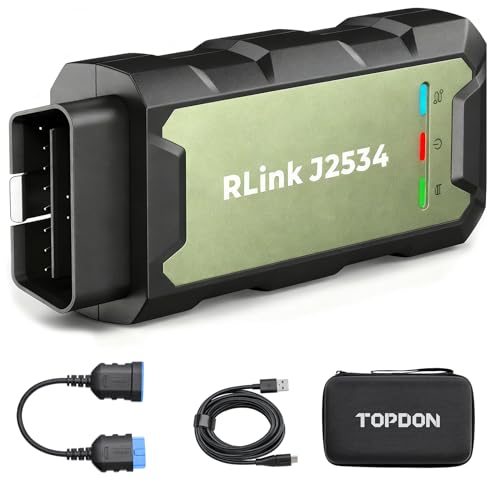
- Advanced VCI Box, Industry-leading J2534 Pass-Thru...
- High-Speed OEM-Level Diagnostics & Programming: Unlock true...
- Coverage for 17 Car Brands & Ultra Reliability: Works...
- User-Friendly RLink Platform & Expert Support: TOPDON’s...
- 6.6 ft USB-C Cable & Portable Storage Case: The RLink J...
Search NHTSA Database for Recalls
Search NHTSA Database for Vehicle Investigations
View Latest Vehicle Investigations
Search NHTSA Database for Vehicle Complaints
View Latest Vehicle Complaints
TSB/Document ID: SD-13-47572A
Replacement Service Bulletin Number:
MFR Communication Date: 2026-01-31
MFR Internal Campaign ID/Software Version:
Communication Type: Service Bulletin/Repair Instructions
NHTSA Components: SERVICE BRAKES
MFR Component System: Trailer
MFR Component Subsystem: ABS
Previous TSB | Next TSB |
for automatic lift axle control (see below). A pressure
threshold switch must be installed in the lift bag for the
lift axle and connected to the ECU. The ECU can then
monitor the position of the lift axle and will compensate
correctly for the load transfer to the other axle(s) when
the lift axle is raised.
Mounting
Bolts
Rubber Link
and Rod
Load Sensor
FRONT OF TRAILER
Vertical Linkage Rod
Adjustable Linkage
with Rubber Link
Axle Attachment
Bracket
•
Lift Axle Control: The TABS‑6 ADV MC module can be
configured to automatically raise (and lower) lift axle(s)
when a pre-configured load is sensed.
•
Trailer ABS Indicator Lamp: Controlled by the ECU
to show the ABS status, the trailer ABS indicator lamp
illuminates when a DTC is active. See Figure 4. If there
are no ABS DTCs present, when ignition power is applied
to the ECU, the lamp will illuminate as a bulb check lasting
typically two (2) seconds, up to six (6) seconds at most. If
Low Pressure Warning Emergency (LPWE) is active, the
ABS indicator lamp will be on until the condition is clear.
Figure 4 – Trailer-Mounted ABS Indicator Lamp
•
WSS: Located at selected hubs, WSS detect the rotation
of individual wheels and send an electrical signal to the
ECU proportional to the rotational velocity. See Figures
5a and 5b.
•
Pigtail Wiring Harness: A power pigtail harness is
required. Auxiliary harnesses are available, as needed.
See Figure 6.
Use of cable ties/tie wraps to attach WSS leads to
rubber hoses/jounce lines is not approved. The hose
may expand during braking due to air pressure and the
cable tie may not, so the conductor material/insulation
of the WSS extensions may be damaged. Bendix instead
recommends only open-ended clips be used to hold
sensor leads to jounce lines.
90° Angle WS-24 Sensor
(with trade dress)
Straight WS-24 Sensor
(with trade dress)
90° Angle WS-24 Sensor
Straight WS-24 Sensor
Axle Strap-Style
Fastener Clamp
Figure 3 – Typical External Load Sensor Installation
For more information, refer to S-1588, Spring Deflection Sensor, on B2Bendix.com.
NOTE: The appearance of the
WS-24 wheel speed sensors may
vary depending upon the date and
location of manufacture, but they are
interchangeable provided they are the
same type (e.g., straight or 90°).
6
Figure 5a – Bendix ® WS-24™ Wheel Speed Sensors
Part No. K134931
NOTE: Stainless steel clamping sleeves require that a high-temperature-rated silicon- or lithiumbased grease be applied to the sensor body. This lubrication will keep the movement between the
sensor and the clamping sleeve independent from one another.
Swoosh
Symbol
KnorrBremse Logo
Figure 5b – Steel Clamping Sleeve
1
4
3
2
(FACE VIEW)
P1
DIAGNOSTIC CABLE
(HARNESS - K143203)
1
12
6
7
J1
1
4
2
3
(FACE VIEW)
P1
DIAGNOSTIC CABLE
(FACE VIEW)
6
1
4
3
P2
P2 AUXILIARY CABLE
(HARNESS - K143204)
(FACE VIEW)
1
4
2
3
1
12
6
7
(FACE VIEW)
P1
DIAGNOSTIC CABLE
(FACE VIEW)
(Harness - K143207)
1
12
6
7
(FACE VIEW)
4
2
1
3
P4
P4 AUXILIARY CABLE
(FACE VIEW)
5-PIN POWER AND
INDICATOR LAMP (POWER/
INDICATOR LAMP)
7-PIN ECU CONNECTOR
(POWER HARNESS - K022146)
SENSOR CABLE
COVER END OF
JACKET DUAL
HEAT SHRINK
SPEED SENSOR ADAPTER
(DIFFERENT LENGTHS AVAILABLE)
O-RING
(LUBRICATED)
WHEEL SPEED SENSOR
(DIFFERENT LENGTHS AVAILABLE)
Figure 6 – Examples of Pigtail Wire Harnesses
7
5. MOUNTING
Circuit
Frame (Chassis) Mount
The TABS‑6 ADV MC module provides three (3) M10,
1.18-in. (30 mm) studs for frame-mounting directly to a trailer
cross-member. The TABS‑6 ADV MC module uses three (3)
Class-8 steel M10x1.5 lock nuts with washers, torqued to 354
± 44.4 in.-lbs (40 ± 5 N•m). A bracket may be used if direct
mounting to a cross-member is not possible.
6. PIGTAIL WIRING HARNESSES
See Figure 6. Several pigtail wire harnesses are available
to connect the TABS‑6 ADV MC module with other trailer
system components. Pigtail harnesses are weather-sealed
at the connector interface and are clearly labeled for proper
installation. Because of the over-molded design of the wiring
harnesses, Bendix recommends that if damage or corrosion
occurs, the complete harness be replaced.
WSS Connectors
The TABS‑6 ADV MC module includes two (2) primary and
two (2) secondary WSS connections separate from the main
vehicle pigtail harnesses, and each requires a separate
harness. The connector of each WSS is a 2-pin Deutsch
DT series.
ECU Connectors
The TABS‑6 ADV MC module ECU has four (4) connectors
(in addition to the WSS connectors mentioned above).
The primary connector is a 7-pin custom series screwon-type connector used to connect to the vehicle’s
power pigtail harness. The main connector is a 12‑pin
Deutsch-DT-series-style connector, used for auxiliary
I/Os. Finally, the auxiliary connectors 2.3 and 2.4 are 6-pin
Deutsch-DT-series-style connectors, used for additional
auxiliary I/Os.
Power and Ground
Trailer electrical power is supplied to the TABS‑6 ADV MC
module from the ignition and brake light circuits.
See Tables 1 and 2 for output values and pin locations.
Function Mode
Value
Operating Range
8.0 to 32.0 VDC
ECU Active
150 mA @ 12 VDC
ABS Active
2.0 A @ 12 VDC
Table 1 – Values for Outputs
8
7-Pin
Trailer
Conn.
5-Pin
ABS
Conn.
7-Pin
ECU
Conn.
7
B
1
4
A
2
1
E
4
N/A
D
5
N/A
N/A
6
N/A
N/A
7
Ignition Power PLC
(Blue Wire)
Brake Light Power
(Red Wire)
Ground
(White Wire)
Indicator Lamp
(White/Green Wire)
TT-CAN Hi*
(White/Green Wire)
TT-CAN Lo*
(White/Brown Wire)
*Tractor Trailer CAN is only available for ECUs labeled with a component index
of M002 and higher.
Table 2 – Main Power Harness and Connectors Pin Out
Power/ABS Indicator Lamp Connector
The TABS‑6 ADV MC module pigtail uses a TTMA RP
97‑99 5-pin Packard Weather Pack connector for brake light
power, constant power, ground, and the trailer-mounted ABS
indicator lamp.
SAE J1939 (CAN) Connector
See Figure 6.
The TABS‑6 ADV MC module 12-pin auxiliary harnesses
typically include a 4-pin connector used for various ECU
communications. Typical uses include J1939 diagnostics
and connection to the Bendix TIM.
Auxiliary I/O Connector
The TABS‑6 ADV MC module provides an option for up to six
(6) auxiliary I/Os. For a pin-out, see Section 11.
Examples of uses of the auxiliary connectors are:
• Lift axle sensing
• Rear axle suspension air bag dump
• SAE J1939 diagnostics
• Automatic lift axle control
• External spring deflection sensor for mechanical spring
suspension
7. ABS INDICATOR LAMP
Trailer-Mounted Lamp
The TABS‑6 ADV MC module controls an ABS indicator lamp
to show the trailer ABS status. With power supplied by the
towing vehicle – if there is an active DTC, or during the bulb
test at startup – the module illuminates the ABS indicator
lamp by providing a 12.0 VDC signal. (The other side of the
lamp is grounded.) The ABS indicator lamp output uses pin
5 of the 7-pin connector on the module.
Dash-Mounted Lamp (PLC-Controlled)
The TABS‑6 ADV MC modules use SAE J2497 standards to
support Power Line Carrier (PLC) communication. The status
of the trailer ABS is transmitted over the ignition power wire
(the blue wire of the J560 connector) – pin 1 of the 7-pin
module connector.
If there is an active DTC during the bulb check at startup,
the TABS‑6 ADV MC module will transmit a signal over the
power line to the towing vehicle’s ECU. The towing vehicle’s
ABS controller will then illuminate the trailer ABS indicator
lamp mounted on the dash.
8. B E N D I X ® W S - 2 4 ™ W H E E L S P E E D
SENSORS (WSS)
Wheel speed data is provided to the TABS‑6 ADV MC module
by the Bendix® WS-24™ Wheel Speed Sensors (WSS).
Typically, the WS-24 WSS is installed in a mounting block that
is welded to the axle housing. The WS-24 WSS are protected
by a stainless steel sheath and are designed to be used with
stainless steel clamping sleeves (sometimes referred to as
a “retainer bushing”, “friction sleeve”, or “clip”) (See Figure
5). The clamping sleeve provides a friction fit between the
mounting block bore and the WS-24 WSS.
Vehicles have an exciter ring (or “tone ring”) as part of the
wheel assembly. (The default setting expects a 100-tooth
tone ring to be used. See Troubleshooting: Section E for more
information.) As the wheel turns, the teeth of the exciter ring
pass the WSS, generating an AC signal which is delivered
to the TABS‑6 ADV MC module ECU. The signal varies in
voltage and frequency as the wheel speed changes.
Vehicle axle and ABS control configurations determine if two
(2) or four (4) WSS are required. See Figures 19 and 20 for
an electrical system schematic showing WSS connector pin
locations.
1. For
increased corrosion protection, Bendix recommends
that a high-temperature-rated silicone- or lithium-based
grease be applied to the interior of the mounting block,
the sensor, and to a new clamping sleeve.
2. Install the new clamping sleeve fully into the block, with
the retaining tabs toward the inside of the vehicle. Please
note that Bendix WS-24 WSS must use the correct
clamping sleeve to avoid problems associated with
reduced retention force, such as sensor movement and
resulting in ABS DTCs. See Figure 5.
3. G
ently push (DO NOT STRIKE) the sensor into the
mounting block hole until it bottoms out on the face of the
tone ring. Secure the cable lead wire to the knuckle/ axle
housing 3-6 in. (7.62-15.24 cm) from the WSS.
4. A
pply a small amount of dielectric non-conductive grease
to both the WSS and the harness connectors.
5. E
ngage the connectors and push them together until the
lock tab snaps into place. It is permissible to use an extra
wire retainer (Bendix part number 300122, or equivalent),
if available, to hold the connectors together.
The friction fit allows the WS-24 WSS to slide back and
forth under force, but to retain its position when the force is
removed. When the WS-24 WSS is inserted all the way into
the mounting block and the wheel is installed on the axle,
the hub exciter contacts the sensor, which pushes the WSS
back. Also, normal bearing play will “bump” the WSS away
from the exciter. The combination of these two (2) actions
will establish a running clearance, or air gap, between the
WSS and the exciter.
Correct WSS installation is necessary for optimal ABS
operation.
Wheel bearing maintenance is an important part of
keeping the WSS in the correct position. Excessive
wheel end play can result in DTCs in cases where the
WSS is pushed too far away from the tone ring for a good
signal to be produced. Maintain wheel bearings per the
manufacturer's recommendations.
NOTE: If the trailer is equipped with a lift axle that will use
WSS, it is important that secondary sensors SE and SF be
used for this axle. See the system diagrams included in this
document. In all cases, the primary WSS must be located
on the fixed axle. For 2S/2M systems, the fixed axle sensors
are SC and SD.
9
9. SAE J2497 (PLC) DIAGNOSTIC LINK
All newer towed vehicles transmit a signal over the power line
to the towing vehicle ABS ECU. The signal, using a heavy
vehicle industry standard known as Power Line Carrier (PLC/
J2497), is broadcast by the trailer ABS ECU over the blue wire
(ignition power line) of the SAE J560 connector and controls
an in‑cab trailer ABS indicator lamp. See Figures 7 and 8.
An oscilloscope can also be used to verify the presence and
strength of a PLC signal on the power line. The PLC signal is
an amplitude- and frequency-modulated signal. Depending
on the load on the power line, the amplitude of the PLC signal
can range from 2.5 mV p‑p to 7.0 V p‑p.
Suggested oscilloscope settings are: AC coupling, 1 V/div,
100 µsec/div. The signal should be measured on pin 7 of the
J560 connector at the nose of the trailer.
10. SAE J1939 (CAN) DIAGNOSTIC LINK
The TABS‑6 ADV MC module provides a data link for
transmitting CAN information following the SAE J1939
standard.
ACom Diagnostic Software and the Bendix Trailer Information
Module both support CAN communication with the TABS‑6
ADV MC module.
Figure 7 – Power Line Without PLC Signal
Ignition power must be provided to the TABS‑6 ADV MC
module for the diagnostic link to be active.
11. AUXILIARY I/O
The TABS‑6 ADV MC module provides for up to six (6)
auxiliary I/O functions. Refer to Table 3.
ACom Diagnostic Software supports the configuration of the
TABS‑6 ADV MC module auxiliary I/Os.
Name
Figure 8 – Power Line With PLC Signal
Aux I/O 1
The TABS‑6 ADV MC module provides a data link for PLC
communication following the SAE J2497 standard.
(AuxIO1)
Bendix ACom Diagnostic Software and the Bendix TRDU
both support PLC communication with the TABS‑6 ADV MC
module.
(AuxIO2)
®
®
PLC communication is applicable for 12-V vehicle applications
only. The PLC communication is disabled for voltages greater
than 18 V.
Identifying and Measuring the PLC Signal
The TABS‑6 ADV MC module will continuously broadcast
PLC messages that indicate trailer ABS status. At power-up,
or during a trailer DTC condition, the TABS‑6 ADV MC module
will signal the tractor ABS unit to illuminate the dash-mounted

- CEL Doctor: The ANCEL AD310 is one of the best-selling OBD II scanners on the market and is recommended by Scotty Kilmer, a YouTuber and auto mechanic. It can easily determine the cause of the check engine light coming on. After repairing the vehicle's problems, it can quickly read and clear diagnostic trouble codes of emission system, read live data & hard memory data, view freeze frame, I/M monitor readiness and collect vehicle information.
- Sturdy and Compact: Equipped with a 2.5 foot cable made of very thick, flexible insulation. It is important to have a sturdy scanner as it can easily fall to the ground when working in a car. The AD310 OBD2 scanner is a well-constructed mechanic tool with a sleek design. It weighs 12 ounces and measures 8.9 x 6.9 x 1.4 inches. Thanks to its compact design and light weight, transporting the device is not a problem. The buttons are clearly labelled and the screen is large and displays results clearly.
- Accurate Fast and Easy to Use: The AD310 scanner can help you or your mechanic understand if your car is in good condition, provides exceptionally accurate and fast results, reads and clears engine trouble emission codes in seconds after you fixed the problem. This device will let you know immediately and fix the problem right away without any car knowledge. No need for batteries or a charger, get power directly from the OBDII Data Link Connector in your vehicle.
- OBDII Protocols and Car Compatibility: Many cheap scan tools do not really support all OBD2 protocols. AD310 scanner as it can support all OBDII protocols such as KWP2000, J1850 VPW, ISO9141, J1850 PWM and CAN. This device also has extensive vehicle compatibility with 1996 US-based, 2000 EU-based and Asian cars, light trucks, SUVs, as well as newer OBD2 and CAN vehicles both domestic and foreign. Pls confirm with our customer service whether it is compatible with your vehicle before purchasing.
- Home Necessity and Worthy to Own: This is an excellent code reader to travel or home with as it weighs less and it is compact in design. You can easily slide it in your backpack as you head to the garage, or put it on the dashboard, this will be a great fit for you. The AD310 is not only portable, but also accurate and fast in performance. Moreover, it covers various car brands and is suitable for people who just need a code reader to check their car.

- Multi-Functions - Practical Multi-Functions OBD2 code reader features built-in OBD2 DTC lookup library, which help you to determine the cause of the engine light, read code, erase code, view freeze frame, I/M ready, vehicle information, data flow, real-time curve, get vehicle speed information, calculate load value, engine coolant temperature, get engine speed.
- Wide Capability - Supports 9 protocols compatible with most 1996 US-Based, 2000 EU-Based and Asian cars, and newer OBD II & CAN domestic or import vehicles. Supports 6 languages - English,German, Dutch, Spanish, French, Italian.
- 2.8" LCD Display - Designed with a clear display 2.8" Large LCD screen - white backlight and contrast adjustment. No need any battery or charger, OBD reader gets the power directly from your vehicle through the OBDII Data Link Connector.
- Compact Design - Car diagnostic scanner is equipped with a 2.5 feet long cable and made of a very thick flexible insulator.There are 6 buttons on OBD2 Scanner:scroll up/down,enter/exit and buttons that quick query VIN vehicle number& the DTC fault code.
- ABS / Airbag codes NOT Supported - It is able to read and clear check engine information which is part of OBDII system, but it cannot work with non-OBDII systems, including ABS / Airbag / Oil Service Light, etc.

- 【Your Personal CEL Doctor – Read & Clear Engine Codes】The NT301 OBD2 scanner lets you read diagnostic trouble codes (DTCs), check em-issions readiness, turn off your Check Engine Light (CEL) or MIL, reset monitors, and view live data streams. It retrieves your vehicle's VIN instantly. Like all standard OBD2 scanners, it clears codes only after repairs are completed—if the issue persists, the code will return. Designed for DIYers who want to understand what’s really going on under the hood.
- 【Easy Code Reading – Just Plug & Play】Simply plug into the OBD2 port, turn the ignition to “ON” (engine off), and select the correct menu: Select OBDII-> Wait for seconds-> Select Read codes. For accurate results, ensure your vehicle is compatible and the OBD2 port is free from damage or wiring issues. No batteries needed— powered directly by your car.
- 【Live Data Graphing & Accuracy for Most OBD2 Vehicles】View and log live sensor data in graph form—monitor oxygen sensors, fuel trims, coolant temp, RPM, and more. Spot trends and suspicious values in real time. Compatible with most 1996+ gasoline cars, light trucks, and SUVs sold in the U.S., as well as many 2000+ European and Asian models. Also works on 12V diesel vehicles equipped with OBD2.
- 【S-mog Check Helper – Know Your Readiness Status at a Glance】With dedicated I/M readiness hotkeys and a simple Red-Yellow-Green LED indicator, you’ll instantly know if your vehicle is ready for em-issions testing. Built-in speaker provides audio feedback. No guesswork—just confidence before you head to the test center.
- 【A Must-Have Tool for Every Home Mechanic】Compact, rugged, and ready to use right out of the box. The 2.8” color screen is easy to read, even in daylight. No charging or setup required—just plug into the 16-pin DLC and start diagnosing. Recommended by professional mechanics on YouTube and trusted by DIYers worldwide.
Last update on 2026-03-25 / Affiliate links / Images from Amazon Product Advertising API
This product presentation was made with AAWP plugin.