
NHTSA ID Number: 11027967
Manufacturer Communication Number: SD-13-47572A
TSB/Document Date: 2026-02-02
Summary
Bendix® TABS‑6™ Advanced Multi-Channel (MC) (ABS/TRSP) and MC LITE (ABS Only) Trailer Antilock Braking System (ABS) Modules The Bendix® TABS‑6™ Advanced (ADV) Multi-Channel (MC) module (Generation 2) is an integrated, MC (4S/2M) trailer service brake module controller for air-braked, heavy-duty semi trailers that features the Bendix® Antilock Brake System (ABS) and Bendix® Trailer Roll Stability Program (TRSP®). TABS-6 ADV MC offers a LITE version, which provides an ABS-only functionality while keeping the benefits of having a multi-channel system. NOTE: All references to the TABS-6 module in this document – aside from TRSP-related references – also include the MC LITE module. Installed on semi-trailers, the module acts as a relay valve during service braking, but during ABS events, it may intervene to help maintain vehicle stability by modulating brake pressure at the wheel ends. The Bendix TRSP monitors the trailer's motion and reduces the risk of rollovers by automatically applying the brakes when a risk of a rollover is detected. NOTE: The Bendix TRSP is not available for TABS-6 MC LITE.
If the PDF is very large, it may not load in the preview below.
Some older TSBs had multiple PDFs — visit the NHTSA Website to view all PDFs.
If the TSB PDF does not show, download or view it on the NHTSA Website.
Click on the (+) Plus Sign
Then Click on Associated Document(s)
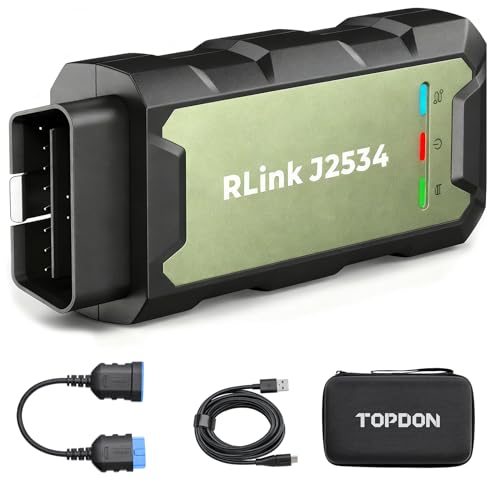
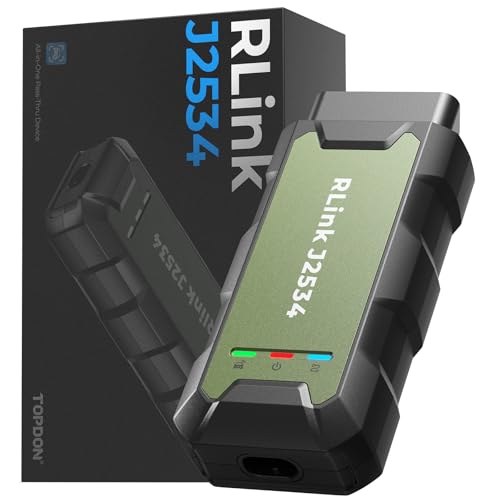
- Advanced VCI Box, Industry-leading J2534 Pass-Thru...
- High-Speed OEM-Level Diagnostics & Programming: Unlock true...
- Coverage for 17 Car Brands & Ultra Reliability: Works...
- User-Friendly RLink Platform & Expert Support: TOPDON’s...
- 6.6 ft USB-C Cable & Portable Storage Case: The RLink J...
Search NHTSA Database for Recalls
Search NHTSA Database for Vehicle Investigations
View Latest Vehicle Investigations
Search NHTSA Database for Vehicle Complaints
View Latest Vehicle Complaints
TSB/Document ID: SD-13-47572A
Replacement Service Bulletin Number:
MFR Communication Date: 2026-01-31
MFR Internal Campaign ID/Software Version:
Communication Type: Service Bulletin/Repair Instructions
NHTSA Components: SERVICE BRAKES
MFR Component System: Trailer
MFR Component Subsystem: ABS
Previous TSB | Next TSB |
trailer ABS indicator lamp.
Diagnostic tools are available that detect the presence of a
PLC signal and perform further system diagnostics directly
using the power line. For more information on these diagnostic
tools, contact Bendix or refer to your local authorized Bendix
dealer or distributor.
Aux I/O 3
(AuxIO3)
AuxRet 12
Pin
No.
1
Aux I/O 2
2
12-Pin
ECU
Conn.
(X2)
3
Auxiliary
Functions
High-Side Driver
Digital Input
High-Side Driver
Digital Input
High-Side Driver
Digital Input
Auxiliary
Type
Output
Input
Output
Input
Output
Input
12
Low-Side Driver
Output
AuxRet 3
11
Low-Side Driver
Output
Sens_Sup
6
+5V Sensor Supply
Output
Sens_In
5
Analog Input
Input
Sens_Gnd
4
Low-Side Driver
Input
High-Side Driver
Output
Aux I/O 4
1
(AuxIO4)
Aux I/O 5
(AuxIO5)
6-Pin 2.3
(X3)
3
Digital Input
High-Side Driver
Digital Input
Input
Output
Input
AuxRet 4
2
Low-Side Driver
Output
AuxRet 5
4
Low-Side Driver
Output
Aux I/O 6
3
(AuxIO6)
High-Side Driver
Input
Digital Input
Output
4
Low-Side Driver
Output
1
+5V Sensor Supply
Output
Sens_In2
5
Analog Input
Input
Sens_Gnd
2
Low-Side Driver
Input
AuxRet 6
Sens_Sup2
10
ECU
Conn.
6-Pin 2.4
(X4)
Table 3 – Auxiliary I/Os
14. POWER-UP SEQUENCE
The Bendix ABS Flex program uses Auxiliary Design
Language (ADL) to allow customized auxiliary functions to
be carried out by the TABS‑6 ADV MC module. Programs
developed in the ABS Flex program may be downloaded
at the production line or in the field to control non-braking
functions of the trailer.
At power-up, the TABS‑6 ADV MC module performs a series
of self-checks that can assist a technician to determine the
ABS system status and configuration.
®
™
For example, the ABS Flex program can potentially
communicate the status of tire inflation and/or temperature,
reefer temperature, load presence, lift axle position, proximity/
reverse alarm, and vehicle weight.
ABS Flex programs monitor the auxiliary I/Os and/or the SAE
J1939 (CAN) and SAE J2497 (PLC) data links. Contact your
Bendix Account Manager to discuss an ABS Flex program
for your vehicle(s).
13. CUSTOMER SCRATCH PAD
The TABS‑6 ADV MC module has a customer scratch pad
feature which allows the customer, or end-user, to store up
to 1,008 bytes of information. This information can then be
read using the ACom Diagnostic Software.
Power
Application
ABS System
Status Indicators
1.0 2.0 3.0 4.0 5.0 6.0 (sec.)
Trailer-mounted ABS
Indicator Lamp
ON
Dash-mounted Trailer
ABS Indicator Lamp
(PLC Detected)*
ON
Dash-mounted Trailer
ABS Indicator Lamp
(PLC Not Detected)
OFF
OFF
ON
OFF
Trailer ABS Indicator Lamp
At power-up, with no active DTCs, the trailer ABS indicator
lamp will illuminate for approximately two (2) to six (6)
seconds as a bulb check and then turn off. See Figure 9.
The Low Pressure Warning Service feature is configured
by default. This feature will alert the driver whenever the
pressure of the reservoir is below 65 psi via an active DTC
that will illuminate the ABS indicator lamp. Once the pressure
has reach above 65 psi, the DTC will clear and the lamp will
turn off.
If any active ABS or related DTCs are present, the trailer ABS
indicator lamp will remain illuminated.
For non-ABS or TRSP-related DTCs, such as auxiliary
functions, at power-up, the trailer ABS indicator lamp will
turn on for approximately six and a half (6.5) seconds as an
extended bulb check, and then turn off.
If a PLC-ready towing vehicle and trailer are powered at the
same time, the TABS‑6 ADV MC module will also trigger a
bulb check on the dash-mounted trailer ABS indicator lamp.
Modulator Chuff Test at Power-Up
At power-up, the TABS‑6 ADV MC module activates a
modulator chuff test. This electrical and pneumatic ABS
modulator test can help the technician identify problems with
modulator installations and/or wiring.
With a full reservoir, brake pressure and a properly installed
modulator on power-up will cause two (2) rapid groups of
five (5) audible air pressure pulses. The TABS‑6 ADV MC
module will not perform a modulator chuff test with an active
ABS DTC.
*Some vehicle manufacturers may illuminate the trailer ABS
indicator lamp at power-up regardless of whether a PLC
signal is detected from the trailer or not. Consult the vehicle
manufacturer’s documentation for more details.
Figure 9 – Trailer ABS Lamp Power-Up Sequence
11
15. ODOMETER FUNCTION
16.
Odometer
The TABS‑6 ADV MC module allows for tire rolling radius
and tone ring tooth count parameters to be set for the axle
being sensed using the ACom Diagnostic Software. These
adjustments may be necessary for the module to accurately
calculate the vehicle velocity and odometer mileage. Wheels
of the same axle must have, and be set to the same, rolling
radius and tone ring tooth count. Refer to the manufacturer’s
tire specification for correct values.
The TABS‑6 ADV MC module includes an odometer function
to provide a means of storing the accumulated mileage of
the vehicle. The mileage is computed by using information
received from the vehicle WSS.
This feature is accurate to within 0.62 miles per power-up and
will typically store mileage up to 1,000,000 miles. The mileage
can be displayed using Bendix ACom Diagnostic Software, a
Bendix TIM, Bendix TRDU, or through blink codes.
Whenever the TABS‑6 ADV MC module is towed using a
pre-1997 tractor (with no constant power supplied to the
trailer), no information about mileage will be stored during that
time, and the mileage can be considered out of calibration.
Trip Counter
The TABS‑6 ADV MC module provides a counter to record
the trip mileage. The feature can be accessed using the
ACom Diagnostic Software or the Trailer Information Module.
Service Interval
The TABS‑6 ADV MC module provides a feature that can
be used to indicate a service interval for the trailer. The
service interval can be accessed using the ACom Diagnostic
Software or the TIM. If configured, the TABS‑6 ADV MC
module can flash the indicator lamp when the vehicle is at
a standstill to indicate when the service interval has been
exceeded.
NON-STANDARD TIRE SIZE
The tone ring size is defaulted to 100 teeth, and the tire-rolling
radius is defaulted to 511 rpm. These parameters can be
adjusted as shown in Table 4.
Tone Ring Size
Tire Rolling Radius
Allowable Range in
Revolutions Per Mile (rpm)
60 teeth
712 to 1005 rpm
80 teeth
512 to 801 rpm
90 teeth
456 to 711 rpm
100 teeth
410 to 640 rpm
120 teeth
356 to 502 rpm
Table 4 – Tone Ring Size to Tire Rolling Radius
17. DTC DETECTION
The TABS‑6 ADV MC module contains self-testing diagnostic
circuitry that monitors the ABS components and wiring.
When the TABS‑6 ADV MC module senses an erroneous
system condition, it activates the external trailer-mounted
ABS indicator lamp, disables all or part of the affected ABS
and/or the TRSP functions, and it stores the DTC in memory,
so that the information is retained even when the power
is removed. The TABS‑6 ADV MC module also uses PLC
communications to send the system status to the towing
vehicle.
For some DTCs, the TABS‑6 ADV MC module will
automatically reset (“self-heal”) the active DTC when the
error is corrected [e.g. when a WSS is re-aligned]. However,
repeated occurrences of a given DTC can cause the code to
“latch” – that is, be retained as active – even if the condition
is only intermittent. Once the code is latched, a manual reset
will be necessary. Technicians can use these latched codes
to assist them in troubleshooting intermittent errors. After the
problem is repaired, the DTC can be reset using blink code
diagnostics or with a diagnostic tool.
When a DTC self-heals or is manually reset, the code remains
stored as an inactive DTC in the ECU memory. This inactive
DTC can be retrieved using blink code diagnostics or with
a diagnostic tool.
12
18. PARTIAL OR FULL ABS/TRSP SHUTDOWN
Depending on the DTC detected, the ABS ECU will partially
or completely disable the ABS and/or TRSP functionality.
In cases where the ABS is completely disabled, the vehicle
reverts to standard service braking (without ABS or TRSP
interventions). Always repair ABS DTCs at the earliest
opportunity.
Depending on the blink code mode activated, the TABS‑6
ADV MC module will blink the trailer-mounted ABS indicator
lamp to display active DTC codes, inactive DTCs, and
odometer mileage. Blink code diagnostics can also be used
to clear active DTCs.
Wait until after the modulator chuff test before activating the
brake light power. Alternatively, wait five (5) seconds.
NOTE: If certain DTCs are set, typically where modulator
DTCs have occurred, the chuff test may not run.
Voltage DTC
The operating voltage range is 8.0 to 32.0 VDC. If the voltage
is detected as being out of range, the ABS and TRSP system
braking features will be disabled, and the system reverts to
standard service braking. When the correct voltage level is
restored, full ABS and TRSP functionality is typically available
again.
19. BLINK CODE DIAGNOSTICS
The TABS‑6 ADV MC module provides diagnostic functions
through blink code diagnostics. This means that the technician
– even without diagnostic tools – can read a series of ABS
indicator lamp blinks to diagnose the DTCs being generated.
With no towing vehicle attached, enter the blink code
diagnostics mode by providing constant power to the ignition
circuit then toggling the brake light power input the specific
number of times shown in Table 5, for the desired mode.
With a parked towing vehicle attached, apply ignition power,
and after the power-up sequence is complete, enter the
diagnostics mode by depressing and releasing the brake
pedal the specific number of times shown in Table 5, for the
desired mode.
Cycles to Enter Desired Mode
Mode
Following a single display of all available messages, the ABS
indicator lamp will remain on for five (5) seconds and then
return to normal operating mode. Blink code diagnostics can
only be activated following a power-up, where wheel speeds
have not been detected. If the vehicle moves during the
blink code diagnostics mode, the TABS‑6 ADV MC module
will cancel the blink code diagnostics and return to normal
operating mode.
Blink code diagnostics must be activated within the first 15
seconds of ignition power being applied.
If brake light power is continuously applied for greater than
five (5) seconds, blink code diagnostics will be disabled until
the next time the ignition power is cycled.
NOTE: Blink codes are not unique and can be shared
between faults, generally of the same type. If there are doubts
over which DTC has occurred, based on the blink code, try
using a diagnostic tool to obtain the unique fault code.
Display Active DTCs
To display active DTCs, apply ignition power and depress
and release the brake pedal three (3) times within 15
seconds (allowing one [1] second between each application).
Following this activation, there will be a five (5) second delay
followed by a blink code display sequence of all active DTCs.
Display Inactive DTCs
Cycles
Active DTC Retrieval
3
Inactive DTC Retrieval (DTC History)
4
Clear Active DTCs
5
Odometer Mileage Display
7
To display inactive DTCs – those that are not currently set,
but have occurred and are stored in the ECU memory – apply
ignition power and depress and release the brake pedal four
(4) times within 15 seconds. Following this activation, there
will be a five (5) second delay followed by a blink code display
sequence of all inactive DTCs stored.
Table 5– Blink Code Information
13
Reset Active DTCs
20. AUXILIARY FEATURES
To reset active DTCs, apply ignition power and depress and
release the brake pedal five (5) times within 15 seconds.
Following activation, there will be a five (5) second delay
followed by:
Low-Pressure Warning Service (LPWS) – Active by
Default
a. I f no DTCs remain, a blink code message of 1-1, (System
Fully Operational - No DTCs Detected) and the ABS
indicator lamp will cease to be illuminated; or
b. If there are remaining active DTCs, a sequence of blink
codes will display all of the remaining active DTCs, and
the ABS indicator lamp will stay on.
Resetting active DTCs with blink code diagnostics does
not clear information from DTC history. Both blink code
diagnostics or diagnostic tools can retrieve inactive DTCs,
but only diagnostic tools can clear this information.
Display Odometer Mileage
To display the trailer odometer mileage, apply ignition power
and depress and release the brake pedal seven (7) times
within 15 seconds. Following activation, there will be a five
(5) second delay followed by a blink code display of the
odometer information (x1000).
E.g. 152,431 miles will be displayed as: 152 (x1000) or one
(1) blink (pause); five (5) blinks (pause); two (2) blinks.
Zeros will be displayed by the ABS indicator lamp strobing
twice.
Odometer mileage cannot be altered with blink code
diagnostics. Complete odometer information can be retrieved
using a diagnostic tool.
The internal pressure sensor on the P1 port the TABS-6 ADV
MC module monitors the pressure on the trailer reservoir
and alerts the driver when the pressure is below 65 psi by
illuminating the ABS indicator lamp. The fault will become
inactive dynamically once the pressure of the reservoir is
above 65 psi. The P1 port pressure is available via TI-CAN.
Low-Pressure Warning Emergency (LPWE)
By monitoring the status of an external pressure switch
installed on the emergency line at the spring brake valve,
the ECU is capable of alerting the driver through the ABS
indicator lamp, when the vehicle is in movement and the
pressure on the emergency line has not reached 65 psi
(the minimum pressure required to release the spring
brakes). The speed threshold at which the alert activates is
configurable. The fault will become inactive dynamically once
the emergency line pressure is above 65 psi. It is optional to
enable the broadcast of the switch status.
Automatic Lift Axle Control (LAC)
The TABS-6 ADV MC module can be configured to
automatically raise a lift axle, or group of lift axles, when
the load on the trailer drops below a configured weight. At
least one (1) of the auxiliary outputs on the TABS-6 ADV MC
module must be configured to provide an electrical signal to
operate the lift axle valve.
The TABS-6 ADV MC lift axle control sub-system ensures that
the legal requirements are fulfilled by preventing overloading
of the axles.

- CEL Doctor: The ANCEL AD310 is one of the best-selling OBD II scanners on the market and is recommended by Scotty Kilmer, a YouTuber and auto mechanic. It can easily determine the cause of the check engine light coming on. After repairing the vehicle's problems, it can quickly read and clear diagnostic trouble codes of emission system, read live data & hard memory data, view freeze frame, I/M monitor readiness and collect vehicle information.
- Sturdy and Compact: Equipped with a 2.5 foot cable made of very thick, flexible insulation. It is important to have a sturdy scanner as it can easily fall to the ground when working in a car. The AD310 OBD2 scanner is a well-constructed mechanic tool with a sleek design. It weighs 12 ounces and measures 8.9 x 6.9 x 1.4 inches. Thanks to its compact design and light weight, transporting the device is not a problem. The buttons are clearly labelled and the screen is large and displays results clearly.
- Accurate Fast and Easy to Use: The AD310 scanner can help you or your mechanic understand if your car is in good condition, provides exceptionally accurate and fast results, reads and clears engine trouble emission codes in seconds after you fixed the problem. This device will let you know immediately and fix the problem right away without any car knowledge. No need for batteries or a charger, get power directly from the OBDII Data Link Connector in your vehicle.
- OBDII Protocols and Car Compatibility: Many cheap scan tools do not really support all OBD2 protocols. AD310 scanner as it can support all OBDII protocols such as KWP2000, J1850 VPW, ISO9141, J1850 PWM and CAN. This device also has extensive vehicle compatibility with 1996 US-based, 2000 EU-based and Asian cars, light trucks, SUVs, as well as newer OBD2 and CAN vehicles both domestic and foreign. Pls confirm with our customer service whether it is compatible with your vehicle before purchasing.
- Home Necessity and Worthy to Own: This is an excellent code reader to travel or home with as it weighs less and it is compact in design. You can easily slide it in your backpack as you head to the garage, or put it on the dashboard, this will be a great fit for you. The AD310 is not only portable, but also accurate and fast in performance. Moreover, it covers various car brands and is suitable for people who just need a code reader to check their car.

- Multi-Functions - Practical Multi-Functions OBD2 code reader features built-in OBD2 DTC lookup library, which help you to determine the cause of the engine light, read code, erase code, view freeze frame, I/M ready, vehicle information, data flow, real-time curve, get vehicle speed information, calculate load value, engine coolant temperature, get engine speed.
- Wide Capability - Supports 9 protocols compatible with most 1996 US-Based, 2000 EU-Based and Asian cars, and newer OBD II & CAN domestic or import vehicles. Supports 6 languages - English,German, Dutch, Spanish, French, Italian.
- 2.8" LCD Display - Designed with a clear display 2.8" Large LCD screen - white backlight and contrast adjustment. No need any battery or charger, OBD reader gets the power directly from your vehicle through the OBDII Data Link Connector.
- Compact Design - Car diagnostic scanner is equipped with a 2.5 feet long cable and made of a very thick flexible insulator.There are 6 buttons on OBD2 Scanner:scroll up/down,enter/exit and buttons that quick query VIN vehicle number& the DTC fault code.
- ABS / Airbag codes NOT Supported - It is able to read and clear check engine information which is part of OBDII system, but it cannot work with non-OBDII systems, including ABS / Airbag / Oil Service Light, etc.

- 【Your Personal CEL Doctor – Read & Clear Engine Codes】The NT301 OBD2 scanner lets you read diagnostic trouble codes (DTCs), check em-issions readiness, turn off your Check Engine Light (CEL) or MIL, reset monitors, and view live data streams. It retrieves your vehicle's VIN instantly. Like all standard OBD2 scanners, it clears codes only after repairs are completed—if the issue persists, the code will return. Designed for DIYers who want to understand what’s really going on under the hood.
- 【Easy Code Reading – Just Plug & Play】Simply plug into the OBD2 port, turn the ignition to “ON” (engine off), and select the correct menu: Select OBDII-> Wait for seconds-> Select Read codes. For accurate results, ensure your vehicle is compatible and the OBD2 port is free from damage or wiring issues. No batteries needed— powered directly by your car.
- 【Live Data Graphing & Accuracy for Most OBD2 Vehicles】View and log live sensor data in graph form—monitor oxygen sensors, fuel trims, coolant temp, RPM, and more. Spot trends and suspicious values in real time. Compatible with most 1996+ gasoline cars, light trucks, and SUVs sold in the U.S., as well as many 2000+ European and Asian models. Also works on 12V diesel vehicles equipped with OBD2.
- 【S-mog Check Helper – Know Your Readiness Status at a Glance】With dedicated I/M readiness hotkeys and a simple Red-Yellow-Green LED indicator, you’ll instantly know if your vehicle is ready for em-issions testing. Built-in speaker provides audio feedback. No guesswork—just confidence before you head to the test center.
- 【A Must-Have Tool for Every Home Mechanic】Compact, rugged, and ready to use right out of the box. The 2.8” color screen is easy to read, even in daylight. No charging or setup required—just plug into the 16-pin DLC and start diagnosing. Recommended by professional mechanics on YouTube and trusted by DIYers worldwide.
Last update on 2026-03-25 / Affiliate links / Images from Amazon Product Advertising API
This product presentation was made with AAWP plugin.