
NHTSA ID Number: 11027967
Manufacturer Communication Number: SD-13-47572A
TSB/Document Date: 2026-02-02
Summary
Bendix® TABS‑6™ Advanced Multi-Channel (MC) (ABS/TRSP) and MC LITE (ABS Only) Trailer Antilock Braking System (ABS) Modules The Bendix® TABS‑6™ Advanced (ADV) Multi-Channel (MC) module (Generation 2) is an integrated, MC (4S/2M) trailer service brake module controller for air-braked, heavy-duty semi trailers that features the Bendix® Antilock Brake System (ABS) and Bendix® Trailer Roll Stability Program (TRSP®). TABS-6 ADV MC offers a LITE version, which provides an ABS-only functionality while keeping the benefits of having a multi-channel system. NOTE: All references to the TABS-6 module in this document – aside from TRSP-related references – also include the MC LITE module. Installed on semi-trailers, the module acts as a relay valve during service braking, but during ABS events, it may intervene to help maintain vehicle stability by modulating brake pressure at the wheel ends. The Bendix TRSP monitors the trailer's motion and reduces the risk of rollovers by automatically applying the brakes when a risk of a rollover is detected. NOTE: The Bendix TRSP is not available for TABS-6 MC LITE.
If the PDF is very large, it may not load in the preview below.
Some older TSBs had multiple PDFs — visit the NHTSA Website to view all PDFs.
If the TSB PDF does not show, download or view it on the NHTSA Website.
Click on the (+) Plus Sign
Then Click on Associated Document(s)
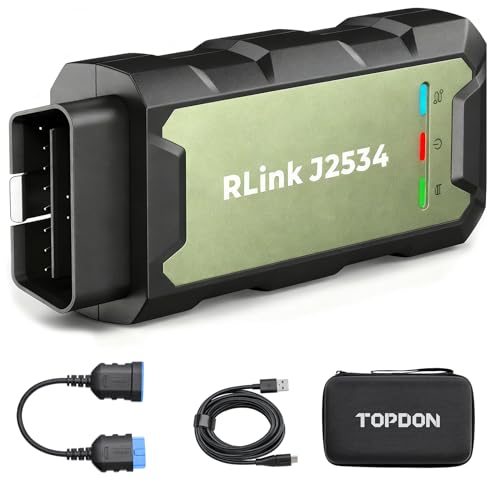
- Advanced VCI Box, Industry-leading J2534 Pass-Thru...
- High-Speed OEM-Level Diagnostics & Programming: Unlock true...
- Coverage for 17 Car Brands & Ultra Reliability: Works...
- User-Friendly RLink Platform & Expert Support: TOPDON’s...
- 6.6 ft USB-C Cable & Portable Storage Case: The RLink J...
Search NHTSA Database for Recalls
Search NHTSA Database for Vehicle Investigations
View Latest Vehicle Investigations
Search NHTSA Database for Vehicle Complaints
View Latest Vehicle Complaints
TSB/Document ID: SD-13-47572A
Replacement Service Bulletin Number:
MFR Communication Date: 2026-01-31
MFR Internal Campaign ID/Software Version:
Communication Type: Service Bulletin/Repair Instructions
NHTSA Components: SERVICE BRAKES
MFR Component System: Trailer
MFR Component Subsystem: ABS
Previous TSB | Next TSB |
SD-13-47672A
®
Bendix® TABS‑6™ Advanced Multi-Channel (MC) (ABS/TRSP) and
MC LITE (ABS Only) Trailer Antilock Braking System (ABS) Modules
Electronic Control Unit
(ECU) Cover (Sealed)
Mounting Studs
Lockable ECU Connector
Covers on Both Sides
(removable)
7-Pin
Connector
Wheel Speed
Sensor (WSS)
Connectors
For Part Label Information,
See Page 47
12-Pin
Connector
For Port
Descriptions,
See Page 3
Mounting
Studs
Wheel Speed
Sensor (WSS)
Connectors
Figure 1 – Bendix ® TABS‑6™ ADV MC and MC LITE ABS Module
1. INTRODUCTION
The Bendix TABS‑6 Advanced (ADV) Multi-Channel (MC)
module (Generation 2) is an integrated, MC (4S/2M) trailer
service brake module controller for air-braked, heavy-duty
semi trailers that features the Bendix® Antilock Brake System
(ABS) and Bendix® Trailer Roll Stability Program (TRSP®).
TABS-6 ADV MC offers a LITE version, which provides an
ABS-only functionality while keeping the benefits of having
a multi-channel system.
®
™
NOTE: All references to the TABS-6 module in this document
– aside from TRSP-related references – also include the MC
LITE module.
Installed on semi-trailers, the module acts as a relay valve
during service braking, but during ABS events, it may
intervene to help maintain vehicle stability by modulating
brake pressure at the wheel ends. The Bendix TRSP monitors
the trailer's motion and reduces the risk of rollovers by
automatically applying the brakes when a risk of a rollover
is detected.
NOTE: The Bendix TRSP is not available for TABS-6 MC
LITE.
Section TABLE OF CONTENTS . . . . . . . . . . . PAGE
1. Introduction . . . . . . . . . . . . . . . . . . . . . . . . . . . . . 1
2. General Safety Guidelines . . . . . . . . . . . . . . . . . 2
3. Antilock Braking System (ABS) Operation . . . . . 3
4. Bendix® Trailer Roll Stability Program
(TRSP®) Operation . . . . . . . . . . . . . . . . . . . . . . 4
5. Components . . . . . . . . . . . . . . . . . . . . . . . . . . . . 5
6. Mounting . . . . . . . . . . . . . . . . . . . . . . . . . . . . . . . 8
7. Pigtail Wiring Harnesses . . . . . . . . . . . . . . . . . . .8
8. Antilock Braking System (ABS) Indicator Lamp . 9
9. Bendix® WS-24™ Wheel Speed Sensors . . . . . . 9
10. SAE J2497 (PLC) Diagnostic Link . . . . . . . . . . 10
11. SAE J1939 (CAN) Diagnostic Link . . . . . . . . . . 10
12. Auxiliary I/O . . . . . . . . . . . . . . . . . . . . . . . . . . . 10
13. Bendix® ABS Flex™ Program . . . . . . . . . . . . . . 11
14. Customer Scratch Pad . . . . . . . . . . . . . . . . . . . 11
15. Power-Up Sequence . . . . . . . . . . . . . . . . . . . . . 11
16. Odometer Function . . . . . . . . . . . . . . . . . . . . . . 12
17. Non-Standard Tire Size . . . . . . . . . . . . . . . . . . 12
18. Diagnostic Trouble Code (DTC) Detection . . . . 12
19. Partial ABS Shutdown . . . . . . . . . . . . . . . . . . . .13
20. Blink Code Diagnostics . . . . . . . . . . . . . . . . . . . 13
21. Auxiliary Features . . . . . . . . . . . . . . . . . . . . . . . 14
23. Troubleshooting . . . . . . . . . . . . . . . . . . . . . . . . 16
24. Appendix A . . . . . . . . . . . . . . . . . . . . . . . . . . . . 48
1
GENERAL SAFETY GUIDELINES
WARNING! PLEASE READ AND FOLLOW THESE INSTRUCTIONS
TO AVOID PERSONAL INJURY OR DEATH:
When working on or around a vehicle, the following guidelines should be observed AT ALL TIMES:
▲ Park the vehicle on a level surface, apply the ▲ Never connect or disconnect a hose or line
containing pressure; it may whip and/or cause
parking brakes, and always block the wheels .
hazardous airborne dust and dirt particles . Wear
Always wear personal protection equipment .
eye protection . Slowly open connections with
▲ Stop the engine and remove the ignition key
care, and verify that no pressure is present . Never
when working under or around the vehicle .
remove a component or plug unless you are
When working in the engine compartment,
certain all system pressure has been depleted .
the engine should be shut off and the ignition
key should be removed . Where circumstances ▲ Use only genuine Bendix ® brand replacement
parts, components, and kits . Replacement
require that the engine be in operation, EXTREME
hardware, tubing, hose, fittings, wiring, etc .
CAUTION should be used to prevent personal
must be of equivalent size, type, and strength as
injury resulting from contact with moving,
original equipment and be designed specifically
rotating, leaking, heated, or electrically charged
for such applications and systems .
components .
▲ Do not attempt to install, remove, disassemble, ▲ Components with stripped threads or damaged
parts should be replaced rather than repaired .
or assemble a component until you have read,
Do not attempt repairs requiring machining or
and thoroughly understand, the recommended
welding unless specifically stated and approved
procedures . Use only the proper tools and
by the vehicle and component manufacturer .
observe all precautions pertaining to use of those
tools .
▲ Prior to returning the vehicle to service, make
certain all components and systems are restored
▲ If the work is being performed on the vehicle’s
to their proper operating condition .
air brake system, or any auxiliary pressurized air
systems, make certain to drain the air pressure ▲ For vehicles with Automatic Traction Control
from all reservoirs before beginning ANY work
(ATC), the ATC function must be disabled (ATC
on the vehicle . If the vehicle is equipped with
indicator lamp should be ON) prior to performing
a Bendix ® AD‑IS® air dryer system, a Bendix ®
any vehicle maintenance where one or more
DRM™ dryer reservoir module, a Bendix® AD‑9si®,
wheels on a drive axle are lifted off the ground
AD‑HF®, or AD‑HFi® air dryer, be sure to drain the
and moving .
purge reservoir .
▲ The power MUST be temporarily disconnected
▲ F o l l o w i n g t h e v e h i c l e m a n u f a c t u r e r ’s
from the radar sensor whenever any tests USING
recommended procedures, deactivate the
A DYNAMOMETER are conducted on a vehicle
electrical system in a manner that safely removes
equipped with a Bendix® Wingman® system .
all electrical power from the vehicle .
▲ Never exceed manufacturer’s recommended
pressures .
▲ You should consult the vehicle manufacturer's operating and service manuals, and any related literature,
in conjunction with the Guidelines above .
Disconnect the electrical connectors from the ABS
system/TRSP controller before welding on the trailer.
2
Dielectric grease should be applied to electrical
connectors to help protect against moisture intrusion.
These modules feature:
2. ABS SYSTEM OPERATION
•
modular design with an integrated ECU; pressure
A
sensors; a lateral acceleration sensor; and Modulator
Relay Valves (MRVs) – eliminating external pigtail
harnesses for these components
The TABS‑6 ADV MC module uses WSS, MRVs, and an
ECU to optimize the contact between the tires and the road
surface during a braking event where excessive wheel slip
– or wheel lock-up – is detected.
•
An operating voltage range of 8 - 32 V
•
n electronic odometer with trip counters and service
A
interval options
•
scratch-pad feature with up to 1,008 bytes of freely
A
definable read/write text space available for customer use
•
n extended data logging feature, including a resettable
A
drive recorder
When a situation is detected where the system needs to
intervene, the ECU will send signals to the MRVs to modulate
controlled brake pressure at the wheel ends. Depending on
the configuration of the ABS system, interventions may be
made on individual wheels, or pairs of wheels. In the case of
pairs of wheels, the wheels controlled by a modulator may
be either on the same side of the vehicle, or at both ends
of an axle.
•
wide variety of electrical inputs/outputs (I/Os) that
A
allow the customer to program auxiliary functions such
as automatic Lift Axle Control (LAC); Integrated Speed
Switch (ISS); external load sensors; Auxiliary Design
Language (ADL) for customized auxiliary functions; and
others
•
wide range of diagnostic tools for flexible troubleshooting
A
such as blink codes; SAE J2497 Power Line Carrier
(PLC); SAE J1939 (CAN) diagnostics; the Bendix® Trailer
Remote Diagnostic Unit (TRDU); and the Bendix® Trailer
Information Module
•
upport for SAE J2497 PLC communication to the towing
S
vehicle and diagnostics
•
upport for SAE J1939 (CAN) communication for
S
diagnostics and external devices
•
pressure-equalizing valve in the sealed ECU housing
A
to give improved protection from water, etc.
•
serviceable nylon filter to help prevent foreign material
A
from entering the control port
•
ocking dust covers to provide electrical connector and
L
cable protection
3/8-in. NPTF Load
Port 42 for Air Suspension
(Plugged for the ABS only or Spring Suspension Vehicles)
Two 3/8-in. NPTF Delivery
Ports 21 (to Brake Chambers)
The TABS‑6 ADV MC module ECU is typically able to
modulate the brake pressure with greater speed and accuracy
than a driver.
Service Braking
During service braking, the TABS‑6 ADV MC module functions
as a relay valve. If the ECU does not detect excessive wheel
slip, it will not activate the ABS system, and the vehicle will
stop with service braking.
Axle control (select high) and side control should not be
used on fifth-wheel dollies or steerable axles. In these
cases, it could cause a yaw moment during braking that
results in unwanted steering of the axle. Use a dolly
control (select low) configuration.
3/8-in. NPTF Control
Port 4 with Integral Filter
3/8-in. NPTF Delivery
Port 21 (to Brake Chambers)
1/2-in. NPTF Supply
Port 1 (Plug Unused Port)
3/8-in. NPTF Delivery
Port 22 (to Brake Chambers)
Two 3/8-in. NPTF Delivery
Ports 22 (to Brake Chambers)
For NPTF fittings, the use of a thread sealant is recommended. This can be a pre-applied or a hand-applied sealant product (with PTFE) can
be used. When using a hand-applied sealant, use caution so as not to over-apply. Always follow the fitting manufacturer’s pre-applied or
hand-applied thread sealant recommendations. Use of PTFE tape is not approved and will void the Bendix ABS/Bendix TRSP valve warranty.
Figure 2 – Ports Used
3
Side Control (Independent Control)
3. BENDIX TRSP OPERATION
Side control uses a single MRV to separately control the
braking on one (1) or more wheels, on either side of the
vehicle.
In the case of braking surfaces with poor overall traction,
the side control ABS interventions will maintain the wheels
on each side of the vehicle independently, at just under the
speed where they would lock up.
NOTE: Side control should not be used on fifth-wheel dollies
or steerable axles.
During a TRSP system intervention, the vehicle
automatically decelerates. The TABS‑6 ADV MC module
can slow the vehicle with or without the driver applying
the brake pedal, and even when the driver applies the
throttle.
Axle Control
Axle control uses a single MRV to control the wheels at both
ends of a given axle (or multiple axles in cases where a single
MRV is controlling several axles).
In the case of braking surfaces with poor overall traction (e.g.
roads that are worn, slippery, or are made of loose gravel) –
or braking surfaces with areas of poor traction (e.g. asphalt
roads with patches of ice) – axle control ABS interventions
will maintain the wheel that is not slipping at just under the
speed that may lock the wheel. The system permits the other
wheel (that is experiencing slippage) temporary periods of
wheel-lock during the intervention.
Even with TRSP-equipped vehicles, the driver remains
responsible for ensuring vehicle stability during operation.
The TRSP system only functions within the limits of
physics. The system can help mitigate potential vehicle
stability incidents. Other factors – such as driving too fast
for the road, traffic or weather conditions, over-steering,
an excessively high vehicle Center of Gravity (CG), poor
road conditions, or insufficient vehicle maintenance – can
cause vehicle instability that is beyond the capability of
any stability system to mitigate.
Axle control should not be used on fifth-wheel dollies or
steerable axles.
When intervening on regular traction road surfaces, a system
configured for axle control performs similar to a side-control,
two-modulator system.
Steerable Axles
For applications that have both fixed and steerable axles,
such as drawbar trailers (full-pull trailers), a 4S2M axle
configuration should be used. These configurations have
the ability to minimize yaw on steerable axles.
ABS Fail-Safe
The TABS‑6 ADV MC module is designed to react in a fail-safe
manner in the event of a system Diagnostic Trouble Code
(DTC). For example, if the ECU detects that a sensor is not
responding, an ABS system DTC will be set and the TABS‑6
ADV MC module will illuminate the trailer ABS indicator lamp
and revert to a fail-safe mode where some, or all, advanced
ABS functions (including the Bendix TRSP) may not function.
Even in cases where the ABS system is completely disabled,
the standard pneumatic brake function of the vehicle will still
be available, but without the benefits of the ABS system. The
TRSP feature is also disabled with an active ABS system
DTC. If the indicator lamp is illuminated, always have the
ABS system serviced at the earliest opportunity.
4
Operating the vehicle with a damaged/disconnected load
sensor could lead to serious performance issues that
may result in property damage, serious injuries, and/or
death. The advanced ABS system used on this vehicle
uses sensors, including the load sensor, to assist the
TRSP function.
The TRSP system should only be used on specific
vehicle platforms that have been validated and approved
by Bendix engineering.
For vehicles installed with spring suspension systems,
care must be taken to prevent damage to the load
sensor when lifting the trailer. The linkage rod must be
disconnected from the sensor’s rubber boot whenever
the frame of the trailer is lifted, dropping the axle(s).
This includes situations where a jack is used on the rear
bumper or when a crane is used to lift the trailer.
The TRSP system reduces the risk of rollovers during
driving by automatic application of the service brakes when
the system detects potential rollover conditions. This is
accomplished with monitoring sensors both at the trailer
wheel ends and within the TABS‑6 ADV MC module. The
TRSP system reacts by applying the trailer service brakes
and slowing the vehicle combination.
4. COMPONENTS
Installations of the TABS‑6 ADV MC module use the following
components:
Internal
•
E CU: The ECU monitors the WSS signals, lateral
accelerometer sensor signal, and various pressure
sensors (and, if configured, external spring deflection
sensor) to determine when the ABS and/or TRSP
intervention is required. When needed, the ECU actuates
the appropriate pressure MRVs to optimize the brake
pressure. The ECU monitors the system to detect and
warn the driver of any malfunctions. DTCs are stored in
the ECU and can be reviewed to diagnose the TABS‑6
ADV MC module system.
•
rake Demand Pressure Sensor: This sensor monitors
B
the trailer service brake pressure being applied by the
driver and sends an electrical signal proportional to the
driver’s brake demand to the ECU.
•
rake Delivery Pressure Sensors: These sensors (P21
B
and P22) monitor the trailer service brake pressure that
is being delivered to the wheel ends through, or by, the
TABS‑6 ADV MC module system and sends electrical
signals proportional to the delivered trailer service brake
pressure to the ECU.
•
Internal Load Sensor: For air suspension systems, the
load sensor port (P42) must be plumbed to a fixed axle air
ride bellows. NOTE: The sensor must not be plumbed to
lift axle bellows since they are not charged when the axle
is not being used. The function of this sensor is to monitor
the pressure and send an electrical signal proportional to
the trailer’s axle load to the ECU.
•
ateral Accelerometer Sensor: The lateral accelerometer
L
sensor senses the lateral movement of the trailer and
sends an electrical signal proportional to the trailer’s
lateral acceleration to the ECU.
•
MRV: MRVs are integrated into the module and are
controlled electrically by the ECU to decrease, hold,
or allow the fully applied brake pressure into the brake
chamber to control the braking torque at the wheels.
•
upply Pressure Sensor: Supply pressure sensors are
S
non-serviceable, and are located within the module.
The Bendix TRSP system uses the following sensors:
•
•
•
Lateral Acceleration: A lateral accelerometer is located
within the TABS‑6 ADV MC module. This sensor detects the
lateral motion (or “roll”) of the vehicle as it moves. The TABS‑6
ADV MC module must be mounted either facing forward
(0 degrees) or facing the rear (180 degrees) of the trailer
to function correctly – See the Troubleshooting section for
full details of acceptable installation locations. NOTE: Do
not attempt to change the location of the module without
contacting Bendix for engineering approval.
Vehicle Speed: The TRSP system obtains information
about the vehicle speed and rate of acceleration from
the WSS.
Axle/Bogie Load: The trailer’s axle load information is
obtained either by the use of:
a. A
n integrated pressure sensor port (P42) of the
TABS‑6 ADV MC module, where a direct reading of
the suspension air spring pressure is taken; or
b. If configured for a mechanical spring deflection
sensor, a voltage reading that is proportional to the
spring deflection.
TRSP Intervention with Driver Actions
It is possible that the driver will also apply the brakes before
or during a TRSP intervention by the TABS‑6 ADV MC
module. In all cases, the ECU monitors the driver’s brake
application and compares that to the amount of braking the
TRSP program has calculated needs to be applied. The
pressure delivered to the brakes will always be the higher of
the two (2) values.
5
External
•
External Load Sensor: For spring suspension systems,
an external electrical spring deflection sensor is installed
– typically as close to the center (±5 in. / 12.7 cm) as
possible of an axle with linkage attached to the center
of the axle (but MUST NOT be installed on a lift axle),
See Figure 3. Vehicles with a mechanical load sensor
have the port (P42) used for sensing the air suspension
system plugged.
•
oad Sensor: See Figure 3. If a trailer is equipped with
L
an external electrical spring deflection sensor, a linkage
is attached to an axle (but must not be installed on a lift
axle) – within five (5) in. (12.7 cm) of the center of the
axle – connects to a load sensor attached to the chassis
of the vehicle. The output from the sensor is an electrical
signal that is proportional to the spring deflection. The
connection to the ECU is via the auxiliary 12-pin or 2.4
connector.
•
Lift Axle Sensing: If a trailer is equipped with a lift axle,
then lift axle sensing must be used, unless configured
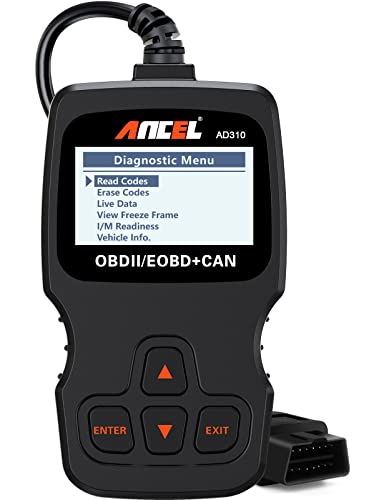
- CEL Doctor: The ANCEL AD310 is one of the best-selling OBD II scanners on the market and is recommended by Scotty Kilmer, a YouTuber and auto mechanic. It can easily determine the cause of the check engine light coming on. After repairing the vehicle's problems, it can quickly read and clear diagnostic trouble codes of emission system, read live data & hard memory data, view freeze frame, I/M monitor readiness and collect vehicle information.
- Sturdy and Compact: Equipped with a 2.5 foot cable made of very thick, flexible insulation. It is important to have a sturdy scanner as it can easily fall to the ground when working in a car. The AD310 OBD2 scanner is a well-constructed mechanic tool with a sleek design. It weighs 12 ounces and measures 8.9 x 6.9 x 1.4 inches. Thanks to its compact design and light weight, transporting the device is not a problem. The buttons are clearly labelled and the screen is large and displays results clearly.
- Accurate Fast and Easy to Use: The AD310 scanner can help you or your mechanic understand if your car is in good condition, provides exceptionally accurate and fast results, reads and clears engine trouble emission codes in seconds after you fixed the problem. This device will let you know immediately and fix the problem right away without any car knowledge. No need for batteries or a charger, get power directly from the OBDII Data Link Connector in your vehicle.
- OBDII Protocols and Car Compatibility: Many cheap scan tools do not really support all OBD2 protocols. AD310 scanner as it can support all OBDII protocols such as KWP2000, J1850 VPW, ISO9141, J1850 PWM and CAN. This device also has extensive vehicle compatibility with 1996 US-based, 2000 EU-based and Asian cars, light trucks, SUVs, as well as newer OBD2 and CAN vehicles both domestic and foreign. Pls confirm with our customer service whether it is compatible with your vehicle before purchasing.
- Home Necessity and Worthy to Own: This is an excellent code reader to travel or home with as it weighs less and it is compact in design. You can easily slide it in your backpack as you head to the garage, or put it on the dashboard, this will be a great fit for you. The AD310 is not only portable, but also accurate and fast in performance. Moreover, it covers various car brands and is suitable for people who just need a code reader to check their car.

- Multi-Functions - Practical Multi-Functions OBD2 code reader features built-in OBD2 DTC lookup library, which help you to determine the cause of the engine light, read code, erase code, view freeze frame, I/M ready, vehicle information, data flow, real-time curve, get vehicle speed information, calculate load value, engine coolant temperature, get engine speed.
- Wide Capability - Supports 9 protocols compatible with most 1996 US-Based, 2000 EU-Based and Asian cars, and newer OBD II & CAN domestic or import vehicles. Supports 6 languages - English,German, Dutch, Spanish, French, Italian.
- 2.8" LCD Display - Designed with a clear display 2.8" Large LCD screen - white backlight and contrast adjustment. No need any battery or charger, OBD reader gets the power directly from your vehicle through the OBDII Data Link Connector.
- Compact Design - Car diagnostic scanner is equipped with a 2.5 feet long cable and made of a very thick flexible insulator.There are 6 buttons on OBD2 Scanner:scroll up/down,enter/exit and buttons that quick query VIN vehicle number& the DTC fault code.
- ABS / Airbag codes NOT Supported - It is able to read and clear check engine information which is part of OBDII system, but it cannot work with non-OBDII systems, including ABS / Airbag / Oil Service Light, etc.

- 【Your Personal CEL Doctor – Read & Clear Engine Codes】The NT301 OBD2 scanner lets you read diagnostic trouble codes (DTCs), check em-issions readiness, turn off your Check Engine Light (CEL) or MIL, reset monitors, and view live data streams. It retrieves your vehicle's VIN instantly. Like all standard OBD2 scanners, it clears codes only after repairs are completed—if the issue persists, the code will return. Designed for DIYers who want to understand what’s really going on under the hood.
- 【Easy Code Reading – Just Plug & Play】Simply plug into the OBD2 port, turn the ignition to “ON” (engine off), and select the correct menu: Select OBDII-> Wait for seconds-> Select Read codes. For accurate results, ensure your vehicle is compatible and the OBD2 port is free from damage or wiring issues. No batteries needed— powered directly by your car.
- 【Live Data Graphing & Accuracy for Most OBD2 Vehicles】View and log live sensor data in graph form—monitor oxygen sensors, fuel trims, coolant temp, RPM, and more. Spot trends and suspicious values in real time. Compatible with most 1996+ gasoline cars, light trucks, and SUVs sold in the U.S., as well as many 2000+ European and Asian models. Also works on 12V diesel vehicles equipped with OBD2.
- 【S-mog Check Helper – Know Your Readiness Status at a Glance】With dedicated I/M readiness hotkeys and a simple Red-Yellow-Green LED indicator, you’ll instantly know if your vehicle is ready for em-issions testing. Built-in speaker provides audio feedback. No guesswork—just confidence before you head to the test center.
- 【A Must-Have Tool for Every Home Mechanic】Compact, rugged, and ready to use right out of the box. The 2.8” color screen is easy to read, even in daylight. No charging or setup required—just plug into the 16-pin DLC and start diagnosing. Recommended by professional mechanics on YouTube and trusted by DIYers worldwide.
Last update on 2026-03-25 / Affiliate links / Images from Amazon Product Advertising API
This product presentation was made with AAWP plugin.